Little car on a big mission re-creates a visit to Modesto first made in 1916
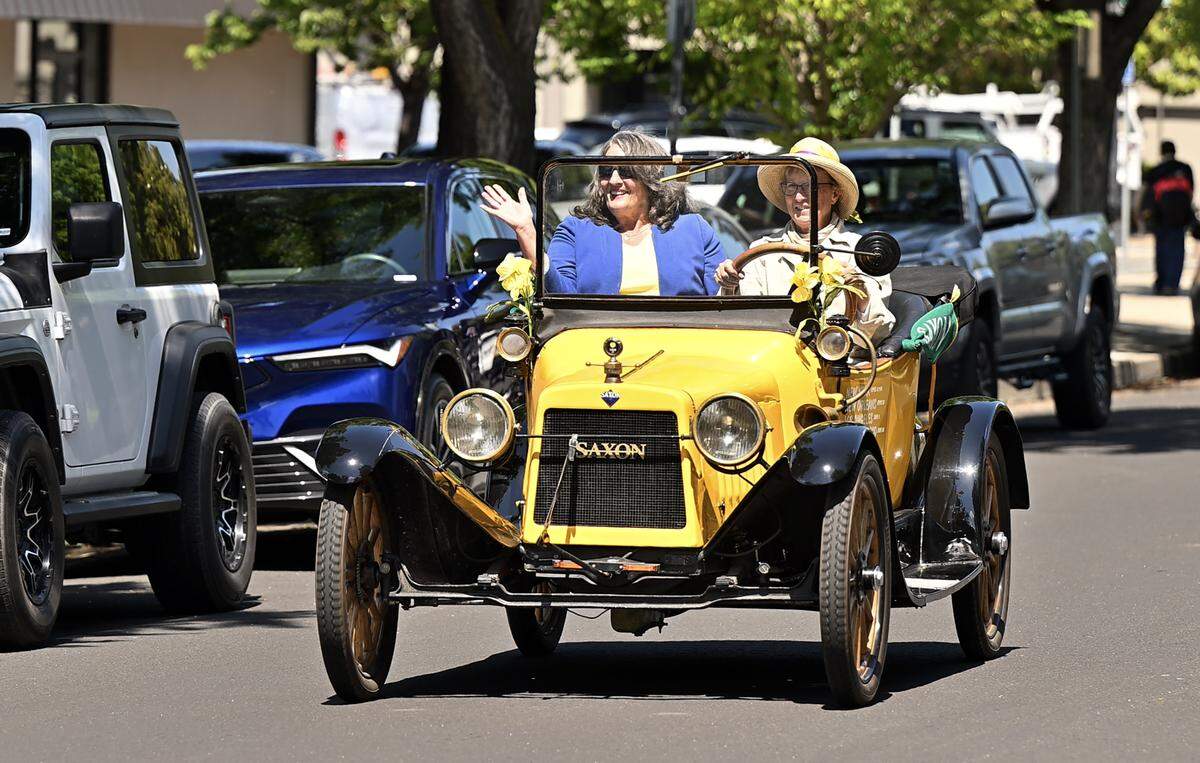
As ballots begin to hit mailboxes in Stanislaus County, the county Commission for Women and the local League of Women Voters welcomed a restored 1918 Saxon Flyer into Modesto to re-create a 1916 suffragette ride that promoted women’s right to vote.
The reproduced trip now promotes the ratification of the 28th Amendment, known as the Equal Rights Amendment. The amendment would codify in the Constitution women’s equal protection under the law. It was originally introduced in 1923, three years after the ratification of the 19th Amendment.
The Modesto stop on Wednesday was significant because the two women who made the historic drive, Alice Burke and Nell Richardson, visited the city back then and spent a night at the Modesto Hotel.
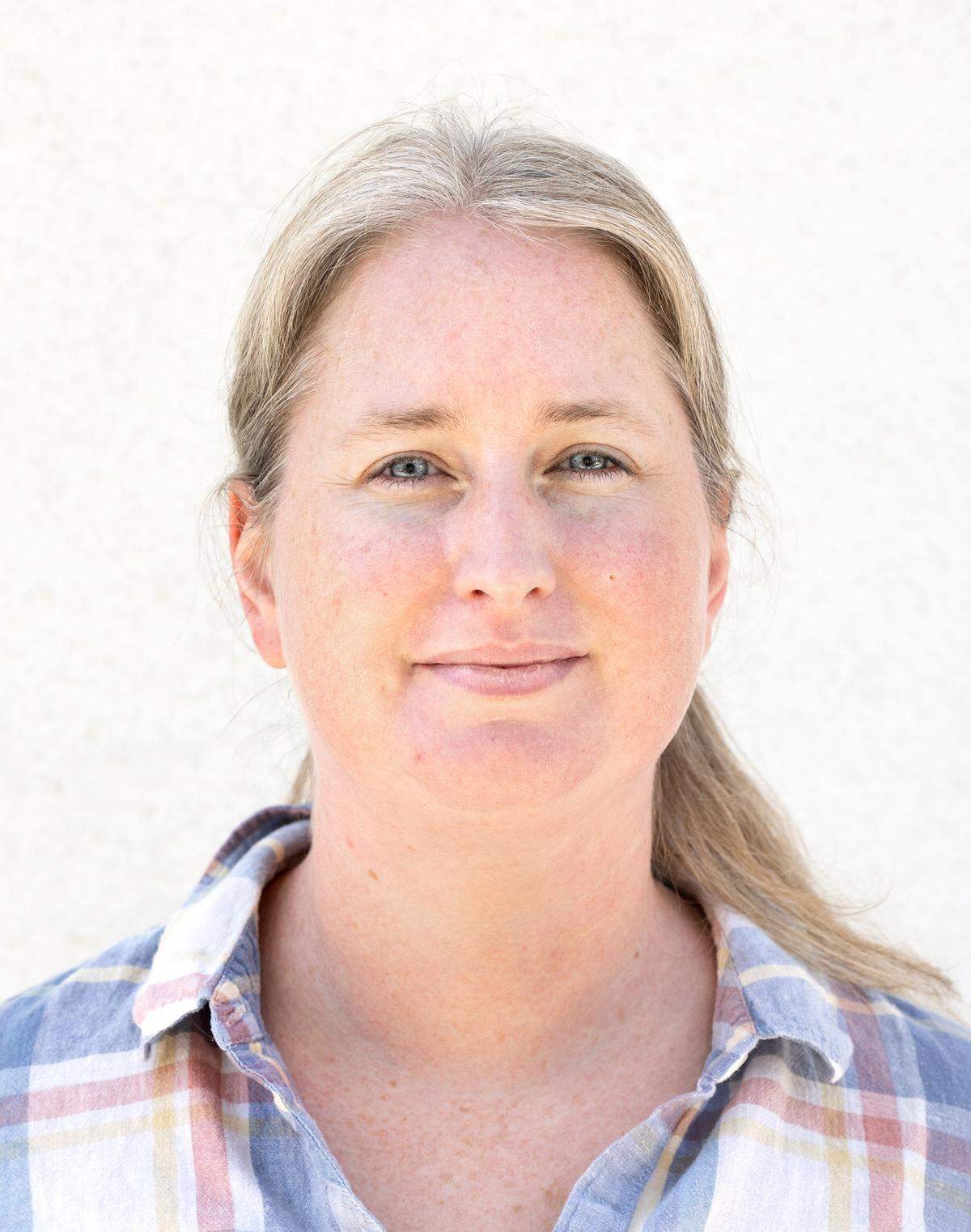
Jeryl Schriever wrote the book “Driving the Vote for Women: An American Journey for Suffrage” about the 1916 nationwide drive, which began in New York.
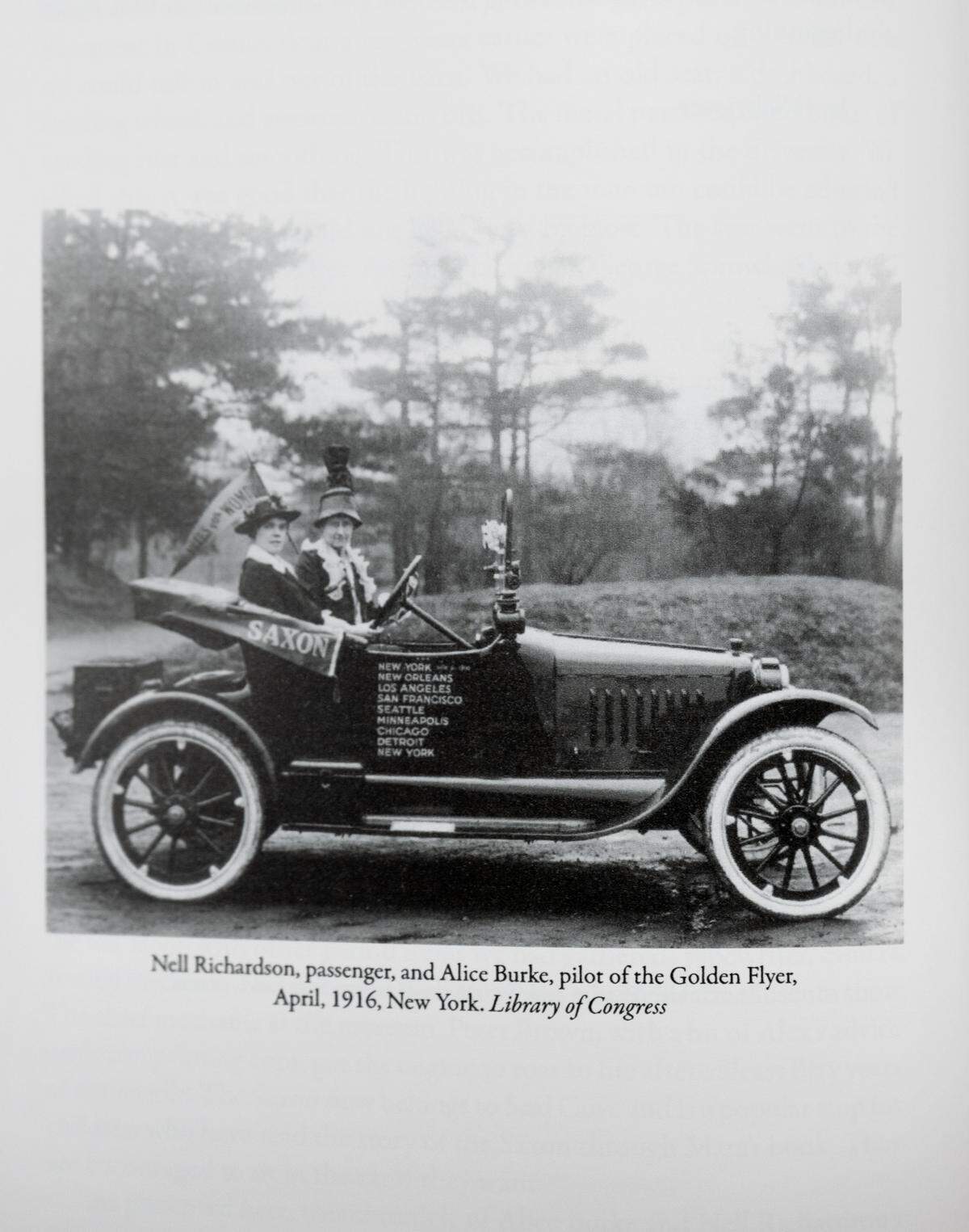
“They took a little yellow car, just like the one out here, and they drove around the country,“ Schriever said at Wednesday’s event. “They did 100 miles a day, and every night they would get dressed up and go out and tell why women deserve the right to vote.”
The antique car being used on the current tour can go up to only 25 mph, needs to be manually started and is in a trailer for long stretches between stops.
Susan Nourse, the driver of the historic Flyer, started in New York on March 1 and followed the route Burke and Richardson took down the Eastern states, through Arizona and north from San Diego.
“When we were going through the desert and the sand dunes and everything, I tried to imagine them riding in this car in the heat without anyone following them and supporting them,” Nourse said. “They were on their own, so they had incredible perseverance.”
At the tour stop Wednesday, Central Valley poet Linda Scheller gave background on Alice Paul, an advocate for the ERA in the 1920s, detailing how women trying to get into men’s-only spaces were often thrown to the ground, pulled by their hair, brutalized and detained.
“If they were not detained, sometimes the women would pull out a rock from their pocket and break a window so they did end up behind bars,” Scheller said. “The resulting publicity generated a lot of public sympathy for the women who were only trying to speak and attain equal rights.”
The ERA met the state requirement in 2020 after Virginia became the 28th state to ratify it. However, there was a sunset clause preventing the amendment from becoming law if not ratified by 1982.
Kathy Bonk, an organizer of the tour, said the group has proposed a joint resolution in Congress to reset the clock and remove any obstacle to its passage.
“It’s kind of in purgatory right now, somewhere between hell and heaven, and we’ve got to move it so that Congress recognizes it,” Bonk said.
Schriever said some pushback to the ERA has been the argument that it’s unnecessary and that women already have equal rights. But she noted that women, and women of color in particular, make less than men for doing the same jobs.
“The amendment is two sentences, it’s just about fairness,” Schriever said.
The amendment reads:
“Section 1: Equality of rights under the law shall not be denied or abridged by the United States or by any state on account of sex.
Section 2: The Congress shall have the power to enforce, by appropriate legislation, the provisions of this article.
Section 3: This amendment shall take effect two years after the date of ratification.”
Many of the attendees Wednesday dressed in yellow and wore hats reminiscent of the suffragettes’ garb as they pushed for equal rights.
Modesto Mayor Sue Zwahlen took a short ride in the antique car, starting at the McClatchy Square rose garden downtown and looping around 14th and J streets before returning to just outside the McHenry Mansion.
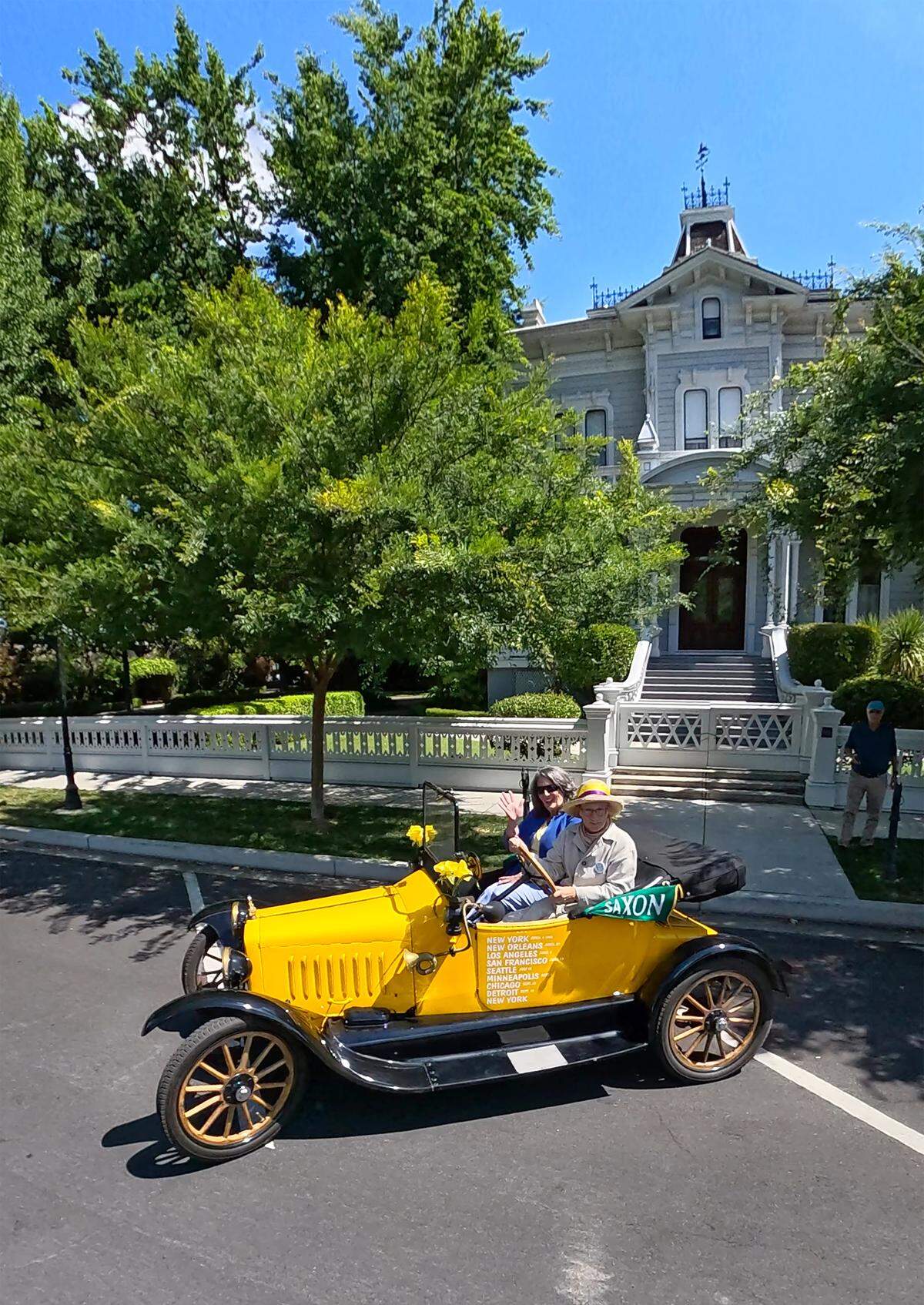
Several other attendees hopped in car for photos.
As part of the event, Zwahlen spoke about the importance of voting in the June 2 primary, citing low voter turnout in Stanislaus County.
“The right to vote is often taken for granted,” Zwahlen said. “We are nothing without the voters at the local, state or federal level. You make the decisions, this is our city and our future.”