Former Stan State dean files lawsuit alleging racial discrimination and harassment
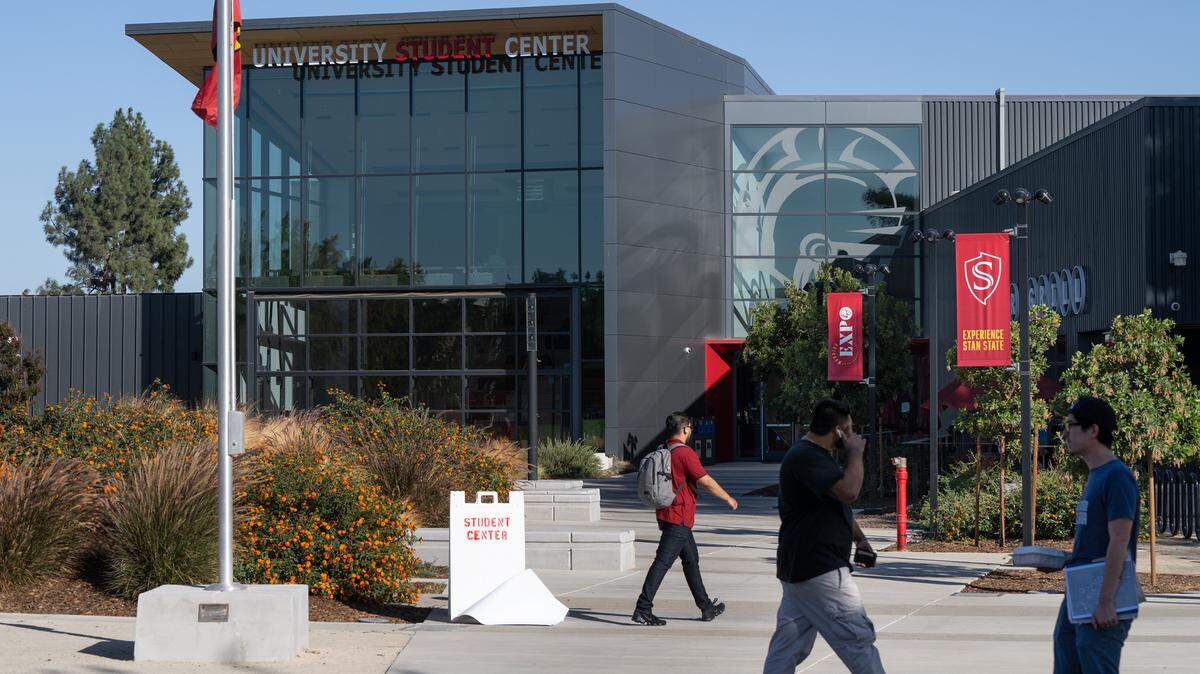
A former dean at Stanislaus State has filed a lawsuit against the California State University Board of Trustees and two faculty members, alleging racial discrimination, harassment and retaliation.
The lawsuit, filed in August by Terence Pitre, seeks $950,000 in damages and names Stan State faculty members Alfred Petrosky and Jarrett Kotrozo. It alleges discrimination and retaliation based on race, whistleblower retaliation, failure to prevent harassment, creating a hostile work environment, intentional interference with economic relations and aiding and abetting discrimination.
Pitre, who served as dean of the College of Business Administration, joined Stan State in July 2022. He left the university in June and now works at Kettering University in Michigan as its dean of the School of Management.
“I choose to leave not because I want to, but because I must,” Pitre wrote in his eight-page resignation letter. “My wife and I had planned for a life together, and I developed a plan to chart a long career path within the CSU system. However, no geographical location, title, promotion or salary is sufficient to cover up the stench of the effects of my continued degradation of my physical and mental well-being.”
Attorney David Tyra, who represents Petrosky and Kotrozo, declined to comment, citing ongoing litigation, but said the allegations would be addressed in court.
Amy Bentley-Smith, director of media relations and public affairs for the CSU office of the Chancellor, deferred to Stan State’s comment in June on the matter.
“Stanislaus State does not comment on individual personnel matters. Concerns of discrimination and harassment are taken seriously and reviewed in accordance with CSU policy. In this case, the concerns raised were investigated and the university remains committed to fostering a respectful, inclusive environment where the well-being and dignity of every member of our campus community are a top priority.”
History of discrimination alleged
The filing claims that the CSU system has a history of discriminating against Black applicants and employees, and that some members of Pitre’s hiring committee attempted to block his appointment because of his race.
Once in the role, Pitre alleges, faculty refused to meet or communicate with him, ignoring his emails and invitations. Within three months of his arrival, efforts began to have him removed.
According to the lawsuit, Petrosky used a racial slur against Pitre during a 2022 Zoom meeting, and the university took no action to protect him.
The lawsuit also claims Petrosky sought to humiliate Pitre by bypassing him in communications, creating the impression that the dean’s office was unresponsive and making Pitre appear ineffective. Petrosky was never disciplined for what the lawsuit calls his “stated falsehood.”
It alleges that Petrosky also spoke disparagingly about Pitre for 12 to 15 minutes during a campus celebration luncheon.
In October 2023, Pitre reported Petrosky to human resources, citing racist behavior toward him and harassing conduct toward women that he said contributed to a hostile work environment. Pitre proposed issuing a written reprimand, but HR instructed him not to and took no further action on his complaint.
Less than a month later, Pitre learned via email that faculty had passed a vote of no confidence, accusing him of showing “blatant disregard for our campus’ traditions, processes and policies.”
“[Pitre] was humiliated and the vote and the failure to invite him to the meeting was not only racist, but also disrespectful, hurtful and career destroying. He was worried that the racist vote of no confidence would prompt that the provost or president to terminate his position and/or destroy his career,” reads the lawsuit. “By using the words ‘campus traditions,’ faculty was referring to how [Pitre’s] traditions conflicted with the white traditions of CSU Stanislaus.”
At a faculty meeting, the lawsuit states that Petrosky and Kotrozo pushed to add a discussion about removing Pitre, even though it wasn’t on the agenda.
Kotrozo proposed Pitre’s termination by January 2024, and a second vote of no confidence passed — allegedly with procedural problems, including proxy votes on an item not properly noticed. In addition, “no proof of the allegations against the Dean would be provided.”
“To the best of our knowledge, faculty never provided anyone in the administration with any facts, evidence or proof of any wrongdoing by [Pitre],” reads the lawsuit.
The lawsuit also alleges Katrozo falsely stated that he and Pitre had engaged in heated conversations over the past months.
In December 2024, the lawsuit states, Kotrozo escalated tensions with Pitre by retaining a personal attorney in a dispute over his teaching schedule. Kotrozo notified Pitre and the department chair that all correspondence about schedule changes should go through his lawyer.
Pitre alleges this was done to intimidate him and interfere with his duties as dean. According to the complaint, the university’s general counsel later advised Pitre not to engage with Kotrozo directly without first clearing communications through the provost and legal office.
In an email to Provost & Vice President for Academic Affairs Richard Ogle and Associate Vice President for Faculty Affairs Kris Roney, Petrosky stated the following: “You two must take great pride in abandoning our college to this malignant buffoon. Expect our resentment towards Dr. Pitre to find a new home,” according to the lawsuit. The lawsuit alleges that the term “buffoon” carries racist connotations, tracing back to minstrel shows.
In early 2024, after informally reviewing complaints raised by Pitre, Roney issued an executive summary of the votes of no confidence. The report states in part: “The lack of good faith from the outset on the part of some faculty may have made a positive transition for Dean Pitre impossible. It cannot be ignored that there are clearly racially coded examples throughout the years Dean Pitre has been at Stan State. A faculty member described those examples as ‘anti-Black,’ and I am not inclined to disagree.”
In January 2024, Pitre filed a formal complaint against Stanislaus State, alleging harassment, discrimination and retaliation on the basis of race.
The California Department of Justice conducted an investigation, but, according to the lawsuit, it assigned the case to an attorney who also was defending CSU in another employment discrimination, retaliation and harassment matter — creating a conflict of interest.
The lawsuit states that during a faculty senate meeting, the ongoing investigation was publicly discussed, violating the case’s confidentiality. Pitre reported the breach in an email to the Equity Programs & Compliance office but received no response.
The state DOJ issued its final report in March 2025. Instead of examining Pitre’s complaint against the CSU system as a whole, the report evaluated each faculty member separately and, according to the lawsuit, failed to consider the cumulative impact of racist comments and actions.
In February 2025, Pitre filed a tort claim notice with the CSU alleging race-based discrimination, harassment, retaliation and whistleblower retaliation. He never received a response. The following April, he filed a complaint with the California Civil Rights Division and was granted a right-to-sue letter the same day.
On June 19, the lawsuit states Pitre was “constructively discharged” — meaning he involuntarily resigned — due to ongoing discrimination, retaliation and harassment that occurred during his time of employment.
In an email to his former Stan State students, Pitre wrote that the decision to leave was not easy.
“From the time I accepted this role, I experienced persistent racial discrimination, retaliation and targeted harassment from some (not all) faculty and staff,” he wrote in the email. “Despite reporting this condition, the system failed to act meaningfully. I was left without protection or support, even as the environment deteriorated and impacted my physical and emotional health.”
Pitre added that he does not want his experience to be a cautionary tale but a catalyst, and he encouraged students to prioritize their well-being and take control of their futures.
“There is no tragedy in walking away from a space that no longer serves you. The real tragedy is believing you can’t,” he wrote.