
Stanislaus County DACA recipients prepare for new administration
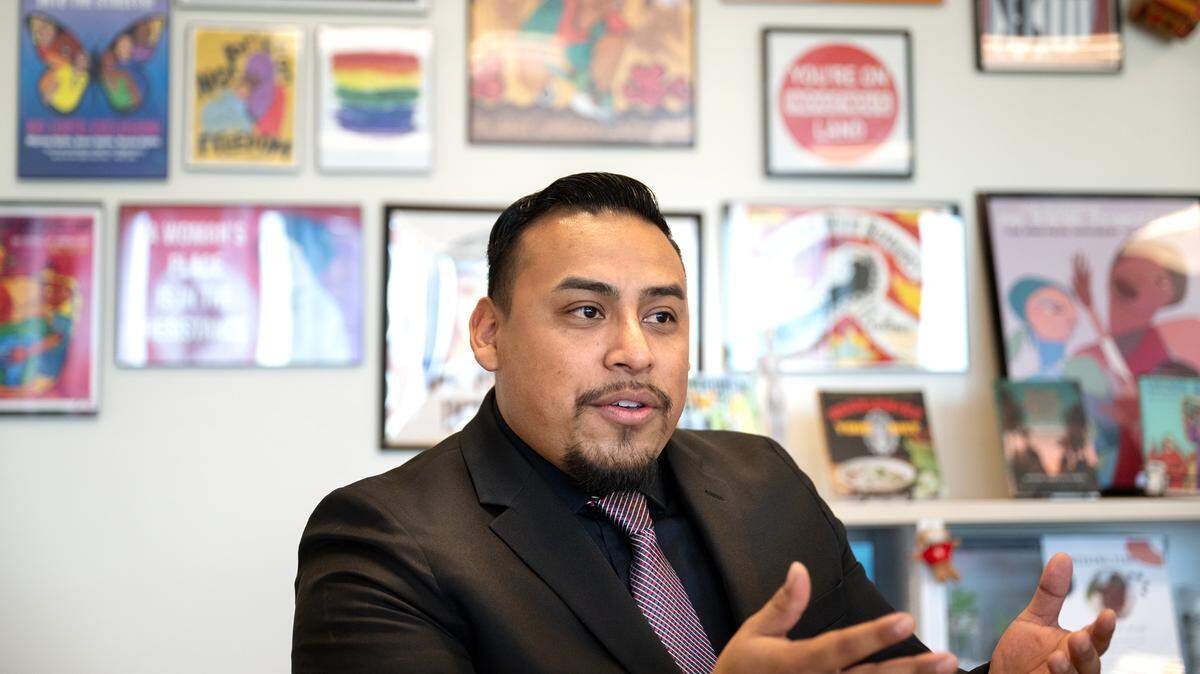
Recipients of the Obama-era Deferred Action for Childhood Arrivals worry about potential changes or even elimination of the program as President-elect Donald Trump assumes office for a second term.
The executive order that produced DACA was enacted in 2012 as a stop-gap solution while the path to citizenship was being worked out in Congress for people who migrated during childhood but grew up in the United States. The program requires renewal every two years but provides deportation protection and work permits to those who meet the specific qualification criteria.
“With all the uncertainty about DACA’s future, it’s hard not to feel anxious all the time,” said Perla Garcia Ledesma, psychology major at Stanislaus State University, “I feel like I am stuck in this limbo, trying to plan for a future we don’t even know is possible.”
Guillermo Metelin Bock, the undocumented-student services lead at Stanislaus State, said he has seen an increase in students seeking services, which has delayed appointments for legal consultation.
“Now we’re working with our provider and saying, ‘OK, we need to increase the number of consultations and also prioritize those who need to renew their DACA,’” Bock said. “Anytime there is an administration change, there’s a probability that it can impact immigration policy.”
What DACA recipients can do now
Fernanda Pereira, director of legal services for El Concilio, usually advises people to renew a DACA application six months ahead of its expiration. Now, she recommends that anyone eligible to renew do so immediately – “file, just file.”
Legal experts have concerns that the new administration will discontinue the DACA program. Pereira said she expects a lot of lawsuits following Trump’s inauguration.
Pereira added that DACA always was intended to be a transitory state. Recipients may be able to pursue other avenues of legal immigration for victims of criminal activity in the U.S., or can check with family members to see if they qualify for other immigration relief.
“Many individuals actually have other alternatives to acquire legal status, and they just need to pursue those alternatives,” Pereira said.
Over 14% of DACA recipients are potentially eligible for other immigration relief programs, according to the National Immigration Justice Center. Some other options include seeking asylum, protections for women who are victims of violence, victims of human trafficking, those fleeing violence in their home country, those fleeing natural disaster in their home country, and people in U.S. military families.
One of the benefits of the DACA program is the ability to leave the country under specific circumstances, which Pereira encourages DACA recipients to take advantage of in the small gap between now and inauguration day.
“If there is an urgent humanitarian reason, we are advising individuals to file for Advanced Parole on an expedited basis. It may still be possible to travel under those circumstances if the case warrants it,” Pereira said.
Advanced Parole allows some DACA recipients to travel abroad for humanitarian, education, or employment purposes. After Jan. 20, there is increased risk of not being allowed to return.
“What we don’t want to happen is that a student is abroad and then there’s an administration change and a student to be impacted, to get stuck,” Bock said.
For people in the DACA program concerned about the new administration’s access to their information, Pereira said that though it’s possible the administration could go after them, DACA recipients tend to have clean records and valid work permits, so they more than likely aren’t a priority.
“Mainly, the rule right now is prudence and preparation,” she said. “Those would be the two models to adopt.”
Current protections for undocumented people
California has protections that generally prohibit local law enforcement from inquiring about immigration status, sharing nonpublic addresses or from using Immigration and Customs Enforcement officers as interpreters.
The unofficial number of students who are undocumented at Stanislaus State is around 200, but this may be an undercount since many students do not apply for residency or funding for fear of being deported. Bock said he wants students to continue to have faith.
“My parents are undocumented immigrants. Many of the stories I’ve heard from students is that their parents came to this country with hope, with faith, to a country where they didn’t speak the language,” Bock said. “But they came here with hope because they wanted to create a better future for their kids. And that story repeats itself, for many of our students, it’s the same story.”
Regardless of immigration status, there are certain constitutional protections everyone has in the United States. The Immigrant Legal Resources Center provides “red cards” that detail those protections, including the right to remain silent and not answer questions, to not open the door, to refuse to sign any document provided by an immigration agent.
Support for students and members of the community
Yasmin Hernandez, a senior service provider for the United Farmworkers Foundation, said her organization holds free virtual and in-person consultations and workshops for Modesto Junior College and 20 other campuses for students, staff and faculty. It also holds workshops for the greater community upon request.
“What’s most important right now is that everyone stays informed on what’s going on with DACA,” Hernandez said. “Recipients should get consultations done to see if they have a more permanent pathway to obtain lawful status, or if they have a different pathway to obtain a separate type of temporary lawful status.”
The United Farmworkers Foundation has scheduled in-person training at MJC directly following the inauguration on Jan. 22, as well as consultations at the Rise Up Center on MJC’s West Campus.
“We’re going to present expectations for that year,” Hernandez said. “We’re going to present on what took place last time this administration was in office, and we’re going to present on how to be prepared.”
Undocumented Student Services at Stanislaus State worked to develop a plan so students have the resources to continue their education even in the event they’re deported. The plan potentially would offer online courses or give a student a withdrawal instead of a fail so they can maintain their GPA.

“Our goal is not to anticipate a threat, it’s going to be to ensure that we have the infrastructure, the resources we need to respond in an instance where support is needed,” Bock said.
DACA recipients should contact immigration attorneys or nonprofits that are accredited by the Department of Justice and should avoid providers who ask for money upfront or make blanket promises without looking at an applicant’s specific situation.
“Do not go to a notary,” Hernandez said. “Sometimes people think that notaries are authorized to practice law and they’re not. So that’s something very important to keep an eye out for.”
Hernandez said people who feel anxious may find it helpful to focus on things that make them happy. She recommends going on a hike or spending time with family or friends.
“It’s also important that we take care of ourselves, because we do have a lot of work ahead of us,” Hernandez said. “It’s important that we are also doing good and we focus on that as well.”
This story was originally published December 13, 2024 at 8:45 AM.