What happens to the stuff I put in blue recycling bins in Modesto? Bee Curious answers
Whether it’s an empty milk jug or an old cereal box, it’s easy to forget about trash once you’ve tossed it into the recycling bin.
A reader asked our journalists with Bee Curious, a community-driven series where reporters answer reader questions about the Modesto region: “What happens with the things that we put in the blue recycling garbage cans?”
Here’s what officials with the city of Modesto said:
What goes in your Modesto blue recycling bin?
The city of Modesto provides residents with three bins: green, black and blue.
The green bin is used for organic material, and the black bin is meant for household garbage.
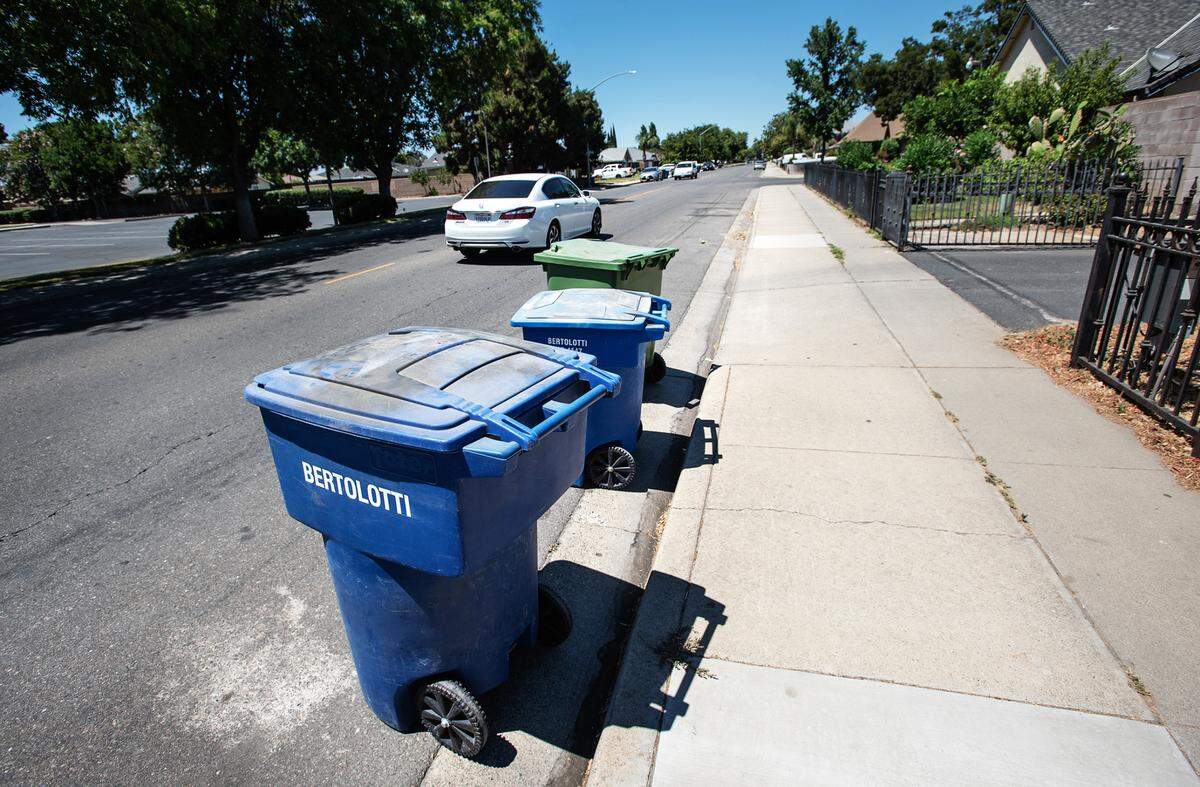
The blue recycling bin is designated for plastic, glass, metal and clean cardboard containers, including those that qualify for the California Redemption Value program, according to the city of Modesto’s website.
“Leave out other items, like plastic bags and films, food waste, toys or straws and plastic cutlery,” city spokeswoman Sonya Severo wrote in an email to The Modesto Bee.
“It is important that all items that will be going into the blue container are clean and dry,” the city website says.
If materials in the blue bin are contaminated with liquid, food residue, or plastic bags, they risk not being processed at the recycling center.
Residents can dispose of these items in the blue can:
- Aluminum cans; clean aluminum foil and trays; metal caps and lids from bottles, jars and tin cans; empty spray cans and scrap metal
- Plastic bottles, buckets, coffee cup lids, containers, clamshells and cups and plates
- Plastic flowerpots, trays, laundry detergent bottles, molded plastic packaging, tubs and lids
- Recyclable plastics (look for the symbol)
- Glass bottles and jars
- Flattened, clean cardboard that has not been contaminated with food products
What can’t I toss in blue Modesto trash container?
No Styrofoam is allowed, the city website says.
Food-soiled paper and cardboard items, such as pizza boxes, should be thrown in the green bin.
City regulations require that blue bins must not exceed 100 pounds once filled, or be filled to the extent that the lid cannot close properly.
To figure out which container to use for your waste, you can visit the Modesto Waste Wizard online to search for any item and find the proper disposal options.
City staff is also available to help with recycling questions by phone at 209-577-5494 or email at swm@modestogov.com, from 8 a.m. to 5 p.m. Monday through Friday.
What happens to garbage bins’ contents after pick-up?
Severo said the materials in your blue recycling bin “should be thought of as more than just garbage.”
“Everything acceptable in your blue recycling container (plastic, metal, or glass containers and clean cardboard) can be recycled and made into new products,” Severo wrote.
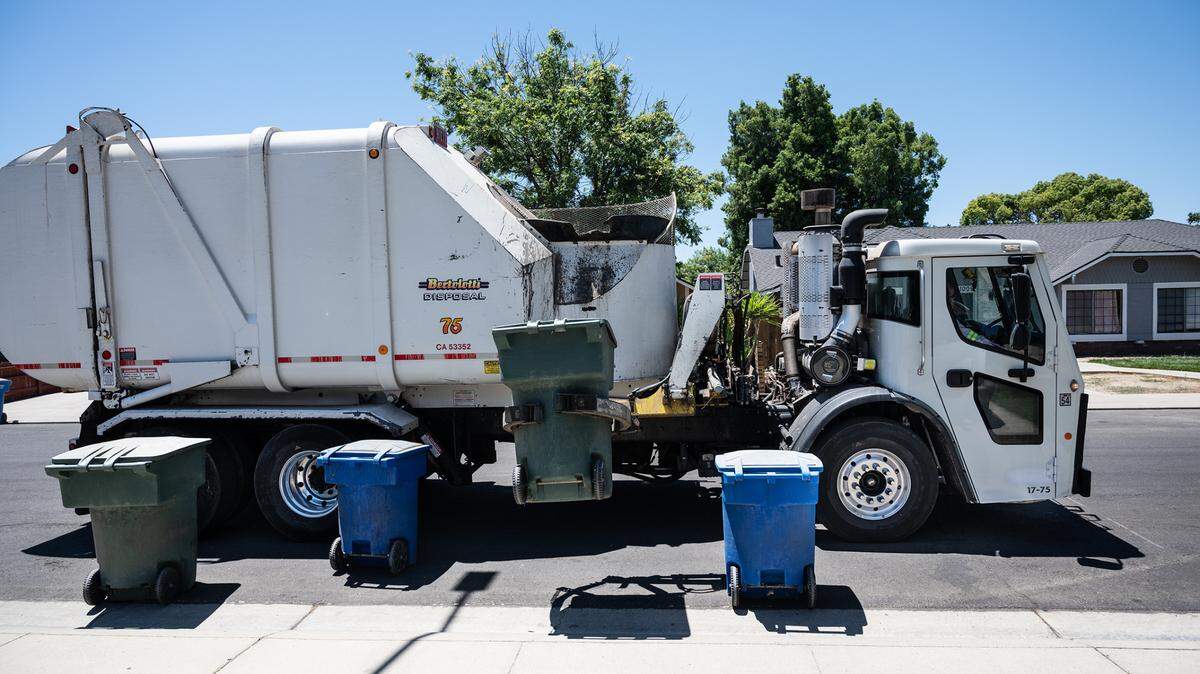
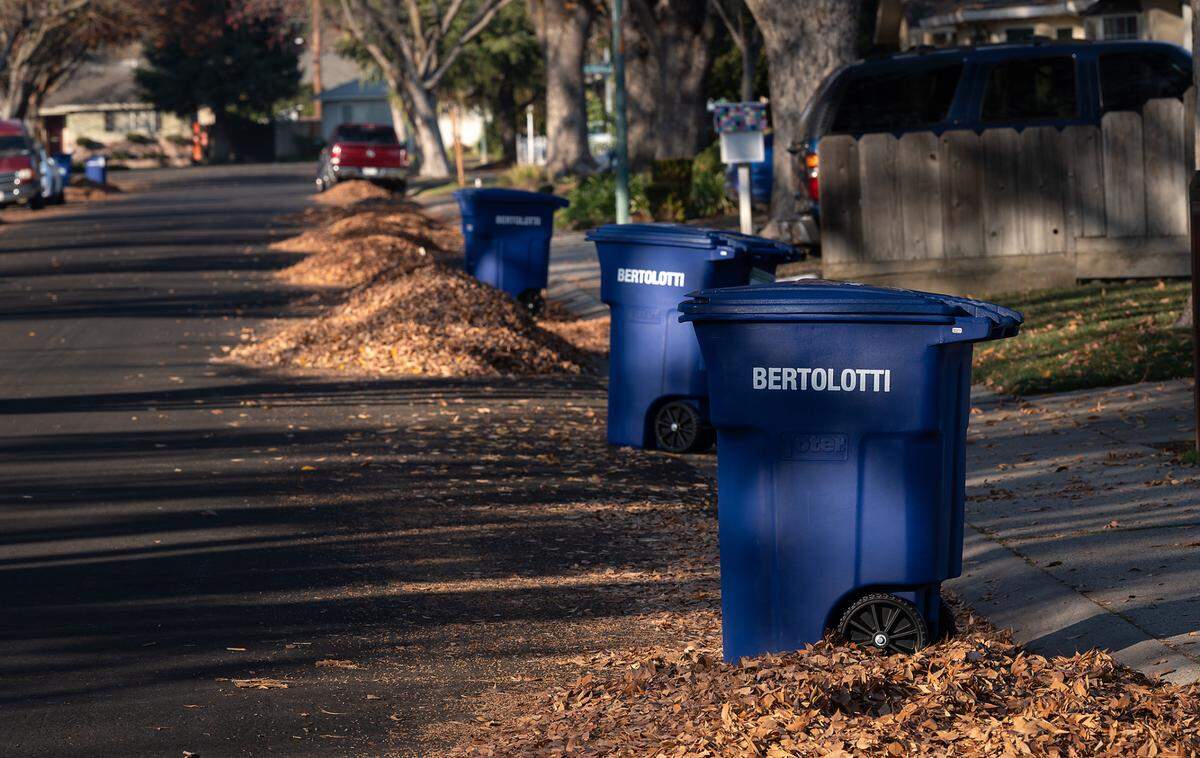
Whenever Modesto’s waste contractors, Gilton Solid Waste Management and Bertolotti Disposal Service, collect residents’ blue recycling containers, she said the materials inside are transported to transfer stations.
There, they are loaded onto larger trucks “to increase the efficiency of transporting waste,” she said.
Recyclable materials are then taken to the Cal-Waste recycling facility in Galt, which only accepts mixed recyclables, she said.
“Material is cleaned and sorted using mechanical equipment and hand-sorting,” Severo wrote. “It is separated by type, baled and distributed to secondary markets.”
Depending on the material, she said producers can make it into recycled-content products.
Glass containers are taken to glass companies, such as Gallo Glass and Halo Glass Recycling, and made into new bottles, Severo said.
“Metals are melted and made into new cans,” she said. “Plastics are separated by type and/or color and can be made into beverage containers, clothes, building materials, plastic packaging and much more.”
“Plastics are more difficult to recycle than glass or metal,” Severo said, but Cal-Waste is able to sort containers by their respective resin types so they can be made into new products.
“This reduces reliance on new materials and reduces waste going to our regional landfills,” she said.