
Are you using Modesto waste bins correctly? Here’s how much contamination could cost you
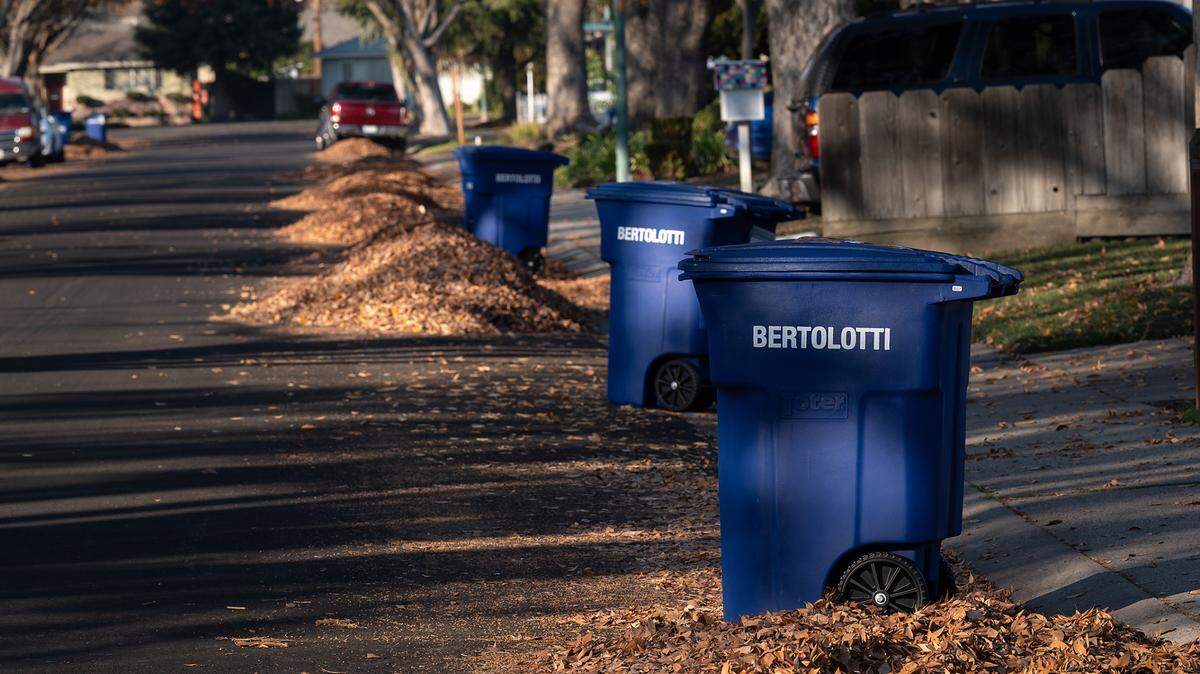
Modesto city employees perform random inspections on waste bins — and if you’re not doing it right, the fines can (eventually) cost more than your rent.
It would take determination to get to the heftiest of fines, but if you mess up enough, even the lowest penalty will cost you triple digits.
And it’s gotten more complicated: Last year, the state mandated residents to recycle food waste, adding another bin to the rotation.
A Modesto Bee reader wrote to our service journalism team, which is focused on answering community questions, asking about the city’s three-bin system.
Here’s how to use it correctly, and what happens if you don’t:
What goes in your Modesto black bin?
Household garbage put in the black container is sent to a waste-to-energy facility, where it is burned to make electricity, according to the city.
The city’s website says trash allowed in this bin includes:
- Animal waste or litter box debris
- Diapers
- Flocked or treated holiday trees
- Household garbage or trash
- Masks, gloves and wipes
- Bathroom waste and feminine hygiene products
- Plastic bags or packaging (nonrecyclable plastic)
- Polystyrene items
- Small pieces of wood or lumber
Organic waste, recyclable material, dirt, rocks, concrete, asphalt and hazardous, toxic and e-waste material are not allowed in black bins, according to the city’s website.
How to use green can in Modesto
Organic material, which is what the green can is used for, is food waste, paper waste, cardboard and small yard waste.
Such materials include, according to the city website:
- Food waste, including meat, bones and dairy
- Brush and tree limbs less than 4 feet long and 6 inches in diameter (Large green waste such as shrubbery and tree trimmings are picked up once a month.)
- Grass, leaves and trimmings
- Food-soiled paper and cardboard
- Paper products
- Cardboard
- Napkins and paper towels
The website says these items cannot be placed in green bins:
- Items that belong in blue and black bins
- Plastic bags or plastic lined bags
- Treated wood or lumber
- Flocked, painted, or fireproofed Christmas trees
- Dirt, rocks, concrete or asphalt
- Materials over 4 feet long or 6 inches in diameter
Compost is created from organic waste and is sold to the public by yardage. Residents can get a free kitchen compost bucket by calling 209-577-5494.
How to use your blue bin
The blue can, or recycling can, is used for CRV (California redemption value) and non-CRV plastics, glass and metals. According to the city, all items that go into the blue container must be clean and dry.
If materials in the blue bin are contaminated with liquid, food matter or a plastic bag, the material risks not being taken to a center for processing.
Recyclable items include:
- Aluminum cans, clean aluminum foil and trays, caps and lids from bottles, jars and tin cans, empty spray cans and scrap metal
- Plastic bottles, buckets, coffee cup lids, containers and clamshells, cups and plates (no Styrofoam)
- Flowerpots and trays, laundry detergent bottles, molded plastic packaging, tubs and lids
- Recyclable plastics (look for the symbol)
- Glass bottles and jars
- Flattened, clean cardboard
Nothing that is supposed to be placed in black or green cans can be placed in blue cans, including plastic bags or plastic-lined bags. You’ll notice that clean cardboard is listed as acceptable in both the blue and green bins. An employee with the city’s Solid Waste Division clarified for The Bee that it’s preferable residents put the clean cardboard in the blue bin, but if it’s full and the green one is not, it may go there. But soiled cardboard, like pizza boxes, may go only in the green bin.
Diana Ruiz-Del Re, a city spokeswoman, said the city encourages residents to continue to take their CRV material to a facility if they want to and it is cost effective for them to do so. Recyclable items that are not redeemable at recycling centers can still be placed in home blue containers.
Bins may not be filled to more than 100 pounds or to the point the lid will not close, according to the city.
City inspections of containers and possible penalties
City employees perform random route reviews of the three containers throughout Modesto, where they flip the lid of the container and check for contamination.
If they find a container has the incorrect material, employees first tag the container to provide residents an opportunity to clean it, Ruiz-Del Re said.
“Our main goal is to educate customers to ensure they are doing the right thing,” Ruiz-Del Re said.
Residents have two weeks to make a reinspection appointment, and if they pass the reinspection, they are cleared. If they do not pass, Ruiz-Del Re said residents can be fined $100 for the first offense with progressive citations following every noncompliance inspection.
Levels of fines
The amount of administrative civil penalties assessed per day or per violation is set according to the following schedule:
- Level one violation: administrative civil penalty of $100 to $500
- Level two violation: administrative civil penalty of $500 to $1,000
- Level three violation: administrative civil penalty of $1,000 to $5,000
- Level four violation: administrative civil penalty of $2,500 to $10,000
- Level five violation: administrative civil penalty of $2,500 to $25,000
For FAQs about the blue bins, and their pickup schedule, go to www.modestogov.com/370/Solid-Waste-Division.
.jpg)