California’s pilot pesticide notification system troubles growers and residents alike
Growing up in Grayson, Ricardo Jimenéz would join his dad for roadside jogs among the almond orchards. Their runs often were interrupted by the overhead passage of a crop duster spraying pesticides and ended with the two of them hosing off with water that usually was yellow, said Jimenéz.
“They never warned us or anything,” Jimenéz, 47, said. “They just did what they did out there.”
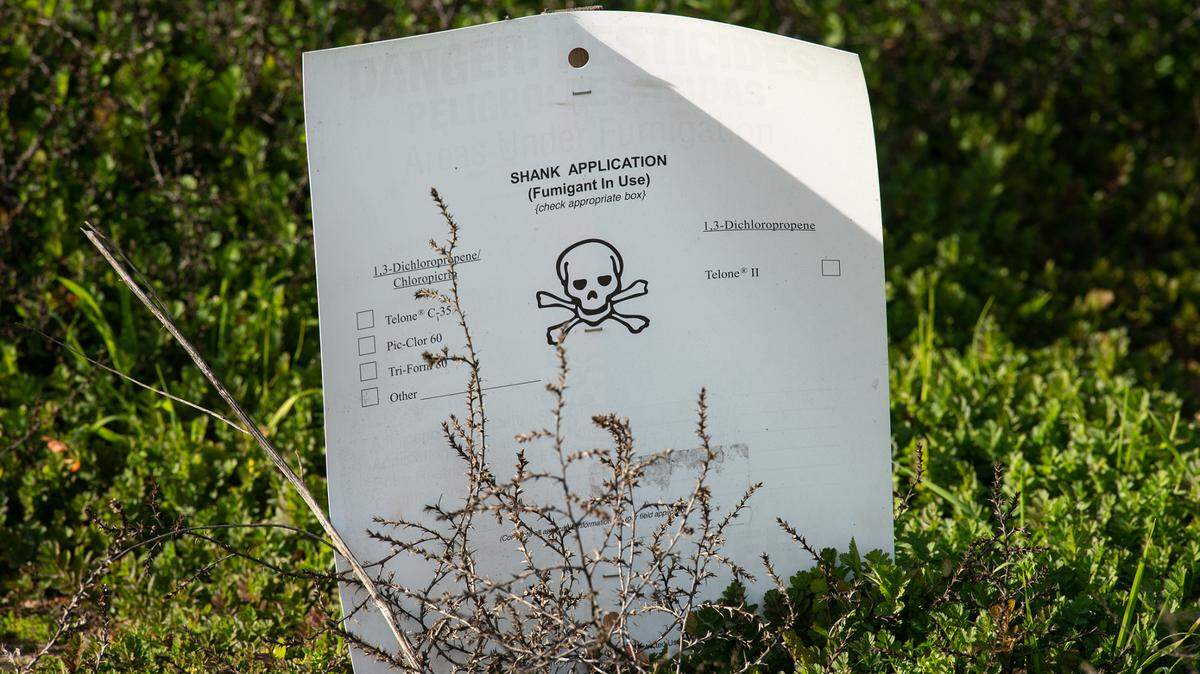
In 2022, county agricultural commissioners in Stanislaus, Riverside, Santa Cruz and Ventura counties volunteered to partner with the California Department of Pesticide Regulation (CDPR) to conduct pilot projects to support the development of a statewide pesticide application notification system.
The Stanislaus program, conducted in Grayson, seeks to enhance transparency and provide equitable access to information for Californians ahead of pesticide applications.
But the notification system has received criticism from growers and residents regarding its necessity and its effectiveness in ensuring the safety and awareness of the communities most impacted. Stanislaus County Farm Bureau leaders call it “alarmist” and complain that it includes no education component.
Following the pilot phase, DPR has refined the platform for the notification system, currently undergoing beta testing in Tulare County. This process involves incorporating evaluation and feedback collected from the public. The system is set to launch pending finalization of proposed regulations.
“This first-of-its-kind system will increase timely, equitable access to information on pesticide use, complementing the department’s stringent regulatory programs to protect people and the environment,” DPR Director Julie Henderson said in a press release. “We appreciate and value the time and engagement from all stakeholders interested in this system and who engaged with the department over the last two years and continue to provide feedback to inform the design of the system and its associated regulation.”
System shortcomings include little public participation
During the pilot program in Grayson, only 46 people out of the community’s nearly 800 adult residents enrolled in the notification system, according to Stanislaus County Agricultural Commissioner Linda Pinfold.
Bianca Lopez, co-founder of the environmental justice nonprofit Valley Improvement Projects, said one concern was the system’s cumbersome sign-up process, which asked participants to share personal information. She said communities of farmworkers and immigrants, constituting a majority of Grayson’s population, generally distrust government entities when it comes to sharing such information, making it a barrier to participation.
Another issue raised was the lack of specificity regarding the location of pesticide applications. The system alerted participants to applications within only a one-mile radius, which some residents found insufficient.
Angel Garcia, co-director of Californians for Pesticide Reform (CPR), who has been participating in the beta test of the proposed statewide system, said that while residents no longer are required to provide personal information to get pesticide notifications, the specific location of spraying still remains undisclosed.
Garcia said part of the reason is because DPR doesn’t have a standardized way of collecting exact locations when growers submit to agricultural commissioners their notices of intent to use pesticides.
Growers argued that providing specific locations could compromise their privacy and potentially attract protesters aiming to disrupt the pesticide application.
“This statewide, blanket and alarmist notification system raises significant and serious concerns on the part of growers here in our county,” Stanislaus County Farm Bureau Executive Director Caitie Diemel and Stanislaus County Farm Bureau President Eric Heinrich wrote in a statement. “This system fails the community by providing only notice of an application and no education about the product being applied or the safety measures required to be taken in its application.
“It also lends itself to abuse by radical activists who may endanger both workers and themselves by trying to disrupt or prevent applications. The system does all this while doing nothing to increase actual safety.”
CPR never has encouraged people to protest at the sites and disrupt pesticide applications, Garcia said, yet the issue is a common talking point from those who oppose the system.
Pinfold said a one-mile radius for notification is a happy medium so residents know what’s happening within their vicinity but the grower’s specific information remains undisclosed.
“How much of a difference does it make to know exactly the location when the more important part is to know what’s being sprayed within your immediate area so you can make the best decisions to take care of your life,” Pinfold said.

A call for greater transparency about health risks
Jimenéz has known a couple of people from Grayson who, despite appearing healthy, died from cancer at a young age. Though he doesn’t know, the thought has crossed his mind whether it could have been from the pesticide exposure.
“You don’t really think about it so much when you’re a kid, but in retrospect you look back like, ‘Whoa, yeah, we were exposed to a lot of stuff,’” he said.
Jane Sellen, co-director of CPR, said there needs to be greater transparency regarding the health risks associated with pesticides and considers this notification system a step in the right direction. She also emphasizes the need for California to shift away from the overreliance on certain harmful chemicals, many of which are banned in other countries.
According to the CDPR, the two most heavily applied pesticides, by far, in Stanislaus County are horticultural oil and Telone. Both are applied in almond orchards and are considered respiratory toxins. Telone also has a cancer risk.
Pesticides can lead to both short-term effects, such as stinging eyes, rashes and nausea, and long-term, chronic effects like cancers, birth defects and neurological toxicity. Vulnerable populations, including infants, young children, farmworkers and pesticide applicators, are at higher risk due to increased exposures.
The notification system alerts individuals to the spraying of restricted materials, which are pesticides that require permits and are identified as having a higher potential to cause harm. Even though unrestricted materials lack the same regulatory controls, Garcia said that they can still pose risks.
Supervisor Vito Chiesa, who works in a family farming operation, said his first concern is the safety of the people working on the farm. He stresses the importance of farmers using the right personal protective equipment and of keeping themselves safe.
“I accept some of the risk myself. Farmworkers don’t accept that risk,” Chiesa said.
This story was originally published January 22, 2024 at 8:00 AM.