Advance pesticide notification pilot to launch in Grayson. How accessible will it be?
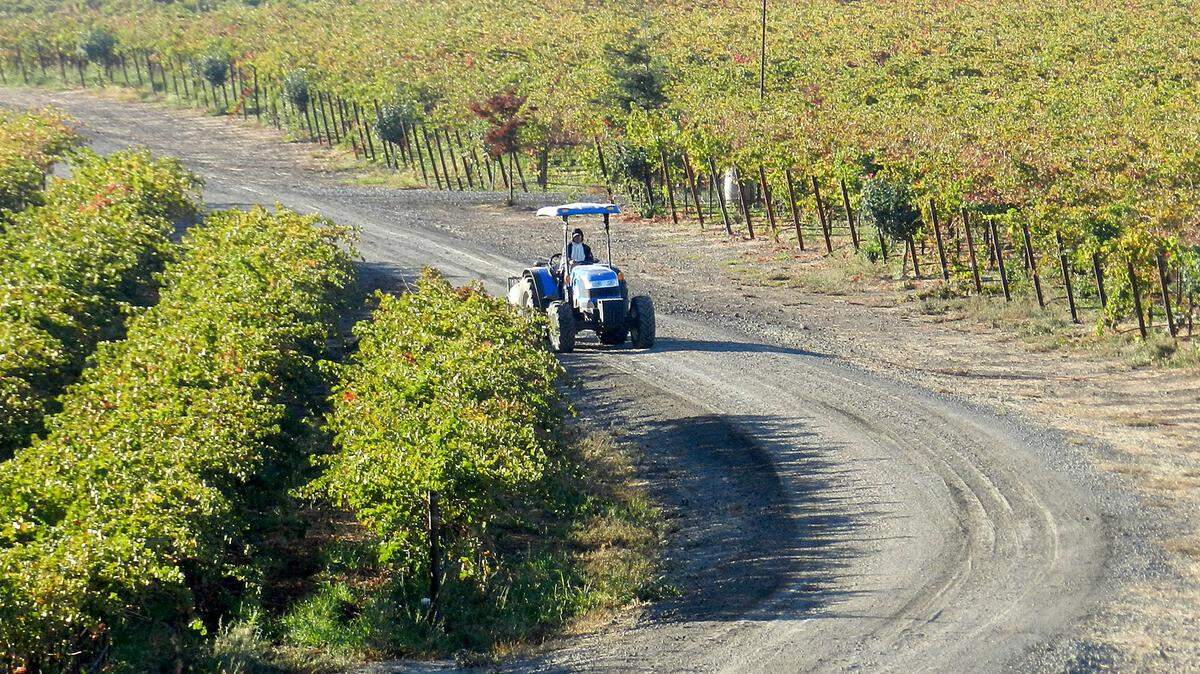
The community of Grayson will participate in a pilot program this spring to help develop a statewide system providing advance notice of pesticide spraying.
Four of the state’s county’s agricultural commissioners, including Stanislaus County’s Kamal Bagri and those representing Riverside, Santa Cruz and Ventura, have volunteered to partner with the California Department of Pesticide and Regulation (DPR) to launch all projects by July. The pilot programs will be key in the design and implementation of California’s statewide notification system, expected to launch in 2024.
The purpose of the statewide system is to provide Californians with increased transparency and equitable access ahead of pesticide applications, DPR Director Julie Henderson shared in a statement. “This is something which is being done for the first time in the nation,” Bagri said in an interview with The Bee.
Submitted inquiries about pesticide notifications, previous pesticide research done in the area and community size all were factors in selecting Grayson to test the program, Bagri said. With limited resources for the pilot and Grayson being small, she said it’s a good place to test different ideas.
All counties participating in the program will run their pilots differently to try various methodologies and determine which works best. Grayson residents will get information through the Stanislaus Notification System Pilot.
The program will provide a notification of restricted materials at least 12 hours in advance to residents within a mile of the pesticide application. Residents will need to register to receive notifications by providing a phone number, email and physical address. Bagri said those hesitant to provide their location can instead register a nearby farmland as their address.
Participants will then be directed to check the county website and provide login information to see more detailed information.
Additional information on Grayson’s pilot program will be provided at community meetings toward the end of February and the start of March. The DPR also plans to hold public planning workshops in the spring to collect community input on the statewide system.
Following the community workshops, the county will take about three weeks to analyze community input. It plans to have a basic structure of the program by April 1 and will continue with the pilot through the launch of the statewide program.
Grayson’s pilot program will then be reviewed in October to determine if modifications need to be made. Bagri said the county is also figuring out if it will provide notifications in different languages like Spanish and Punjabi, but for now will launch the pilot in English.
That may be a problem given that most of Grayson’s residents identify as Hispanic and many primarily speak a non-English language at home, DataUSA shows. The program wouldn’t truly be providing equitable access if it can’t communicate the information in a language that they understand, said Bianca Lopez, co-founder of Valley Improvement Projects, an environmental justice nonprofit.
“If our region has these languages… we should be able to do that,” she said.
Bagri said her department is also struggling to get the community involved. “It’s been a hardship on the department because we are not getting that engagement from the community,” she said.
The community should care more, given that pesticides have been linked to several health issues, including the development of tumors in children whose mothers were exposed to pesticides while pregnant, Lopez said. “I want youth to be very involved because they are the ones who are most affected.”
This story was originally published February 15, 2022 at 6:00 AM.