Could hydrogen power passenger trains through Altamont to BART? Project board says yes
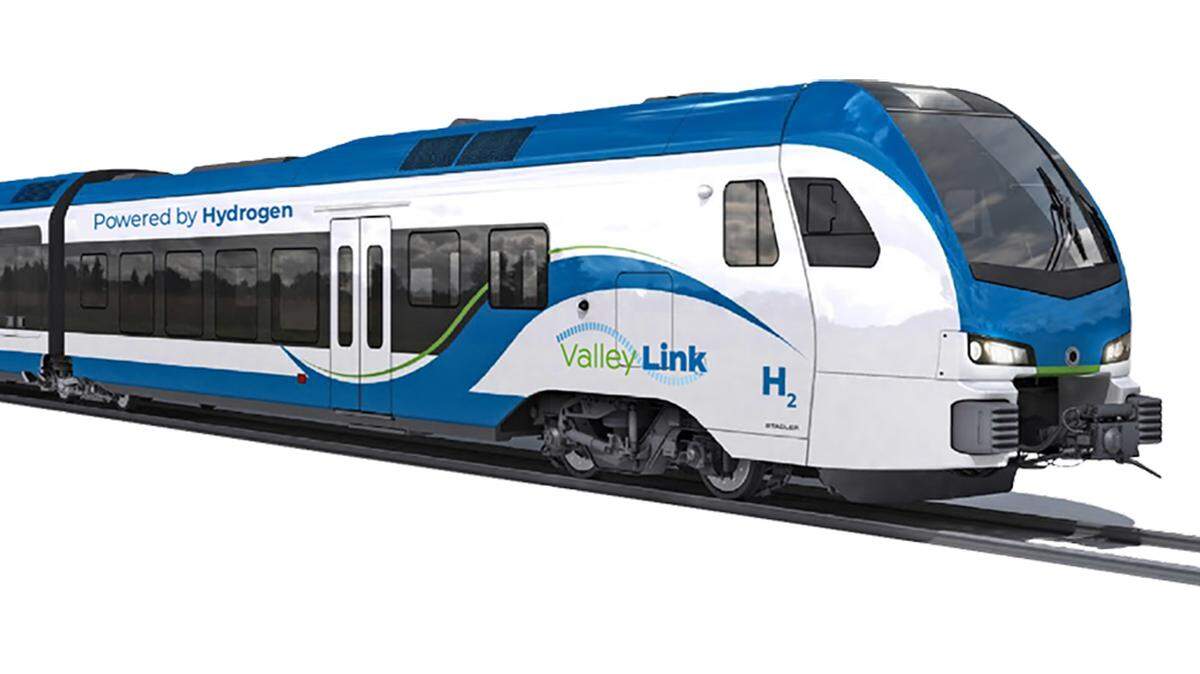
Hydrogen could fuel the frequent passenger trains proposed between Lathrop and the Dublin BART station.
The board for the Valley Link system voted Sept. 14 to accept a report that found the futuristic source feasible. It would be produced at a new plant in southwest Tracy, using solar panels to run the process.
Valley Link seeks to run its first trains by 2027 and to reach full service by 2030. Some of the hydrogen could be used as early as 2025 by a new Bay Area bus service that partners on the plant.
“I’m very, very happy with taking this very bold move forward,” said Veronica Vargas, mayor pro tem of Tracy and chair of the Valley Link board. It met over Zoom and directed the staff to seek funding for detailed design and construction, estimated at $67.1 million.
Valley Link could attract many of the 100,000-plus drivers who commute west from the Northern San Joaquin Valley, as well as leisure travelers. It would have far more trains than the Altamont Corridor Express, which runs four weekday round trips between Stockton and San Jose.
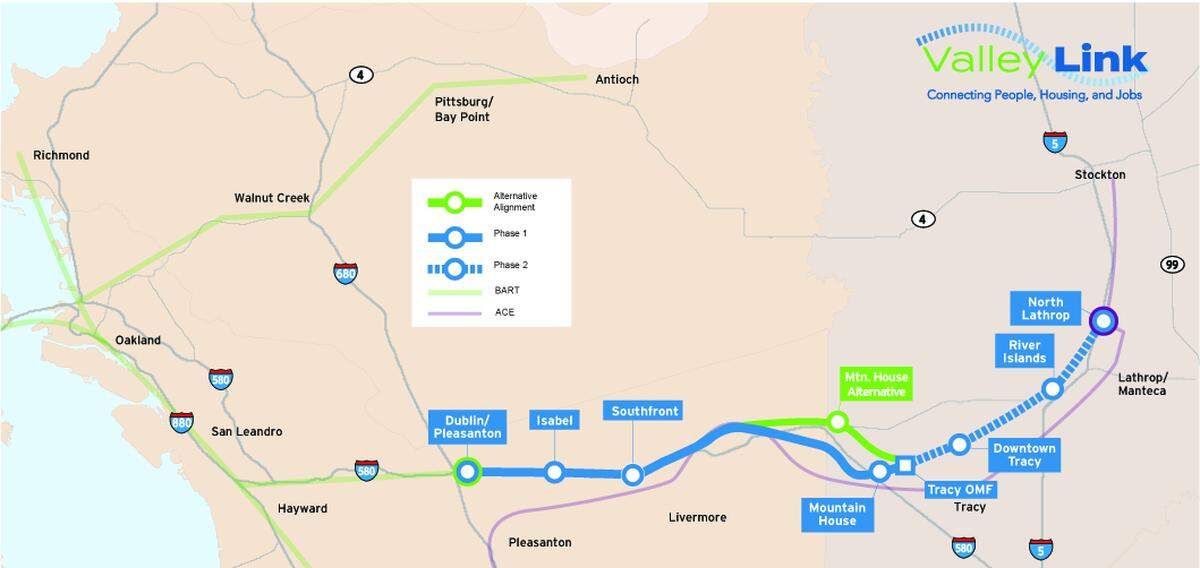
Valley Link has about $700 million in hand for the rail system as a whole. The first phase is expected to cost about $1.8 billion and serve four stations from Dublin to Mountain House. An additional $2 billion would add stations in downtown Tracy, the River Islands area of Lathrop, and north Lathrop.
This last station would be a transfer point for ACE, which is funded to expand into Stanislaus and Sacramento counties by 2024 and Merced by 2029.
The hydrogen study was done on a $88,500 contract with HTEC, a consultant specializing in this energy source, based in Vancouver, B.C.
Cleaner than diesel
Valley Link had planned to run on diesel, which contributes to climate change and air pollution. The hydrogen would be produced via electrolysis, where this element is split off from the oxygen in water. This process can be dirty, too, if it relies on fossil fuels, hence the preference for solar. The arrays would have batteries to store power.
The report said the water could come from Tracy’s domestic supply and would be only 0.8% of the city’s average demand.
The plant and solar array would be along West Schulte Road, where Valley Link already had planned to build a maintenance center for the trains.
The site is along Union Pacific Railroad tracks that the San Joaquin County portion of the passenger service would use. Valley Link would lay new tracks on an abandoned freight corridor through the Altamont Pass and in the Interstate 580 median from Livermore to Dublin.
The Valley Link board voted unanimously for the feasibility report. It is made up of county supervisors and city council members in San Joaquin, Alameda and Contra Costa counties. The document is part of the agenda packet.
‘A model of sustainability’
Several transit systems around the world have started fueling trains and buses with hydrogen. Dublin Mayor Melissa Hernandez noted that Valley Link would be the first in California to make its own fuel.
The system aims to eventually match the BART schedule, with trains as frequent as 12 minutes apart during peak times. Dublin is the end of BART’s southeast branch, which connects with lines running to San Jose, Antioch, Richmond and San Francisco International Airport.
The hydrogen plant’s first use could be express buses planned for the Interstate 680 corridor between Dublin BART and the Amtrak station in Martinez. The buses recently got a $14.5 million state grant toward the $63.5 million cost.
The hydrogen plant could get funding from new state and federal sources that promote this fuel. It also could make money by selling excess output to freight railroads and truckers.
The Valley Link board got support in an email from Tim Sbranti, director of strategic initiatives at the Innovation Tri-Valley Leadership Group.
“Valley Link is well‐positioned to be a model of sustainability capitalizing on innovative technology and recent public and private sector investments to operate on its self‐generated renewable energy,” Sbranti said.
This story was originally published September 22, 2022 at 6:00 AM.