Outside groups call on Stanislaus leaders to give Latinos representation on board
With less than two weeks remaining in a redistricting process, Stanislaus County leaders have much to sort out in redrawing supervisorial districts that are legally defensible.
Supervisors will consider six proposed maps at a special meeting Monday and have a final hearing slated for Dec. 13. The new districts setting the boundaries for electing supervisors through 2030 must be approved by Dec. 15 and will be in effect for the June primary.
Legal advisers recently told the county that a status quo redistricting map could be challenged in court for diluting the Latino vote. Groups commenting on the process argue that at least one, and probably two, districts need to be created to give Hispanics strong majorities for electing representatives to the board.
“It seems clear the Voting Rights Act applies in Stanislaus County and the supervisors need to make choices to avoid the possibility of legal action,” said Jonathan Mehta Stein, executive director of California Common Cause.
Common Cause, along with Communities for a New California Education Fund, submitted an analysis to the county last week citing evidence of “racially polarized voting” in Stanislaus County and the need for fair representation on the Board of Supervisors. The statement was also signed by the Jakarta Movement, which advocates for Punjabi Sikhs and other marginalized communities.
The group has submitted comments for redistricting efforts in other counties across the state.
According to the 2020 Census, the two largest voting populations in Stanislaus County are white residents and Latinos, representing 53 percent and 35 percent of eligible voters, respectively. For years, local Hispanic leaders have said they don’t have representation on the county Board of Supervisors.
An advisory redistricting commission and county project team have focused on redrawing the boundaries of Supervisor Channce Condit’s District 5 to provide at least one district with a strong Latino voting majority. The District 5 seat has represented Ceres, south Modesto, Patterson and Newman for many years.
A Map No. 3, recommended by the advisory commission and county project team, would expand Condit’s district to include Empire and Keyes, with a slight increase in the Latino voter base, and would keep the west side cities of Patterson and Newman in District 5.
Map No. 6 would result in the biggest increase in the potential Latino vote in District 5, from 53.9 percent to 55.58 percent, but would greatly change the election landscape. The map drawn by a community member would place Modesto’s airport neighborhood, the downtown, and south and west Modesto to Carpenter Road within District 5.
The communities in western Stanislaus County would no longer be represented by the District 5 seat.
Supervisor Terry Withrow’s District 3 including west Modesto and Salida would extend farther west to include Patterson, Westley and Grayson. Board Chairman Vito Chiesa’s District 2 would stretch from the Turlock area, in the east, to the western county line and include Newman and the business park site at the former Crows Landing air base.
Map No. 6 calls for Supervisor Buck Condit’s District 1 to absorb Hughson, cutting Chiesa out of his own district.
Chiesa, a Hughson resident, said Friday no public official wants their service ended by redistricting, but if the boundaries made the most sense, he would live with it.
Chiesa said that wrapping his district around Newman and Crows Landing would weaken representation for Turlock. Any plan to put a bigger part of Modesto in District 5 would give Modesto four representatives on the board, he added.
The redrawn District 5 would have 32,000 potential Latino voters (55.58 percent) and 17,500 white voters (30.42 percent). In the four other supervisorial districts, white residents would be the dominant voting population ranging from 49 percent to 62 percent, compared to Latinos ranging from 26.3 percent to 35.6 percent.
When asked about his reelection chances in a predominantly Latino district in 2024, Channce Condit said his mother is Mexican-American. “I am going to put District 5 first,” he said. “I hope I am a good choice no matter how the lines are drawn.”
Chiesa said his own preference is working with maps 1, 2 and 3, which are similar to maps 4 and 5. Maps No. 2 through 5 have Latino voting age populations of 53.47 percent to 54.4 percent in District 5.
Map No. 5 would also put Keyes and Empire in District 5 but would keep Patterson and Crows Landing in Condit’s district. Withrow’s new territory would take in Grayson and Westley. Chiesa’s district would hold onto Hughson and extend across the San Joaquin River to include Newman.
Are county voters ‘color blind’?
The Common Cause analysis concluded the county must comply with a section of the 1965 Voting Rights Act that prohibits setting boundaries that water down the voting power of “majority minority” groups.
The analysis cited evidence that white voters in Stanislaus County, whether intentionally or not, voted cohesively in previous elections against Latino candidates.
The study examined county voting behavior in statewide elections from 2014 to 2018, because data wasn’t available for measuring “racially polarized voting” in local elections. According to the study, racially polarized voting was revealed in six of the seven statewide contests, as Latino candidates received strong support from Hispanic voters and white voters cast their ballots for candidates within their racial category.
In the 2018 Secretary of State contest between Democratic incumbent Alex Padilla and Republican Mark Meuser, 95 percent of Latinos in Stanislaus County supported Padilla compared to only 24 percent of white voters, who overwhelmingly supported Meuser, according to the study.
The county’s voter registration breakdown was 37 percent Democrats and 34 percent Republicans.
In the lieutenant governor’s race between two Democrats that year, 65 percent of Latinos voted for former state senator Ed Hernandez compared to 24 percent of whites. More than 75 percent of whites in Stanislaus County supported Eleni Kounalakis, winner of the statewide election.
Two Latino candidates who were winners in the statewide balloting in 2018, Xavier Becerra for attorney general, and Ricardo Lara for insurance commissioner, fared poorly with white voters in Stanislaus County, according to the study.
Becerra and Lara both received 95 percent of the Latino vote here, but only 24 percent of the white voters supported Becerra. Republican Steven Bailey, who was soundly defeated in the statewide race for attorney general, was supported by 76 percent of whites locally, the study found.
Fewer white voters (15 percent) supported Lara, who prevailed in a closer race with independent Steve Poizner. The Poizner campaign was supported by 85 percent of white voters locally.
The 2018 U.S. Senate election bucked the trend in Stanislaus County. White voters split their support almost 50-50 between longtime Sen. Dianne Feinstein and former Assemblyman Kevin de Leon. About 60 percent of Latinos were for de Leon and 40 percent supported Feinstein.
The methodology of the study
The study released by Common Cause relied on a statistical method of estimating the racial breakdown of voting.
Christian Grose, a political science professor at University of Southern California, conducted the study by using the California Statewide Database and looking at precinct-level election results paired with race and ethnicity data. The methodology called “ecological inference” has been used in voting rights court cases over the years.
While the accuracy of the methodology has been debated over time, today “it’s well accepted and is not controversial,” Stein said.
Grose wrote the book “Congress in Black and White”, exploring the role of race and ethnicity in the redistricting activity conducted every 10 years.
Stanislaus County’s redistricting process was delayed this year by slow reporting of Census data. Because of the June primary, county leaders now face a Dec. 15 deadline for approving a final map for the five districts that meets the legal criteria.
Damian Martinez, senior management consultant for the county, said the advisory commission and county project team were able to work through the process with transparency and community input. The team held six community workshops, a dozen map-drawing meetings and five map-drawing tutorial sessions, including two for community members.
“We have done an extraordinary amount of work in this process,” Martinez said.
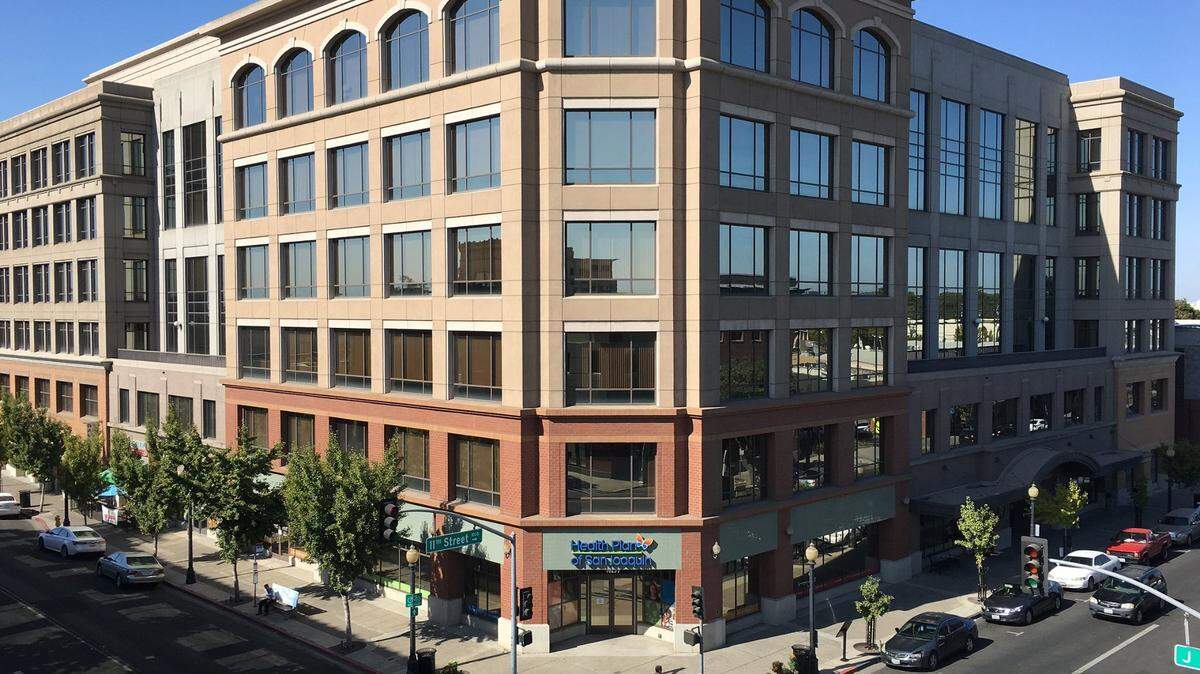
The Board of Supervisors’ special meeting for considering the district maps will begin at 9 a.m. Monday in the basement chambers of Tenth Street Place, at 1010 10th St., Modesto.