More Stanislaus County residents get vaccinated against COVID-19. But not many kids.
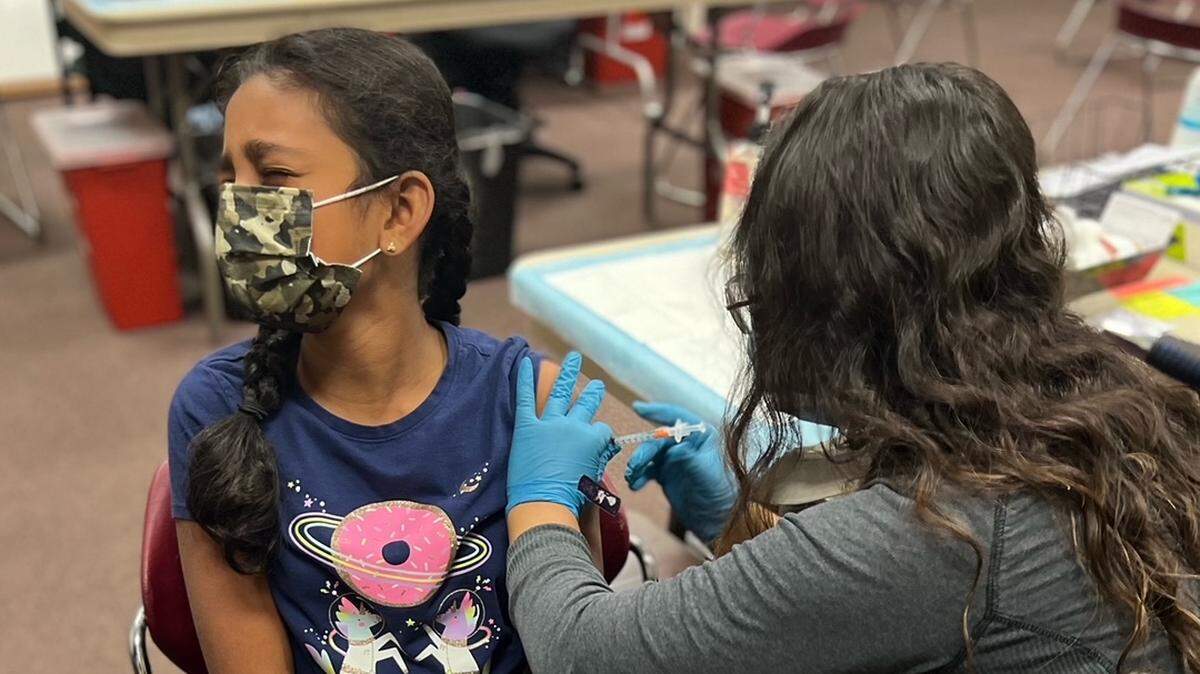
Stanislaus County health officials reported some progress in getting residents vaccinated against COVID-19.
About 47.5 percent of teenagers 16 to 17 years old are now fully vaccinated and 40.6 percent of those 12 to 15 years old are immunized, according to a staff presentation to county supervisors Tuesday evening.
Less than 1 percent of children ages 5 to 11 in Stanislaus County have received the lower-dose Pfizer shots since they became eligible through an FDA emergency use authorization Oct. 29. Surveys have suggested parents would take a wait-and-see approach with the COVID vaccine for children.
The full vaccination rate has reached 53 percent among younger adults in the 18 to 49 age group, while 68 percent of adults age 50 to 64 and 72 percent of seniors 65 and older are immunized.
When the newly eligible children are included, about 52 percent of the county’s eligible population is fully vaccinated against the coronavirus.
Mary Ann Lilly, managing director of the county Health Services Agency, said public health efforts will focus more attention on COVID-19 prevention for adults older than 65, who are most vulnerable to hospitalization and death.
The older residents have the highest immunization rate and some of them are partly vaccinated, but approximately 15 percent still have not received any vaccine, Lilly said.
The vaccines are credited with preventing infection and greatly reducing the risk of serious COVID-19 illness.
Chelsey Donohoo, an epidemiologist for the county, said just 1.7 percent of fully vaccinated county residents have come down with a breakthrough case of COVID-19. The rest (98.3 percent) are not known to have contracted the illness.
On Monday, county public health rescinded a Sept. 2 order that required people to wear masks in indoor public settings, regardless of their vaccination status. But the order eliminating the mask rule was not intended as a message for people to let their guard down, the county said.
The California Department of Public Health still requires people who are not fully vaccinated to wear a mask in businesses and other indoor public settings.
Citing guidance from the Centers for Disease Control and Prevention, county public health is recommending that fully vaccinated people continue to wear face coverings while shopping and visiting indoor public places, until local cases fall below 7 per 100,000.
The county mask order was set to expire 24 hours after the seven-day average case rate fell below 20 per 100,000 population. The rate was 19.6 per 100,000 on Tuesday.
County health officials said in a news release Monday they will keep watch on the COVID transmission rate and hospital admissions and may reinstate a face covering order as circumstances dictate.
The county faces the challenge of avoiding another COVID-19 surge during the upcoming holidays, as shoppers descend on retail stores and families hold traditional gatherings.
Wider access for treatment
The county Health Services Agency has worked to increase access to treatment alternatives for people who catch the unpredictable illness that has resulted in 1,398 deaths in Stanislaus County.
To broaden access to monoclonal antibody treatment, the county has worked with Elite Urgent Care. A county health clinic is providing some space to Elite Urgent Care in the “black glass” building at 1524 McHenry Ave. The county clinic and Elite both operate in the building.
The county advocated for the state to augment staffing so that more patients can receive the intravenous infusion that treats mild to moderate COVID-19 in the early stage.
Lilly suggested that a patient who may be eligible ask their health care provider if the treatment is available. If it is not available through their doctor, then providers like Elite, Patterson Family Pharmacy or other potential sites identified by the National Infusion Center Association locator are options.
The NICA locator identifies where monoclonal treatment supplies have been shipped. The availability of the treatment at those sites needs to be verified. The infusion treatment should be received within 10 days of the start of symptoms.
According to county public health, the eligibility includes those who are high risk for progressing to severe illness, exposure to a person infected with COVID-19 or those who risk exposure in a congregate living facility.
Health insurance often has coverage for the treatment. Lilly said there is federal reimbursement program for patients who are not insured.
County staff said treatment options are fast developing in the COVID-19 environment. The FDA is expected to give a first review Nov. 30 for a pill for treating COVID disease that’s being developed by Merck and a partner company. Pfizer is also seeking authorization for a COVID treatment in pill form.
Taking a pill would be easier than an IV infusion of monoclonal antibodies. But many questions remain about the effectiveness and when the pills might be widely available, county staff said.
This story was originally published November 17, 2021 at 7:02 AM.