Stanislaus County begins COVID-19 vaccinations for children in the 5-to-11 age group
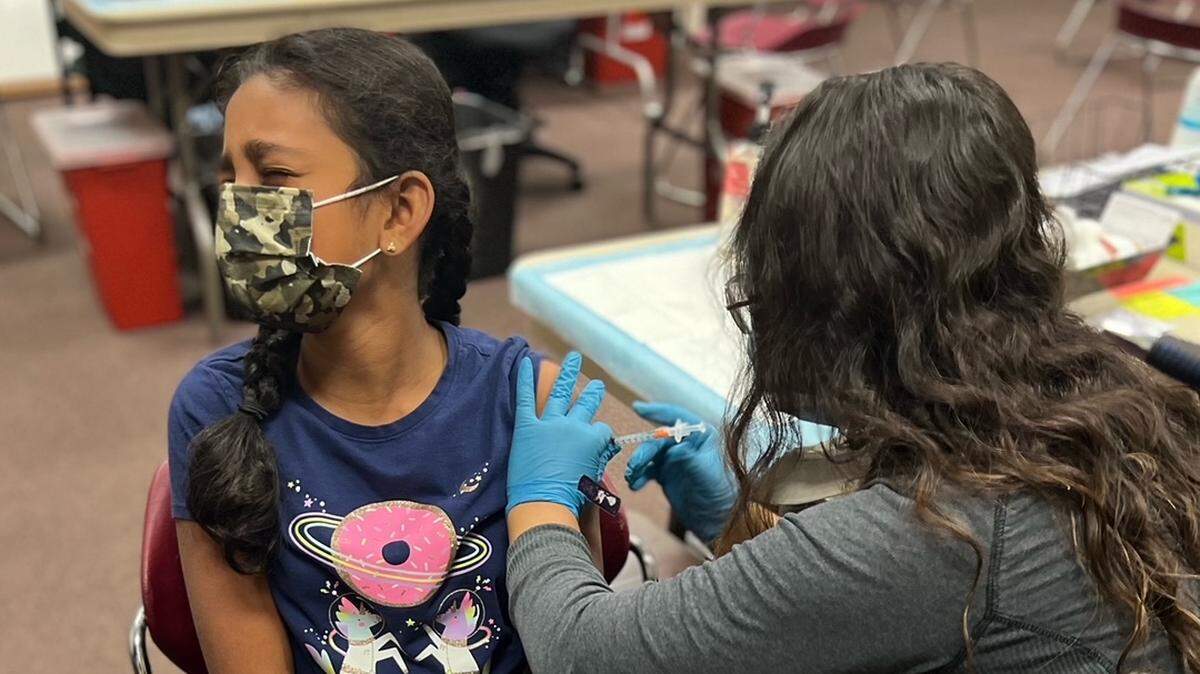
Stanislaus County public health Thursday began giving the coronavirus vaccine to younger children at its COVID-19 vaccine clinics.
The county received a first shipment of the Pfizer-BioNTech vaccine for children ages 5 to 11 after the shot received authorization for emergency use from the Food and Drug Administration.
The vaccine is recommended by the FDA, Centers for Disease Control and Prevention and the Western States Scientific Safety Review group that advises California on use of COVID vaccines.
“While we have seen less severe illness in younger children, COVID-19 has become one of the top 10 causes of pediatric death nationwide,” Dr. Julie Vaishampayan, county public health officer, said in a news release.
Vaishampayan said the immunizations for younger children and adolescents are “an important step in protecting the health and well being of the children in our community.”
The FDA relied on a safety study including 3,100 children that recorded no serious side effects. The county news release said more than 11 million adolescents between 12 and 17 years old have safely received the vaccine.
The county encouraged parents to talk with their child’s pediatrician if they have questions about the vaccination. Health care providers and pharmacies are expected to administer the vaccine to kids in addition to the county’s public vaccine clinics.
The COVID vaccine for younger children has sparked a mixed reaction from parents in Stanislaus County. The county Board of Supervisors regularly hears protests from vocal residents who oppose the state mandate to require the vaccine for schoolchildren in classrooms after it receives full FDA approval.
A Gallup poll in late October showed that 55% of parents in the nation plan for their kids under 12 to receive the vaccination against COVID-19, while 45% answered “no” to that question.
Mary Young of Modesto said she’s concerned about misinformation that’s spread about the safety of COVID vaccine and a casual attitude about other contagious disease measures.
“I gave up trying to convince people that our only way out of this pandemic is for everyone to get the vaccine,” Young said by email. “One (of my children) has chronic kidney disease and has not been in school for the last year due to COVID. It’s terrible that he can’t hang out with his friends because none of them are vaccinated.”
Kaiser Permanente said Wednesday it soon will begin offering the Pfizer shots to kids 5 to 11. The immunization is two shots administered three weeks apart. The kids dose is 10 micrograms, or a third of the dose given to people age 12 and older.
Dr. Nicola Klein, a research scientist and mother who leads the Kaiser Permanente Vaccine Study Center, said scientists have more experience with the COVID-19 vaccine than they have had with any other vaccine given to children for the first time.
“It’s shown to be very safe in these children,” Klein said during a Zoom press conference Wednesday. “The thing to think about with these vaccines is that we have given hundreds of millions of doses of this vaccine amongst populations globally.”
As part of an ambitious plan to offer coronavirus vaccinations to California’s 3.5 million children in that age group, the state intends to offer the vaccines at locations including school clinics, pharmacies, pediatrician offices and county sites, many of which will launch in the coming days. Health officials said they are expecting 1.2 million initial doses of the pediatric vaccine.
As parents make their decisions about COVID-19 and their children, many may want to know more about the vaccine authorization for children ages 5 to 11.
Why is the vaccine recommended for the younger age group?
COVID-19 has infected 1.8 million children age 5 to 11 in the United States, representing about 40% of the cases in young people under 18. Almost 8,300 of those younger children have been hospitalized since mid-September. Of the 700 deaths in children and adolescents, 146 were children 5 to 11.
More than 5,200 of COVID-infected children this fall suffered from multisystem inflammatory syndrome, half of them between 5 and 13 years old.
Expert panels of the FDA and Centers and Disease Control and Prevention favored the emergency use authorization of the Pfizer-BioNTech vaccine for younger children to prevent COVID infections, cases of MIS-C, hospitalizations, intensive care admissions and deaths.
How effective and safe is the vaccine?
A study of 4,700 children in the U.S., Finland, Poland and Spain showed the Pfizer vaccine built the same immunity seen in vaccinated people age 16 through 25. The study found it’s 90.7% effective in preventing COVID infections in younger children.
A safety study including 3,100 children revealed the most common side effects were injection site pain, fatigue, headache and joint pain, most often after the second dose. The effects went away in 24 to 48 hours. No serious side effects were reported.
What is the dosage for younger kids?
The vaccination is a two-dose series of the Pfizer shots, three weeks apart. But the dose for children in the 5-to-11 age group is 10 micrograms, which is a third of the dose given to people age 12 and older.
Are there concerns about heart problems?
A heart inflammation called myocarditis has been at the center of many parents’ and doctors’ concerns surrounding COVID-19 vaccination in children. Still, the condition is considered a rare consequence of the shots.
The FDA panel of medical experts heard an analysis of risks for myocarditis related to mRNA vaccines, which are higher in male teenagers and adults up to 29 years old. None of the children participating in the safety study had myocarditis within three months of the second dose but the study was not large enough to measure the risk, the FDA said.
The expert panel considered a model that estimated from 22 to 106 cases of myocarditis may result from vaccinating 1 million children ages 5 to 11, but that number of vaccinations would prevent 58,000 COVID infections and 240 hospitalizations, NPR reported.
The CDC has confirmed 877 post-vaccine cases of myocarditis in people younger than 30, out of 86 million doses administered. Of the 829 who were hospitalized, 789 were discharged and 77% are known to have recovered from symptoms.
COVID-19 may cause a more serious heart inflammation.
Where is the vaccine available?
Private health care providers are expected to offer the vaccine to their patients, as well as community health centers, drugstores and the county’s public vaccine clinics.
County public health is holding vaccine clinics Thursday from 1 to 4 p.m. at the Gene Bianchi Community Center, 110 S. Second St. in Oakdale, and from 3 to 6 p.m. at Cesar Chavez Junior High, 2701 Eastgate Blvd. in Ceres.
The free county clinics recommend appointments at myturn.ca.gov for the Pfizer vaccine for children age 5 to 11. The clinics offer vaccines by appointment and limited walk-ins are available.
Friday, county vaccine clinics are slated for the Modesto High School auditorium, at 18 H St., from 3 to 6 p.m. and the Denair Middle School Coyote Center, 3701 Lester Road, from 2 to 5 p.m.
Golden Valley Health Centers said it plans to start giving the pediatric vaccine to kids 5 to 11 years old Monday at select sites in Stanislaus and Merced counties. Supply is limited. Parents may call 866-682-4842 to schedule an appointment.
The Stanislaus County Health Services Agency has more information about COVID vaccines and public clinics at www.schsa.org. Appointments for coronavirus vaccinations for children, adolescents and adults can be made at myturn.ca.gov.
The Sacramento Bee and the national McClatchy news desk contributed to this report.
This story was originally published November 4, 2021 at 2:24 PM.