COVID emergency exposes the need for more public health funding in Stanislaus County
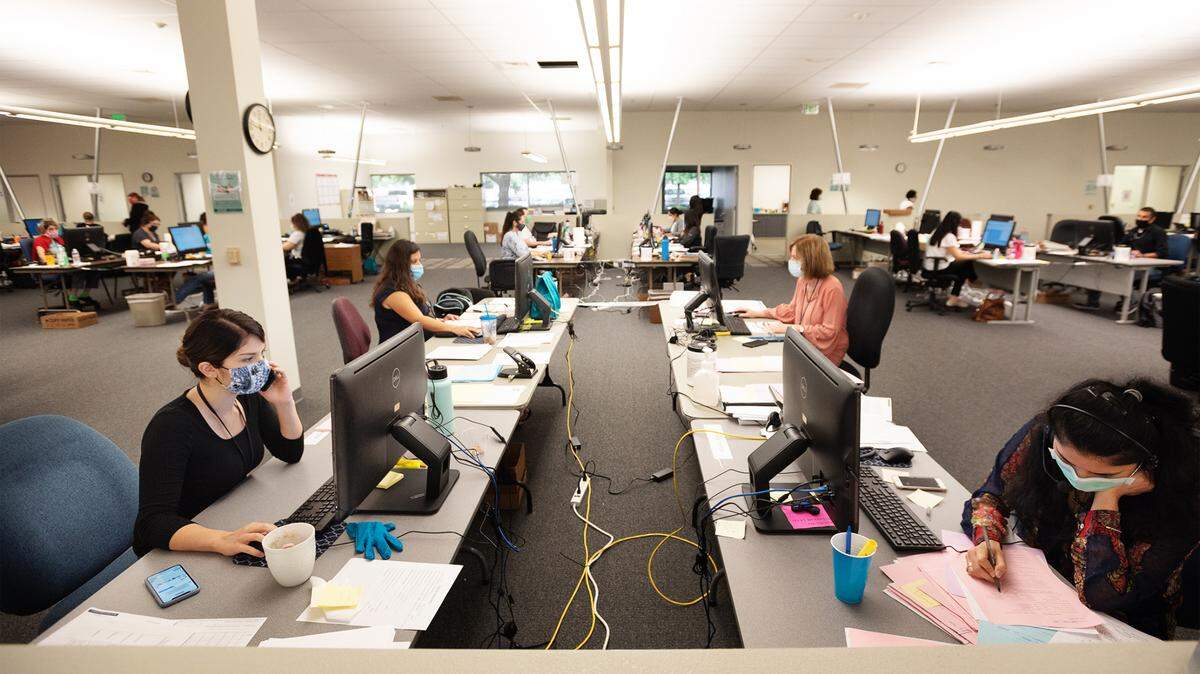
Health advocates concerned about the state of underfunded public health systems see the coronavirus pandemic as their best chance of turning things around.
“We are hoping that our state legislators will recognize the urgency,” said Dr. Lynn Silver of the nonprofit Public Health Institute. “If they don’t recognize it now, I don’t know when they will.”
Public health agencies have been understaffed and underfunded in the past decade or longer, a problem highlighted when coronavirus spread and infected 3.7 million people in California, resulting in 61,500 deaths.
Public health agencies work on tracking and controlling contagious disease, investigate health hazards, promote health education and develop policies to improve community health.
Silver said that over the decades, money has primarily gone to health care, to care for the sick and pay for treatment, while far less has been devoted to prevention and safeguarding the public against major health emergencies.
With the pandemic slowing down, there’s a push for funding to expand public health systems across the nation, in California and counties like Stanislaus, so there is better preparation for the next crisis. For the general public, it could mean fewer lockdowns next time and less sickness and death.
“Some countries like Taiwan could respond to COVID because they had strong public health systems ready to go,” Silver said.
Stanislaus County officials said planning for an expanded public health division and infrastructure will happen in the coming months as the COVID pandemic fades.
The county needs to continue asking the state and federal government for sustainable funding for local public health services and resources, they stressed.
Expansion not in state budget
Gov. Gavin Newsom’s revised state budget proposal this month did not include funds for expanding public health systems. The county is still hoping long-term funding for public health services will materialize, however.
The county drew on short-term funding sources to add more than 100 employees for the battle against COVID-19. Without additional funding in the next two or three years, the county will be faced with downsizing staff.
“We do hear officials at the state and federal level speak to their commitments to support a strong public health system in the future, so we remain optimistic those sentiments will materialize into budget actions,” county spokesperson Amy Carroll said in an email.
A tweet from the County Health Executives Association of California was more to the point: “Astoundingly, the May revise fails to recognize that lives were lost during the COVID-19 pandemic due to long standing neglect of our public health workforce & infrastructure.”
Michelle Gibbons, executive director of the association representing county and city health agency directors, said the state should not wait any longer to reinvest in public health. “The consequences are far too dire,” she said. “We can never predict what the next health emergency will be, but we need a strong workforce to prevent it.”
Gibbons said the erosion of public health funding results in inadequate staffing, ensuring a weak response to major threats like COVID-19. At the same time, sexually transmitted infections are rising and contagious diseases like tuberculosis are going undetected.
Some jurisdictions are able to monitor only for congenital syphilis, while common STDs such as chlamydia and gonorrhea spread in the community, she said.
Gibbons said the typical cycle for public health is years of meager funding until a crisis, followed by panic spending and then the extra money runs out.
The CHEAC is supporting legislation calling for $200 million annually for rebuilding the public health workforce and infrastructure. Another bill by Assemblyman Freddie Rodriguez, D-Pomona, would spend $3.45 million to study the long-term needs of public health agencies.
Silver said there is bipartisan support for Assembly Bill 1038 to establish a $180 million California Health Equity Fund to support projects that mitigate health and social impacts in low-income communities.
When asked about demands for a larger investment in public health, Dr. Mark Ghaly, the state’s health and human services secretary, said at a briefing Friday the state has an opportunity of not just putting money in the same public health buckets but can insist on “doing things in a forward-looking way.”
Ghaly said he was looking forward to holding discussions with partners across the state to make sure California is a leader in dealing with the next global crisis.
Given its wealth and medical expertise, the United States should have been able to respond to COVID-19, Silver said, but the nation was vulnerable due to poorly funded health departments and communities with high rates of chronic disease.
In California, county public health agencies were overwhelmed by the flood of COVID-19 cases. In the middle of a brutal surge in July 2020, Merced County wasn’t notifying contacts of people infected, to keep the virus from spreading, and seven counties including San Joaquin had too many cases to do proper contact tracing, according to CalMatters.
Delays in getting test results stymied contact tracing for a time in Stanislaus County.
Earlier this year, many groups including the American Heart Association and American Cancer Society told Congress a stronger investment is essential for disease surveillance, epidemiology, testing labs, preparedness, policy development, communications and community partnerships.
Gibbons said California needs to explore ways to modernize infectious disease data collection and recording systems and information technology.
Local jurisdictions need more staff for testing, public health labs, vaccinations and monitoring of disease trends, she added.
Public health spending and staffing decline
A national workforce survey in 2019 found that state and local health departments lost about 25 percent of their employees after the 2008 recession.
In a joint project, Kaiser Health News and the Associated Press reported that spending for local health departments declined by 18 percent in the past decade and almost 40,000 public health jobs at the state and local levels evaporated after 2008.
The Stanislaus County Health Services Agency was not immune to the cuts in funding, losing about 40 positions in the budget from 2018-19 to 2019-20.
The American Rescue Plan, a massive stimulus package signed by President Joe Biden in March, has $100 billion for public health, but much of the funding is reportedly for coronavirus testing, contact tracing, identifying variants and other pandemic-related expenses extending into next year.
The White House said this month that $7.4 billion from the federal plan is for hiring state and local public health staff.
Jody Hayes, county chief executive officer, said the county has not designated funds for public health in the $107 million allocation from the federal rescue plan, because short-term funding sources are covering the county’s response to the coronavirus.
Hayes said the county will divert money from the federal pot to support public health if needed. The federal money must be used by Dec. 31, 2024.
Mary Ann Lilly, the county’s health services director, said she doesn’t see a need for additional staffing to deal with the current pandemic. But the Health Services Agency will plan for building an expanded public health team when it starts emerging from the pandemic, she said.
Lilly said public health funding oftentimes is strictly designated for specific programs. What’s needed to support a stronger system for preparing for health emergencies is flexible funding that’s not restricted to specific purposes, Lilly said.
Stanislaus County’s public health division had about 170 employees before the coronavirus emergency. After the virus was detected here in March 2020, the county agency rushed to assemble a larger contact tracing unit. The county’s vaccination clinics this year have included public health nurses who inject the vaccines, as well as part-time emergency medical technicians who were brought on and trained as vaccinators.
To build a more robust public health division, Lilly said more staffing, data and information systems are among the needs. The county can be better prepared for the next emergency if staff members are building relationships with health care providers and other groups in the community, she said.
“We need to be able to produce good data,” Lilly said. “We need staff working with our stakeholders in the community on an ongoing basis.”
The director said there was room for better preparedness for nursing homes and assisted living centers last year during the early stages of the pandemic.
Hayes assured the county will make public health planning a priority. “What would it take so we are best prepared (for the next crisis) and what should the future public health department look like,” he said.
This story was originally published May 21, 2021 at 9:30 AM.