Modesto hospital chaplain supports COVID patients, staff in their toughest hours
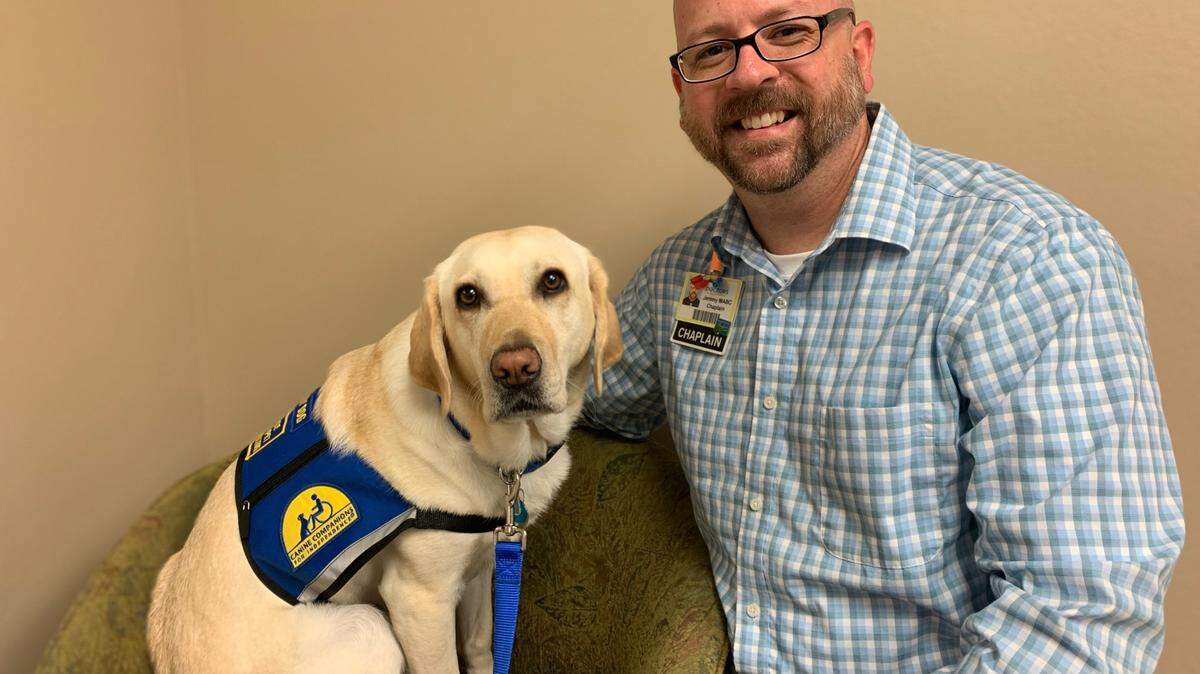
In the hectic environs of the hospital during the coronavirus pandemic, Jeremy Brown is able to slow down and help people get some level of spiritual support under the circumstances.
“In general, we are not designed to be alone,” said Brown, the in-house chaplain at Doctors Medical Center. “We are certainly not designed to suffer alone. People are hard-wired to be relational. ... The simple fact is suffering can be very isolating and COVID-19 has accentuated that.”
Brown has been at Doctors for three and a half years. But the past year has been like no other.
He’s had to make adjustments to lend what support he can to COVID-19 patients who are dying alone and provide encouragement to staff members who keep coming to work during the crisis.
As the Modesto hospital took in large numbers of COVID patients last month, Brown could not forget the unfortunate patients felled by medical emergencies such as stroke or the thrilled parents who had brought a baby into the world.
“I have had to make some adjustments because of this pandemic, but I’m still dedicated to be present with people in these really difficult times in their lives,” said Brown, who’s known simply as Jeremy in the hospital.
Coronavirus disrupted the lives of just about everyone in Stanislaus County and also changed the environment in the county’s five hospitals, which held as many as 363 coronavirus patients during the cold days of December.
Family, friends and clergy are not allowed to visit COVID-19 patients in their hospital rooms. Even the nurse or doctor who comes into the room of a critically ill patient is covered head-to-toe in protective gear.
For the chaplain, who himself wears a mask and even a face shield in certain areas of the hospital, bringing spiritual care has required some creativity in recent months.
One of his roles is assisting clergy to minister to members of their faith in the hospital, whether they are Protestant Christian, Jewish or traditional Sikh.
For the Catholic faith, a priest can come to the hospital to offer last rites for a COVID-19 patient but can’t go into the patient’s room. Brown may ask a respiratory therapist to hold a phone to the patient’s ear as the priest administers the rites.
When it comes to family members who are sick with worry for a loved one, Brown might stand outside the patient’s room while praying with the family over the phone. It may create a sense of closeness, but he understands it’s no substitute for the family being there.
“We are trying to get creative with all of the different faiths,” he said.
Counseling for hospital staff
Brown is also a source of counseling and support for hospital staff and employees in these difficult times.
When the hospital was busy during a coronavirus surge, Brown took time to say a quick prayer outside of every patient room at Doctors and to interact with nursing staff on different floors. He found staff were receptive to sharing a moment of prayer.
He said the pandemic has raised the level of anxiety, concern and stress over the functions of the hospital, whether it’s admitting COVID patients or providing trauma care for a car crash victim.
“Many people who work in our hospital do have some sort of faith,” Brown said. “My job is meeting people from wide backgrounds and different faiths. I don’t know that I have seen employees on the front line get more religious, but I have seen faith come to the forefront more during this time.”
Brown is an Evangelical Christian but said the job isn’t about wearing personal beliefs on his sleeve.
He said his heroes are staff members on the COVID floors, who keep giving despite the risks and emotions of caring for COVID patients, many of whom don’t respond to treatment.
Nurses and doctors are in health care to help people to heal, return to their families and resume their lives, Brown pointed out. One of his practices is asking a care team to gather for a moment of silence if a patient dies. He calls it “the pause” and it serves as a reminder of the compassion and respect they harbor for the family.
As for memorable moments during the fight against COVID, the chaplain has been impressed by the compassion of staff members toward patients.
One time a family asked him to pray for a patient who was dying. Upon arriving at the room, he watched through the window a nurse holding the patient’s hand and softly reassuring him that he was not alone.
Brown later asked the nurse, “’What made you do that?’ She said, ‘If that was my family member that is what I would have done.’ It’s not anything that is huge or grand. Just a simple act of kindness.”
The chaplain on a daily basis sees the life cycle on both ends of the spectrum. As the pandemic has raged across Modesto, births at Doctors Medical Center have continued on a regular pace. It is not uncommon for Brown to start the day giving a blessing of thanksgiving for a couple celebrating a birth.
“I can’t say enough about the importance of the service Jeremy provides at Doctors Medical Center, especially during these difficult times,” said Cheryl Harless, chief nursing officer at Doctors Medical Center. “He represents a calm, safe space for our staff and provides incredible compassion for our patients and families. We are truly lucky to have him.”
Employees like his canine companion
Brown has a valuable companion in a service dog named Bria. A cross between a yellow lab and Golden Retriever, Bria was trained at the Canine Companions for Independence center in Santa Rosa and is known for her gentle and intuitive nature.
Brown said the canine is always a welcome sight for employees taking a break from the grind. The canine also has a calming effect on families suffering a terrible loss.
“There are no words to describe how valuable she has been in those situations when we spend time with people as they experience the worst days of their lives,” Brown said.
The chaplain notes that some areas of the hospital are off limits for the Golden Retriever, but he makes sure to take her on visits to different departments and units, where he listens to employees from nurses to housekeepers. Bria is good therapy for stressed-out hospital workers.
Brown is the facility dog team handler for Bria under an agreement with the Santa Rosa center.
He follows cleaning protocols to make sure the dog isn’t bringing germs to the hospital or taking anything home that could infect his family. Bria lives with Brown, his wife and their three children.
The decontamination process includes wiping the dog down with a cleanser, trimming her nails and cleaning out its ears thoroughly.
“People are surprised when I say I brush her teeth at night,” Brown said.
Brown, 40, worked for law enforcement agencies before finding a career in ministry. He holds a master’s degree in biblical counseling and previously was a bereavement specialist for Community Hospice.
His position at Doctors gives him an inside view of the pandemic that may differ from media portrayals or public assumptions. Brown said his parents have expressed concern he may contract COVID-19, while friends and family are weary of COVID restrictions.
“I have friends who are more concerned about when their kids can go back to school and play sports,” the chaplain said. “In the hospital you see the realities.”
This story was originally published January 8, 2021 at 11:24 AM.