
Hoodwinked: Sherri Papini reappears after missing for 22 days with an unbelievable story
READ MORE
Hoodwinked: Sherri Papini kidnapping hoax series
Click the arrow below for more coverage on Sherri Papini and the kidnapping hoax that garnered nationwide attention.
Expand All
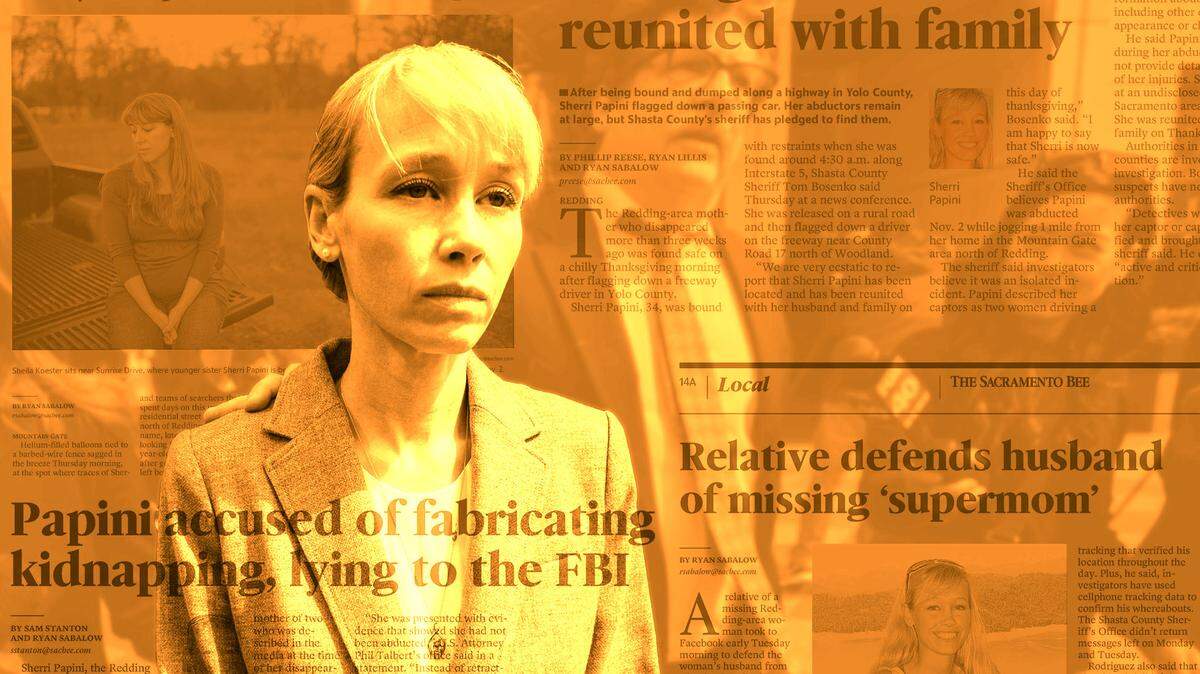
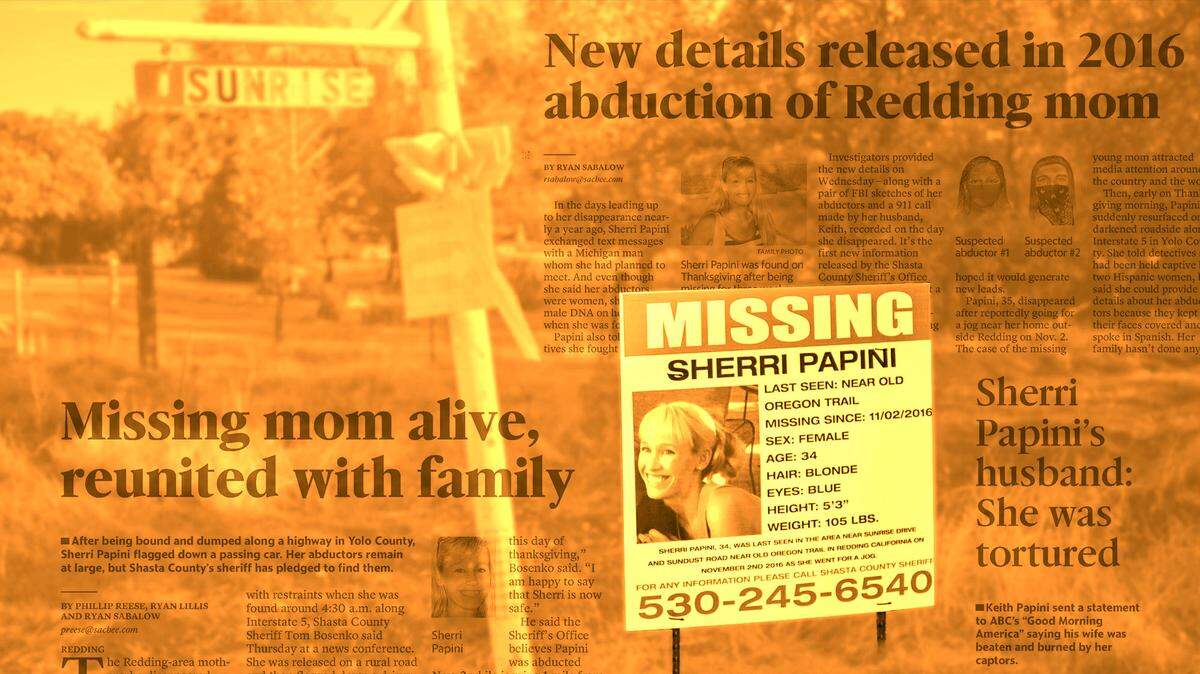
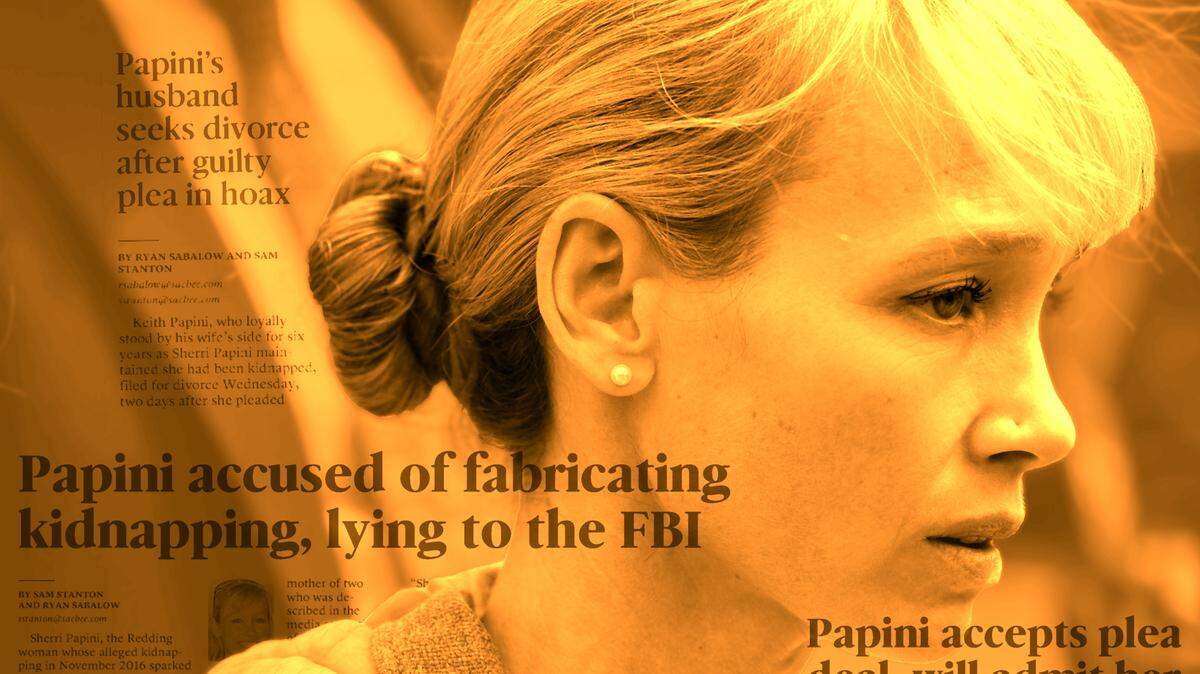
This is the second of three stories that chronicle Sherri Papini’s kidnapping hoax. If you missed the first story, click here to read part one. Or you can skip ahead and click here to read part three.
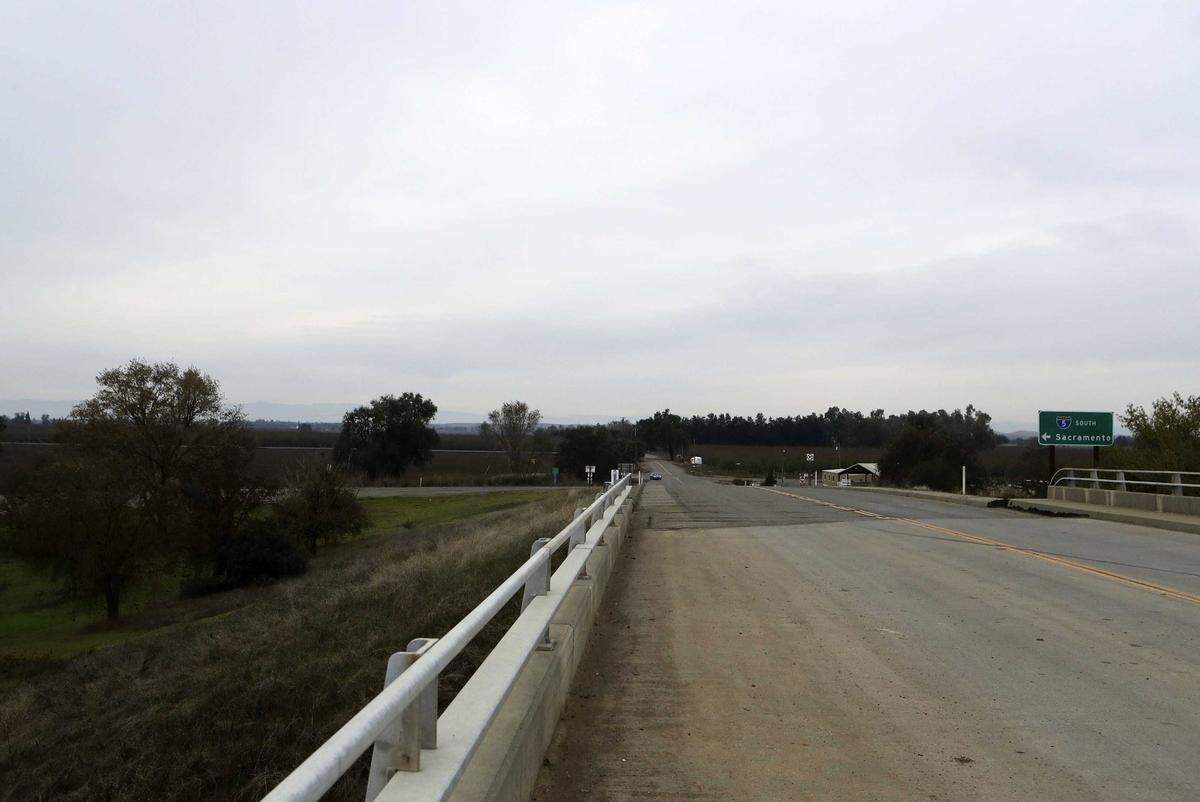
Alison Sutton was driving northbound on Interstate 5 just before 4:40 a.m. She was with her daughter, Michelle, on their way from Southern California to visit relatives for Thanksgiving on the North Coast.
Bleary-eyed and tired after driving non-stop along the flatlands of California’s Central Valley, Sutton was jolted by the sight of a woman practically standing in traffic.
“She had a piece of fabric. I don’t know what it was,” Sutton said. “But she had this piece of fabric that she was waving as she tried to flag somebody down. She had kind of this wild-eyed, frantic, desperate look in her eyes. It’s the look in her eyes that, like, stuck with me.”
Sutton pulled over and called 911. A truck driver who also spotted Sherri Papini would pull over and wait with her until a California Highway Patrol Officer arrived. The officer immediately radioed for help from Yolo County deputies. The officer urged them to go Code 3 — police dispatch lingo for turning on lights and sirens and speeding to a location as quickly as possible.
Dispatcher: “CHP is on scene and advised that she is chained to something.”
Deputy: “Copy.”
Dispatcher: “CHP is advising she is heavily battered, and it is confirmed kidnapping.”
Deputy: “I just recognized the name. I’m going to give you a call.”
Dispatcher: “CHP was advising they’re going to need CSI.”
Papini’s long, blonde hair was cut short. She had a swollen nose. She’d lost nearly 10 pounds, a substantial amount for a woman who barely tipped the scales at 100 when she’d gone missing.
A series of medical exams at a Woodland hospital found no evidence of sexual assault, though there were plenty of other signs of trauma.
“She had bruises on her face, rashes on her left arm and left upper inner thigh as well as other parts of her body, ligature marks on her wrists and ankles, burns on her left forearm, and bruising on her pelvis and the fronts of both legs,” the FBI would later write in their criminal complaint.
She had been branded on her right shoulder, though the FBI wrote it wasn’t clear what the brand said. Agents wrote the markings were “indistinguishable.” Papini would later tell a detective she thought the markings appeared to be from the biblical book of Exodus.
“It’s a really confusing Bible passage,” she told them. “It’s like a really weird part of the Bible. It doesn’t make any sense.”
At first, though, Papini refused to talk to detectives, so they gave an audio recorder to her husband who asked her questions in the hospital and during an ambulance ride to another medical center.
Papini described how, while out jogging, two women abducted her at gunpoint and forced her into a dark-colored SUV. She saw that they had masks on before they wrapped something around her head to block her vision.
She said she was groggy during the drive. She said she might have been hit with a stun gun or drugged.
“I don’t remember a lot,” she told her husband. “I’m missing time. The car smelled really bad. Like sewage. She stuck me with something. I kept falling asleep.”
In that interview and in others that would follow with detectives, she described her abductors playing mariachi music while she was in the SUV.
When they arrived at their destination, she said they kept her chained in a small room. She was only unchained when they let her out to bathe. She wore either an adult diaper or used a bucket with kitty litter for a toilet. Her diet consisted of stale bread, beans, tortillas, leftover meat and apples. She said she was beaten when she looked at her captors.
Papini was given the opportunity to take two showers during her 22-day captivity. She described taking the first shower at gunpoint under the supervision of both women. She tried to engage the women.
“Where am I? Why am I here?” Papini asked.
Eventually, Papini described one of her captors saying, “We sell you,” and the other one adding, “Your buyer is a cop.”
When the younger woman got distracted by a comment from the older woman and lowered her gun, Papini said she slammed the younger woman’s head into a toilet. The women grabbed Papini and dragged her back into the bedroom by her hair. They forced her to drink a bitter substance and locked the door.
Papini also claimed to have fought back at other times.
“I tried to get out the first time, and that’s when she branded me,” she told her husband in the initial recorded interview. She described how her abductors brought a table in, hit her back and tied her down. When they branded her, she said her skin made “a sizzling popping sound.”
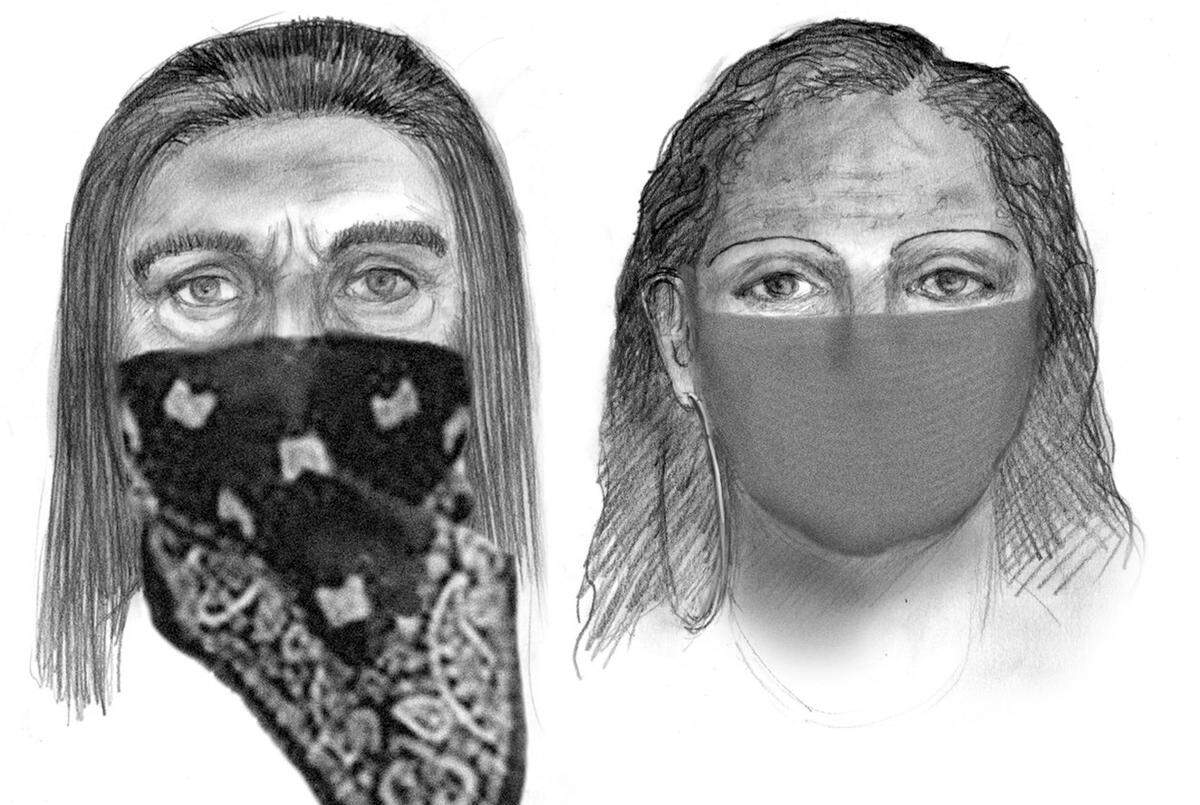
She offered limited descriptions of her captors, saying they wore face coverings including different colored bandannas and lace masks. One of the women, she said, had thin eyebrows and pierced ears. Her hair was long and curly. The other one, who was older, had straight black hair and thick eyebrows.
Sherri told Keith one of the women, who she said otherwise spoke Spanish most of the time, read her articles in English that raised questions about whether Papini had been abducted.
“She was laughing at me,” Papini told her husband. “‘No one believes you. Everyone thinks you ran away. No one believes you.”
Papini said she was then reminded just why she was kidnapped in the first place — to be sold, presumably as a sex slave.
“Guess what?” the woman told Papini. “The buyer’s a cop. They’re never gonna find you.”
She said that the day before her release, she heard her captors arguing, followed by a gunshot. The older one never reappeared. The next day, the younger one forced her into a car before dropping her off along the road in Yolo County.
The details she provided about her captors’ appearances were among the only ones released at a Redding news conference a few days after her return.
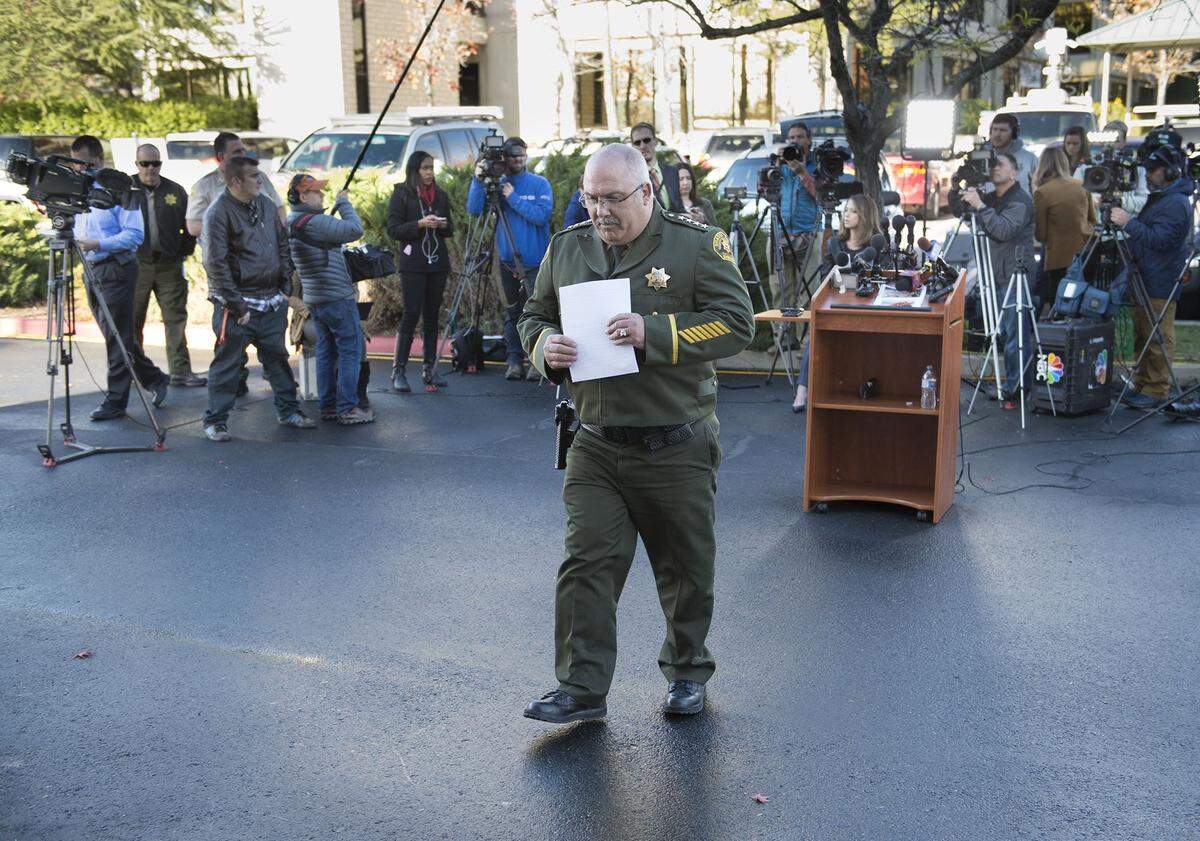
“Remember that she was held against her will and was isolated,” then-Sheriff Tom Bosenko told the gaggle of reporters. “There’s still a lot of unknowns about her assailants. However, we commend Sherri for her efforts to sit down with our detectives to provide a statement.”
Bosenko urged anyone with information to contact authorities, and Capt. Brian Jackson of the Shasta County Sheriff’s Office said it didn’t take long for detectives to start fielding calls from tipsters wanting to report suspicious Latinas.
Jackson gave an example of what their calls were like: “I was at Walmart, and there were two Hispanic ladies — one was younger, one was older — and they were whispering, and they’re looking at me, and I got blonde hair.”
A couple of days after Bosenko’s news conference, Keith Papini gave his only statements to reporters since his wife’s return, first in writing, then in an interview with ABC’s “20/20.”
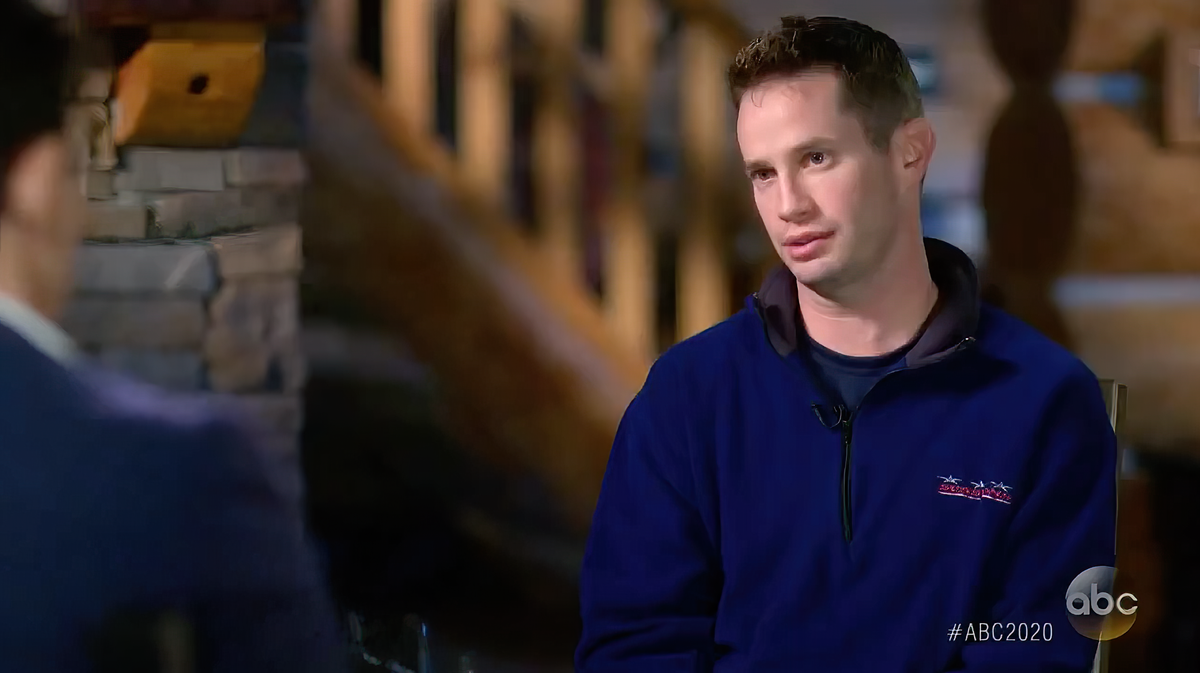
He lashed out at those who didn’t believe her. By that point, online doubters were beginning to express skepticism about her story.
“Rumors, assumptions, lies, and hate have been both exhausting and disgusting,” he said in the written statement. “Those people should be ashamed of their malicious, sub human behavior.
“We are not going to allow those people to take away our spirit, love, or rejoice in our girl found alive and home where she belongs. I understand people want the story, pictures, proof that this was not some sort of hoax, plan to gain money, or some fabricated race war. I do not see a purpose in addressing each preposterous lie.”
In his emotional TV interview on “20/20,” he described feeling the scabs on her branded shoulder. He recounted how she screamed herself raw trying to get help the night her abductors let her free.
“She was coughing up blood from the screaming,” Keith Papini said, “trying to get somebody to stop.”
He had no doubts.
“I knew she was taken,” he told ABC at the time.
Detectives turn to cell tower clues
While Sherri Papini struggled to provide meaningful information about her captors, investigators turned to cellphone records for clues.
Around the time Keith Papini was talking to “20/20,” detectives were asking a Shasta County judge to sign off on a search warrant.
They had already obtained warrants that pulled reams of cellphone tracking data from cellular towers near where Papini had disappeared and from where she was found along the freeway.
They sent the data to the FBI’s Cellular Analysis Survey Team, which performed a data run on the numbers, looking for cellphones that had pinged towers at both locations.
Six numbers came back.
The warrant allowed them to search the records associated with each number — including pictures and text messages and billing information — without the knowledge of the phones’ owners.
The hope was that Papini’s abductors had their cellphones on, and that the detectives could use that information to track them down.
One of the numbers belonged to Sarah Steiger, who was 21 and had dark hair like Papini’s abductors, though she isn’t Latina.
She lived in Redding at the time. The morning Papini reappeared, Steiger was on her way to the Sacramento airport to visit her family for Thanksgiving.
When she returned from her trip, two detectives knocked on her door. It was after 9 p.m., and Steiger had no idea why these two men wearing plain clothes were standing in the dark outside her home.
“They started out asking me questions, like who else lived in my house?” she told The Bee recently in a phone interview from Arkansas, where she now lives. “And they actually kind of were trying to come in and look around in my house. But I was like, ‘Oh, I’m not very comfortable with that,’ so I kind of kept them on the outside of the door.”
She said they began asking her questions about what she was doing on the morning Papini showed back up.
Eventually, before they left, she said they told her that her cellphone had pinged a cell tower, and that they were questioning her about the Papini case.
“Looking back,” she said, “I probably shouldn’t have answered those questions, because they really didn’t tell me who they were, you know?
“Later, I was talking to my roommate, and she’s like, ‘How do you know that they were actually really cops?’ and I was like, ‘I don’t know.’ ”
The experience left her rattled. She was afraid to sleep alone in her house that night. She had a friend come over to stay with her out of fear the men who’d been asking her questions would come back.
“It left me definitely fearful, you know?”
Papini, Trump and Latinos
Eight days after Papini turned up, about 200 people gathered in Redding, 130 miles north of where she was found, to pose for a “welcome home” photograph. The picture was to be presented to Papini as a surprise gift.
They stood on a grassy area not far from Redding’s landmark Sundial Bridge and waved as a drone flew overhead to capture the photo. Older couples, families with children, cyclists and dozens of people accompanied by dogs mingled together, many of them wearing pink — Papini’s favorite color. They wore pink shirts, sneakers, jackets and scarves. One woman rode a pink bicycle.
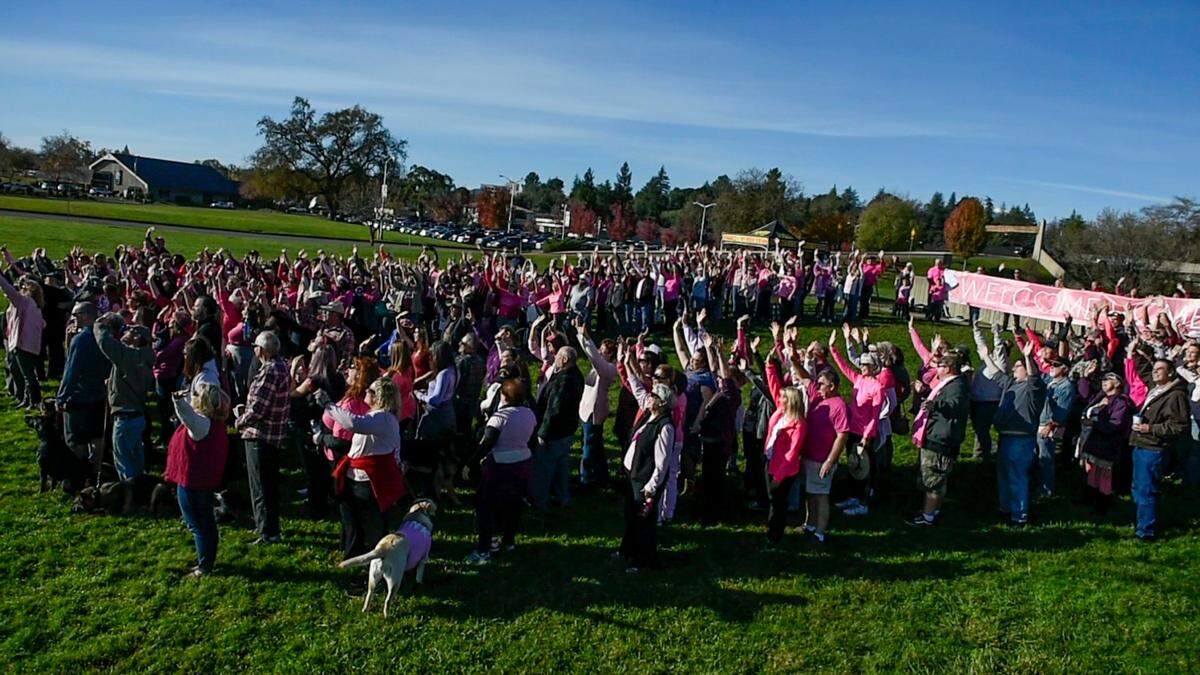
Many reacted with disgust to suggestions that were emerging online that the case might be some sort of hoax.
“It’s sick,” Lisa Jeter, who helped organize the event, told a Bee reporter who traveled from Sacramento that day. “I mean, she’s the sweetest, most warmhearted person you would ever meet, and for people to be that negative — that cruel — is disheartening and very, very sad.”
Missy McArthur, the former Redding mayor, also attended the rally and had similar thoughts.
“They’re just trolls,” she said. “Forget them. They’re just out of it.”
Papini’s story of being abducted by two Latinas sold well in Shasta County for other reasons, said Alan Ernesto Phillips, an advocate for Shasta County’s small Latino population.
Papini went missing just days before Donald Trump was elected president. His stories of Mexican immigrants being rapists and criminals resonated in Shasta County, whose population of 182,139 people is only 10% Latino. Trump secured two-thirds of the vote here in the 2016 election.
“I believe that Trump, his fellows and his followers surprisingly quickly gave license to be able to say, ‘Mexicans are coming over that border, and they’re going to rape our women. They’re going to bring in drugs. They’re going to take away our jobs,’ ” Phillips said.
Phillips said some Latinas in the community — already uncomfortable because of the political climate — went “subterranean.”
Latinas were advised not to go out in pairs, he said. If they could, Phillips said, they avoided driving dark-colored SUVs like the one Papini claimed her abductors drove.
“They wouldn’t go out into public around white people,” he said, “unless they had a witness.”
Doubts about Papini’s story percolate online
Papini’s story wasn’t embraced by everyone in Shasta County.
Tim Scarbrough, who’s lived in Shasta County since the 1970s, was one of Papini’s most outspoken skeptics.
He was worried the weeks Papini was missing and for a few days after she returned.
“At the time, I had two teenage daughters, both blonde,” Scarbrough told The Bee recently. “I was fearful for my daughters and fearful for women in the community.”
But after a few weeks, and as new details emerged, her story didn’t sit right with Scarbrough, who at the time worked for a local website-hosting company.
For one, experts were telling reporters in interviews that it’s incredibly rare for women to kidnap each other. They also noted that sex trafficking victims — including children — almost always know the people exploiting them. Abductions of adult white women for the sex trade are exceedingly rare in the U.S.
Scarbrough also read reports online sleuths had dug up that appeared to show Papini as the author of a racist post.
An essay posted on a now-defunct website called Skinheadz.com was signed by a “Sherri Graeff” — Papini’s maiden name. It included a photo of a woman who looked like Papini. The writer said that while growing up in Shasta County, she got into two fights with Latinas.
“I used to come home in tears because I was getting suspended from school all the time for defending myself against the Latinos,” the post read. “The chief problem was that I was drug-free, white and proud of my blood and heritage.”
The essay portrays the writer as a fierce fighter who inflicted damage on one of the Latinas she fought.
“It took three full-sized men to pull me off of her,” the post read. “I broke her nose and split her eyebrow.”
Detectives say they never learned if Papini wrote the post. Papini and her family members insisted she didn’t. In an interview with detectives, Papini said at one point she’d hired an attorney to try to have the post removed.
“That was not her,” Papini’s ex-husband, David Dreyfus, told The Bee in late November 2016. “There was someone who made a malicious post. That is entirely uncharacteristic of her and not her at all. … With as diverse of a friends group as she and I had, that’s not her.”
Scarbrough didn’t buy it.
In late December 2016, he began writing a blog about the inconsistencies in her story as well as rumors he’d heard that made him think she’d made up the kidnapping.
One of his entries went viral, generating close to 50,000 pageviews, a huge number for such a small blog, which he has since taken down.
Many of the emails and comments he received were supportive and urged him to keep digging, but he said about half of them, many of them from his neighbors in Shasta County, chided him for refusing to believe her story like they did.
“I was being attacked,” he said, “because I questioned the story that just didn’t add up.”
Papini’s sister, Sheila Koester, was among those who took issue with Scarbrough’s blog.
“The information that you have written in your blog is false and is harmful to my family,” she wrote in a comment. “We are asking that you take your blog down because of your false and inaccurate information is causing harm to my family at this time of healing.”
Detectives uncover Papini’s history of lying
Detectives also had their doubts from the beginning, but they kept them largely to themselves.
“Nothing was ever making sense,” said Capt. Jackson of the Shasta County Sheriff’s Office. “But, obviously, in the beginning stages, we take every report seriously.”
They had good reason to.
Just a few months earlier, the Vallejo Police Department had admitted that detectives got it wrong when they announced that the 2015 kidnapping and sexual assault of Denise Huskins was a hoax. Her kidnapper, Matthew Muller, has since pleaded guilty. Huskins and her boyfriend, who Muller left tied up and drugged in their home when he abducted Huskins, have since sued the department. The case reportedly settled for $2.5 million.
But the inconsistencies of Papini’s story were piling up. Details she told detectives didn’t make sense.
For instance, Papini initially claimed her wrists were zip-tied behind her back when she was first put in the room, but she said she somehow got them in front of her and chewed off her bindings. She mentioned being hit with a Taser in her first interview, but it never came up again. And details she shared about the branding changed after her initial interview.
Initially, Papini claimed that she was branded as punishment for her first attempt at escaping, when she pulled boards off the window of her room. She also stated that her abductors told her that her “buyer” wanted her branded.
In subsequent interviews, she said the branding came later and as punishment for something else.
She chalked up her memory problems about the branding incident to being in pain from the burn “as well as the weight of her body on her breast implants,” the FBI wrote in their complaint.
While Papini was missing, detectives and FBI agents also filed at least 15 search warrants for cellphone records and for data associated with Papini’s social media accounts.
The records revealed that before she vanished Papini had been secretly exchanging messages with both Donovan Miske, the man from Michigan, and with another man whom detectives haven’t identified. She had their numbers hidden on her phone under women’s names.
One other piece of evidence cast doubt. In the spring of 2017, The Bee revealed that Papini’s mother in 2003 called deputies to ask for help with her daughter.
Papini, her mother alleged, had been harming herself and blaming the injuries on the mom. The report The Bee obtained was only two sentences long. It didn’t say whether the department found evidence that Papini — then 21 — had in fact harmed herself.
Jackson said detectives were aware of the report and talked to Papini about it. He said it was another red flag, similar to the Skinheadz blog, but not enough evidence to publicly disavow her claims.
At the same time, people detectives interviewed told them Papini had a long history of narcissistic behavior and lying.
Papini’s former youth counselor, who investigators didn’t name, told them while she was still missing that Papini “was good at creating different realities for people so that they would see what she wanted them to see, which got her really good attention,” according to the FBI’s complaint.
Her ex-husband, Dreyfus, who was in the military, told detectives they got married only because she needed his health insurance “due to complications related to regular egg donations,” according to the FBI’s complaint. He couldn’t be reached for comment for this story.
Like several others they interviewed, Dreyfus told them Papini claimed she’d been abused by her family growing up. He told detectives that after they divorced in 2007, several mutual friends told him she was a habitual liar.
Shauhin Davari, one of Papini’s ex-boyfriends from the early 2000s, wasn’t among those contacted by authorities, but he told The Bee he would have said much the same thing about Papini.
“That’s just the way that her modus operandi is: lie, cheat, steal, bat her eyelashes,” he said. “It’s weird to call her a con artist because I don’t know that her goal is to get money out of somebody, but she doesn’t have the ability to be truthful.”
DNA hit breaks open Papini investigation
Nearly a year after she first went missing, the sheriff’s office released the first sketches of the two masked women based on descriptions Papini had provided to a sketch artist.
Detectives also released the first new information about the case in months. Some of it seemed to cast doubt on the story.
For instance, Papini told detectives she cut her foot in the fight with the one woman in the bathroom, but investigators didn’t find evidence of the cut.
Jackson told The Bee at the time that it wasn’t necessarily a sign that Papini was making up that part of the story — or any other parts of her account.
“Obviously, in any investigation, especially something of this nature where there’s trauma and it’s a prolonged thing,” Jackson told The Bee in 2017, “it’s not abnormal to have inconsistencies.”
But behind the scenes, Jackson was becoming frustrated.
“I would have days where it was like, ‘This is a waste of our time,’ ” he later told The Bee. “But we have an obligation to investigate this, because what if, you know, it is true? Then we have a serious problem.”
Though it didn’t seem so at the time, Jackson dropped a bombshell in that 2017 news release — the last one detectives would send about the case for the next four years.
He told reporters that a forensic exam found male DNA on Papini’s clothes that didn’t belong to her husband.
He didn’t reveal at the time that the male DNA was found in her underwear.
In the interview with The Bee after her arrest, Jackson said that doesn’t necessarily mean Papini had had sex. The DNA could have ended up on her clothing merely through close association. A medical exam after her reappearance didn’t find any evidence she’d recently had sex.
Nevertheless, the DNA would prove to be the decisive piece of evidence. In March 2020, a DNA hit from a family-tree database led them to the mother of James Reyes, her ex-boyfriend.
“If we didn’t have that, where would we be today?” Jackson said. “We wouldn’t be here. And the quote-unquote cold case or whatever would be quote-unquote sitting on the shelf. ”
FBI agents went to Reyes’ home on June 9, 2020, and collected items from his trash, including an “Honest Honey Green Tea” bottle. The DNA on it matched what was on Papini’s underwear.

That garbage collection is essentially the same technique investigators used to confirm the identities of Golden State Killer Joseph James DeAngelo and NorCal Rapist Roy Charles Waller.
A few weeks later, FBI agents and a Shasta County sheriff’s detective confronted Reyes at his apartment.
He quickly began to tell the story that unraveled all of Papini’s lies.
Ex-boyfriend’s account of Papini’s missing weeks
Reyes, who has not returned messages from The Bee seeking comment for this story, and Papini had been friends since they were in their early teens. At one point they had become engaged, but it didn’t work out.
He was cleaning his house in 2015 and came across a box of old photos and some of Papini’s stuff that he’d held on to. He sent the items to Papini’s parents. Not long after, she called him at work. She said she wanted to run away with him and that she’d been saving cash to do it.
Papini told him that her husband was beating and raping her and she was trying to escape.
“She kind of laid out the situation,” he told the investigators about that initial call. Afterward, they bought prepaid phones to communicate with each other. She shipped him a package that included a note detailing the spot where she wanted him to pick her up.
He got a friend to rent him a car, and he drove up from Orange County. He waited at a Redding Starbucks for her to text him. When she did, he pulled up to where she was jogging, and she climbed in the backseat and laid down. She slept most of the way back down to Costa Mesa, he told the investigators.
Once there, he bought her some sweats, socks and T-shirts to wear since she’d only been wearing sweaty running clothes.
He worked during the days and, as far as he knew, she never left the house. They talked and ate together, but otherwise Papini rarely left her room.
“She was just feeling for herself, you know,” Reyes told the investigators about what Papini did for most of those three weeks. “She was in her own thing.”
At her request, he said he covered up the window in her room with boards. The room, FBI agents said, matched the description of the one Papini said her captors kept her in, including the closet where she said they’d kept her chained. There was no sign of a chain, however.
As the weeks went by, Reyes said Papini started missing her kids, and she told him she wanted to go home. She ate little in an apparent effort to lose weight. She chopped off her hair. She started hitting and burning herself. But she needed help for her other injuries.
She told him to “bank a puck off my leg, so I shot a puck off her leg, lightly,” he told investigators. Reyes held up a hockey stick and she rammed her nose into it, said Jackson, the Shasta County sheriff’s captain.
Then she asked him to go to Hobby Lobby and buy a wood-burning tool. She pulled her shirt up and as the tool glowed red hot, and with shaking hands, Reyes attempted to brand the message that Papini wanted written. He told the investigators he couldn’t remember what exactly it was she wanted him to sear onto her skin, but he clearly remembered that she never complained about the pain.
Then right before Thanksgiving, she told him, “I’m ready to go.” He got his friend to rent him a car, and they drove without stopping to Yolo County. He dropped her off on a frontage road beside an orchard. He drove back to Orange County and had dinner that night with his aunt.
“I haven’t talked to her since then,” he told the investigators.
Were any women involved in her “captivity?” they asked.
“Yeah, yeah, no,” he told them. “I don’t know any Mexican girls.”
Reyes told investigators he wasn’t the only one who knew Papini was with him. His cousin, his cousin’s wife and the cousin’s mother also knew she was at his apartment.
Reyes’ cousin even spotted her — once while she was standing in the window and once when he briefly went inside. She retreated from his view both times.
Reyes’ family members’ names weren’t provided in the FBI’s report, which noted they never made any effort to speak to police about Papini until after Reyes had the investigators show up at his apartment.
Three days later, FBI agents confronted Papini.
Despite telling her multiple times that it’s a crime to lie to the FBI, she stuck with her story. With one exception.
When her husband, Keith, left the room, she admitted she had been speaking to other men.
“When I went out of town for work, I talked with other guys,” she said. “I made a mistake, and I talked to other men and I shouldn’t have.”
With this small admission, Sherri Papini went home.
FBI agents and detectives continued to investigate for another year, building a case not against would-be abductors but the person they now believed was truly responsible. In early March 2022, five years and three months after she re-emerged with a fantastical tale of abduction, agents knew there was only one thing left to do.
This is the second of three stories that chronicle Sherri Papini’s kidnapping hoax. Click here to read the third and final part about Papini’s arrest and the impact of her actions on the community. If you missed the part one, you can find the story of her disappearance here.
This story was originally published July 28, 2022 at 5:00 AM with the headline "Hoodwinked: Sherri Papini reappears after missing for 22 days with an unbelievable story."