We visited the lab guiding Stanislaus’ quest for bioindustry jobs. Here’s what we learned.
Advocates for making Stanislaus County a hub for bioindustry draw inspiration from an East Bay lab that has been tinkering since 2011.
The Modesto Bee got a tour Feb. 2, two days after the county Board of Supervisors earmarked the first $10 million for the Stanislaus 2030 Investment Blueprint. The plan seeks to employ thousands of people in turning crop and other waste into building materials, fuel, plastics and more.
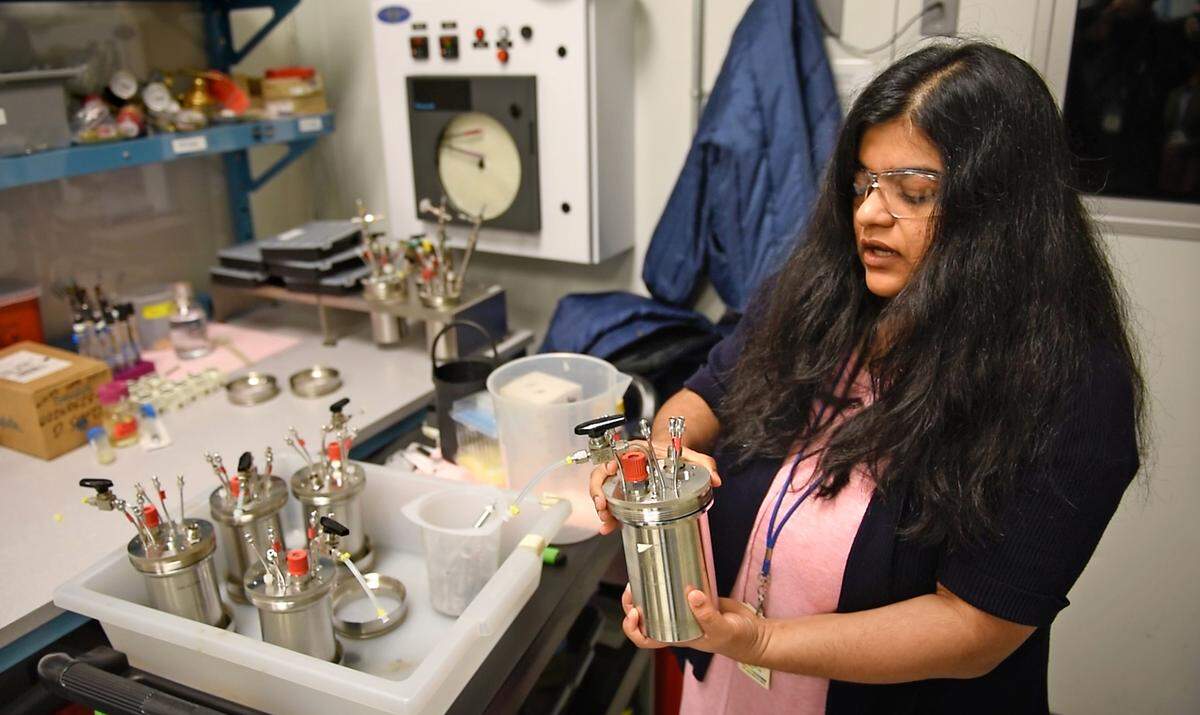
The lab does small-batch testing in Emeryville for bioindustry startups around the country. It is overseen by the nearby Lawrence Berkeley National Laboratory, part of a U.S. Department of Energy network.
Deepti Tanjore is the director of the Emeryville lab, formally called the Advanced Biofuels and Bioproducts Process Development Unit. And she is an adviser to Stanislaus 2030.
The plan’s key element is a far larger lab in the county that would bring promising ideas close to commercial scale. Tanjore said it is an ideal location because of its vast supply of orchard wood, cornstalks and other materials.
“We realized that there’s this opportunity with the Central Valley being so close by,” she said. “There’s a lot of agriculture. There’s a lot of feedstocks.”
The lab already has worked with Aemetis Inc., which plans to make jet and truck fuel from discarded orchard trees in Riverbank starting next year. And the Almond Board of California has tested new uses for shells and other woody waste.
40,000 jobs in 7 years?
The Stanislaus 2030 plan was released in November by a 31-member committee representing business, education and local government.
The hope is to create about 40,000 well-paying jobs in various sectors over the next seven years. Both public and private sources could cover the estimated $75.8 million total cost. The plan deals with small business, job training, child care and other general needs, along with bioindustry.
Supervisors voted 5-0 to set aside the first $10 million from federal COVID-19 relief provided to the county. They will consider detailed spending over the course of 2023.
The goal is jobs paying at least $28.58 an hour, with benefits and chances for promotion. The report said such work is in short supply in the current county economy, which is dominated by farming and food processing.
But those traditional sectors do provide the feedstocks for a bioindustrial future. Some of the dairy manure already is being turned into energy, supplanting climate-harming natural gas. Orchard and vineyard owners face a 2025 phaseout of open burning of waste wood, sought by clean-air activists. Wineries have stems and skins left over after pressing juice from grapes.
Clients of the Emeryville lab have had to look beyond California for space to further develop their products, Stanislaus 2030 consultant Karen Warner told supervisors.
“They’re not going to scale, even though they have next-door neighbors here in the Valley that are ready and positioned to be the best place to do production in this industry,” she said.
Fermentation is main function
The 2030 team has not chosen a site for the proposed facility. The report did suggest that it have 20,000 liters of testing capacity, compared with 300 in Emeryville.
That lab employs 26 people and gets about $2.5 million in federal funding each year. Up to $7.5 million more comes from companies having their new processes tested.
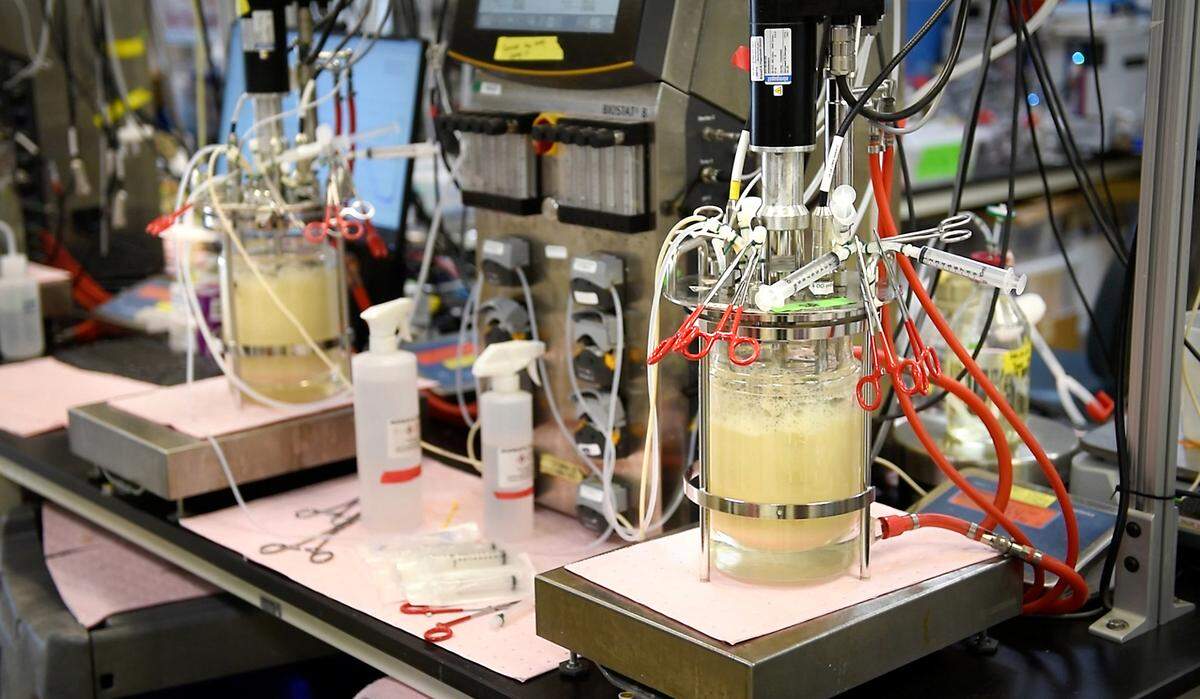
The staff uses mainly yeast and bacteria to break down the various feedstocks, which react in an array of tanks, centrifuges, beakers and other equipment. This is a high-tech version of fermentation, which humans have done for millennia to make bread, cheese, wine and beer.
The lab helped develop a denim dye far less toxic than the widely used indigo. A ski maker tested a polymer made from algae. Another company enhanced the nutritional value of baby formula.
Stanislaus 2030 estimated a $57.6 million investment for bioindustry. It includes $25 million to build the scale-up facility and $6 million to subsidize its first three years of operation. The committee also suggests $9 million in incentives to startups and $10 million to accelerate older companies, separate from the facility.
County supervisors could vote later this year on how to spend most of the initial $10 million. The only detail approved Jan. 31 was $650,000 for the first year of partnership with Opportunity Stanislaus, an established economic development outfit. It is called BioEconomy, Agriculture and Manufacturing Circular, or BEAM. Circular refers to the global movement toward putting all waste to use.
Supervisor Terry Withrow said he has visited the federal lab and supports bioindustry for the county’s future. But he cautioned that it needs to attract substantial private investment along with the public sources.
West Side activist John Mataka urged the board to do a full study on the impacts to air, water, traffic and other concerns. He noted that the trash-burning power plant near Westley was touted as a benefit in the 1980s but has impaired the health of residents.
Almond shells into plastic?
The Modesto-based Almond Board sent nut shells to Emeryville to assess for use in plastics. They were heated to a temperature comparable to a home oven, then crushed into a biodegradable powder. This was mixed with conventional plastic, reducing the proportion from petroleum sources.
“We wanted to generate this valuable third-party data to have this available to show potential investors,” said Guangwei Huang, associate director of food research and technology at the board. “Now it’s just a question of who’s going to jump in to get this off the ground.”
Under a second contract, the lab is looking at making fuel from almond shells and the hulls that surround them. The board also is working with Stanislaus 2030 “about co-funding a biomass feedstock reliability assessment,” said an email from Rick Kushman, manager of media relations and global communications.
Aemetis President Andy Foster is part of the Stanislaus 2030 committee. He said by email that the Emeryville lab helped with the process that will turn the sugars in orchard wood into ethanol at the former Army ammunition plant in Riverbank.
Foster said the orchard wood will have less impact on the climate than the ethanol that Aemetis has brewed from Midwestern corn in Keyes since 2011. The Cupertino-based company also has a Keyes plant that supplies PG&E with gas extracted from manure at several dairy farms.
This story was originally published February 8, 2023 at 7:25 AM.