Panel imagines Stanislaus as ‘bioindustry’ hub. What might we make, and how many jobs?
A few years from now, many Stanislaus County workers could be making plastics from corn, fuel from cattle manure, and other products of the “bioindustrial” sector.
That was the key recommendation in the Stanislaus 2030 Investment Blueprint, released Wednesday, Nov. 2, by a committee of local leaders. They talked over 14 months about how best to create well-paying jobs by the end of the current decade.
The report defined those jobs as paying at least $28.58 an hour, with benefits and opportunities for promotion. And it acknowledged that this does not happen nearly enough in today’s local economy, centered on traditional farming and food processing.
Stanislaus 2030 called for a $57.8 million investment in bioindustry, aided possibly by government grants. The main piece would be a site where promising ideas could be developed before moving on to permanent quarters. The committee also urged enhanced job training and supply chains for turning waste into wealth.
“We could be doing something unique in our area that brings in significant income from outside,” committee co-chair Dillon Olvera said in a phone interview Friday.
Olvera is president and CEO at the Beard Industrial District, a 2,000-acre expanse near the southeast corner of Modesto. He said the proposed testing facility could go on some of its 300 vacant acres, or another location such as the former Navy airfield near Crows Landing.
The 31-member committee includes people in local government, business, education, health care and other fields. Along with bioindustry, it urged support in general for job training and small business.
We do much already
The county already makes use of plenty of waste. Dairy farmers fertilize their feed crops with manure-tainted water and get a small part of their feed from almond hulls. Rendering plants turn dead animals and restaurant grease into raw materials for numerous products.
Stanislaus 2030 suggests putting microbes to work to make the products of the future. Yeast has long been vital to the county’s huge wine industry, and bacteria at its cheese and yogurt plants.
The committee envisions technologies that kick bioindusty into high gear. And it promotes a “circular” economy, which could conserve landfill space and energy while easing the climate crisis.
“The concept is not new, but we need to dig deeper and plow deeper, so to speak, than we did in the past,” committee member Don Borges said by phone. He is dean of agriculture and environmental sciences at Modesto Junior College.
The report said only about 24,000 people hold “good jobs” in the county, 13% of the total. Another 22% do work that might advance into that category. About 124,000 employees are in or near poverty.
The committee estimates that the blueprint could create more than 40,000 good jobs, most of them in bioindustry. It does not break down the types of work.
Aemetis is a pioneer
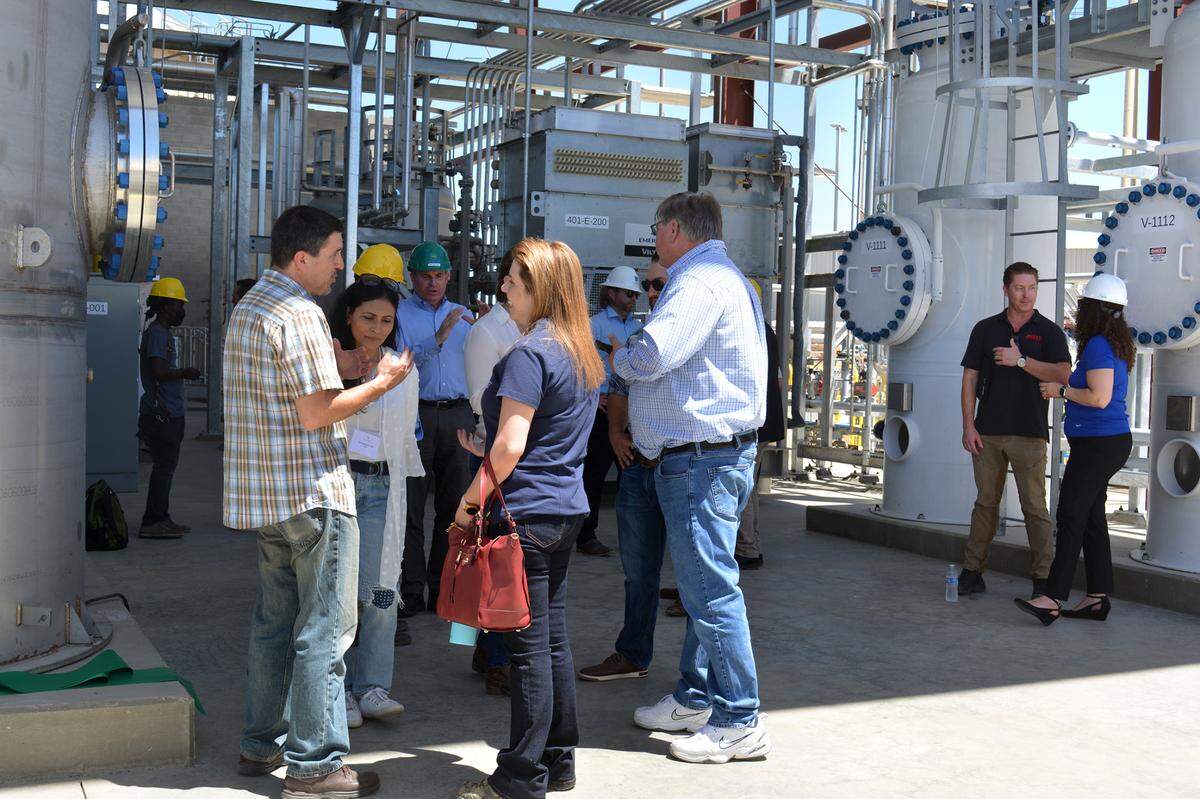
The Stanislaus 2030 committee includes Andy Foster, an executive vice president at Aemetis Inc. The Cupertino-based company began making ethanol from Midwestern corn in Keyes in 2011. Last May, it started supplying PG&E with gas derived from dairy manure. It plans a 2025 completion for a Riverbank plant producing jet and truck fuel from discarded orchard trees.
The Keyes site employs about 50 people, and the Riverbank project will bring about the same, Foster said by phone Monday. The totals do not include truckers and other people working on contract to get the waste to the plant.
Foster said Aemetis has invested more than $500 million on these projects, and other companies could find the county attractive. He noted its extensive rail and road systems and capacity for adapting to job-training needs.
Aemetis is redeveloping the former Army ammunition plant in Riverbank for its fuel project and other tenants. They already include green businesses such as Circulus, which processes old plastic bags. It soon will have Belluno Organics, which makes fertilizer from food waste.
This complex also is a possible site for the demonstration plant proposed by Stanislaus 2030. It would provide space to various startups, in a layout yet to be designed. The site would include a lab where microbe-based processes could be tested, much larger than the current one at a U.S. Department of Energy facility near Berkeley.
This story was originally published November 7, 2022 at 12:53 PM.