Modesto ranks 5th least educated among 150 U.S. cities, according to recent study
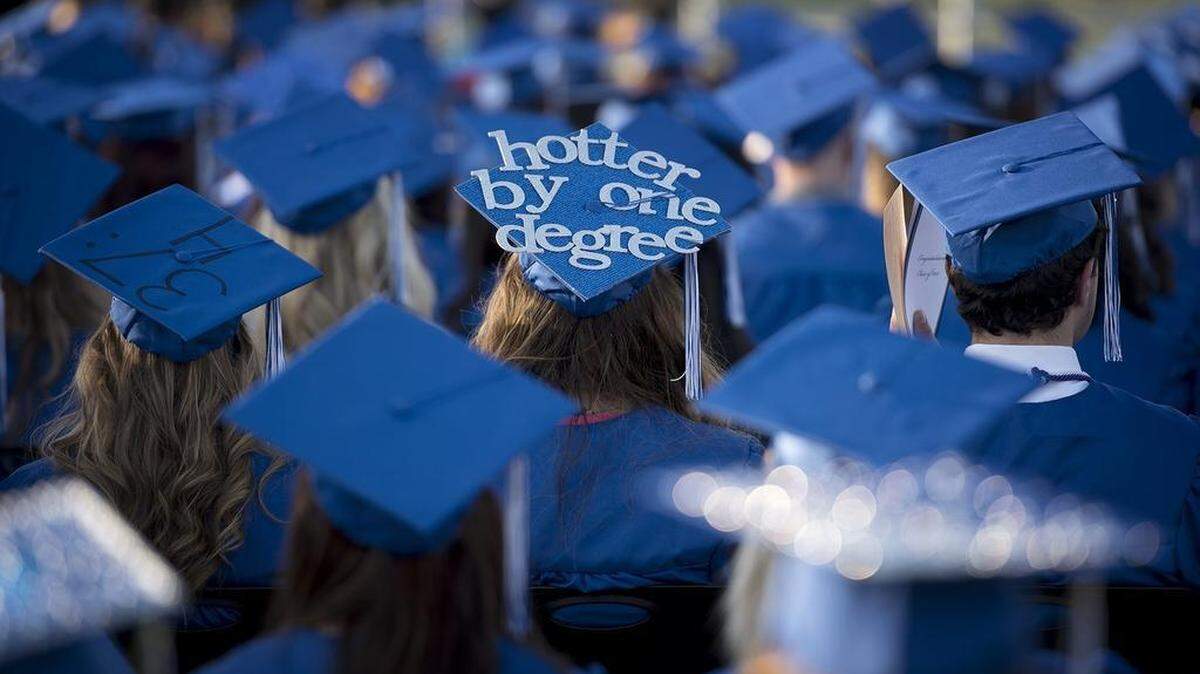
Despite improvements in its graduation rates, Modesto continues to struggle in education, according to a recent report that ranks it the fifth least educated among “the 150 largest U.S. metropolitan statistical areas.”
The report demonstrates that local schools and colleges still have much work to do, said Dr. Chad Redwing, the interim president of Modesto Junior College. “We should not accept to stay at this end of the rankings — we need to encourage more learning in our community.”
The ranking, compiled by WalletHub, is largely based on the level of education Modesto residents have achieved — how many residents age 25 or older have a high school diploma, attended college or earned a college degree. To a much smaller extent, the ranking also considers assessments by other organizations of the quality of local schools and colleges, number of people enrolled in college, summer school opportunities, racial and gender gaps in education, and other factors.
In WalletHub’s report, Modesto ranked 148th out of 150 cities in bachelor and graduate-level degree holders. As for high school graduates, Modesto placed 144th.
According to 2022 Census data, 83.4% of residents in Modesto age 25 years or older are high school graduates but just 19.5% have a bachelor’s degree or higher. Both are lower than the national average.
Modesto also has a dropout rate of 17%, six points higher than the national average.
Modesto City Schools public information officer Linda Mumma Solorio defended the district. “We are very pleased with the education program we offer our students, as well as our ability to have full-time college counselors at each of our sites,” she said. “However, we are always looking for ways to improve our programs for the betterment of our students and community.”
Mumma Solorio said the Stanislaus 2030 Investment Blueprint found that “there is a high percentage of students that graduate with college degrees that do not lead to good jobs locally.” In addition, she cited the blueprint also found that “local training programs are designed for industries that do not lead to promising and good jobs.”
Many great minds in Modesto schools, student argues
Modesto High School senior Megan Owen, a member of the ASB Leadership program who takes International Baccalaureate courses, disagrees with the ranking and said Modesto is often unfairly judged.
“Pasting a label across the entire city and describing it as ‘uneducated’ entirely discounts the great minds, and there are many, that call Modesto home,” Owen said. “For example, in just the past few years, we have had four students from my high school alone attend Harvard, and one of my good friends who graduated this past year is attending Yale this fall on a full ride.”
Though she plans to attend college, Owen said a reason why some high-schoolers can’t is a matter of cost.
“There is a stigma around not attending college I feel is harmful to students,” she said. “Some may not be able to afford it, but this is in no way correlated to their intelligence level. Some may want to go directly into the workforce and feel college is not necessary for them to succeed financially and four years at an expensive university would only hold them back.”
Because the statistics are based on residents 25 and older, the ranking does not take into consideration graduation rates of the most recent high school classes, which have shown modest improvements in the past five years. The rates for Modesto City high-schoolers have risen from 88.5% in 2018-19 to 91% in 2021-22.
Though there is that uptick, Modesto students scored low in English language arts and English-learner progress and very low in math — their math scores were 128.2 points below the standard — according to the state Department of Education’s 2022 California School Dashboard.
“Over the past five years, [Modesto City Schools] has worked to create the systems and structures to realize the MCS Vision: Every student graduates with the skills, knowledge and character traits essential to thrive and contribute to our community and society at large,” Mumma Solorio said.
Majority of MJC students aren’t full time
As for higher education in the city, fewer than half of Modesto Junior College students graduate within six years, according to Redwing. He said he believes part of the reason for the low graduation rates in Modesto is that many students work part time or full time and cannot focus solely on their studies. He also said students aren’t getting relevant work experience outside the classroom.
“So as we think about how to boost program completion rates, one reality to address is the opportunity gap our students face between the classroom and work,” he said. “More than 60% of college students nationwide work part or full time as they study, and our students are no different. This is part of the reason why less than a third of MJC students are full-time students; most already have full-time lives.”
Modesto Junior College is not the only higher education institution struggling with graduation rates.
In 2015, California State University launched Graduation Initiative 2025 to increase graduation rates, eliminate equity gaps in degree completion and meet California’s workforce needs.
Stanislaus State in Turlock was charged with various goals, among them raising the six-year graduation rate for first-time freshmen to 65%. The 2018-2019 graduation rate was 60.80% for freshmen graduating in six years, while the rate was 20.6% for those who earned their degrees in four years.
“Our mission is to serve the educational needs of our six-county region. We actively collaborate with our K-12 and community college partners to ensure all have access and the opportunity to pursue a quality education that is attainable and affordable,” said Rosalee Rush, senior associate vice president of communications and public affairs at Stanislaus State.
WalletHub conducted this study by comparing the 150 most populated U.S. metropolitan statistical areas across two dimensions: “educational attainment” and “quality of education and attainment gap.” It utilized statistics including the share of adults age 25 and older with a high school diploma or higher, some college experience, bachelor degree holders and graduate degree holders. In addition, the rankings also used GreatSchools.org’s ratings of U.S. public schools, WalletHub’s “College & University” rankings report, and the Education Equality Index.
Other areas in Central California also ranked poorly in the study. Visalia was ranked as the least educated city in the country. Stockton placed 145th, Bakersfield 147th and Fresno 140th.