Complaints at Modesto hospital under investigation by California agency. What’s the concern?
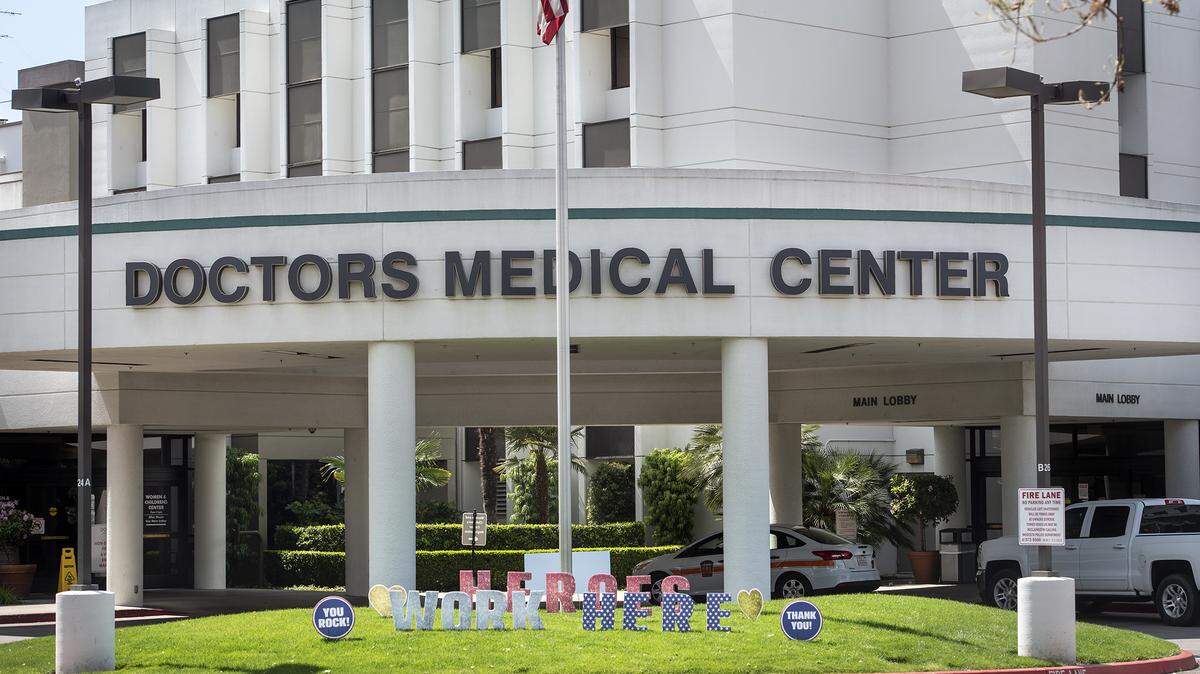
The California Department of Public Health declared an “immediate jeopardy” at Doctors Medical Center in Modesto over the use of nurse anesthetists to sedate and monitor surgical patients, according to an internal update sent to hospital medical staff.
The state has been investigating complaints at the 394-bed hospital since last week. The hospital has been canceling or rescheduling dozens of surgeries and procedures.
An update Tuesday said the use of certified registered nurse anesthetists, or CRNAs, has been put on hold because they were granted privileges for procedures they had not previously performed at the hospital.
According to in-house communications, the hospital will redo a credentialing process for CRNAs that assesses their abilities to safely care for surgical patients.
Regulators declare an immediate jeopardy when health and safety violations have potential to harm patients at a medical facility. The CDPH and the federal Centers for Medicare and Medicaid Services won’t lift the order until the hospital’s plan for mitigating the situation is approved.
“The CRNAs will not be returning to the hospital until the plan of correction is accepted by CMS,” the update to staff said.
Doctors Medical Center is trying to cover as many surgeries as possible with physician anesthesiologists.
CRNAs are nurses who hold an advanced degree to provide anesthesia services and have gained broad acceptance in health care. But they have been under scrutiny in Modesto since last year.
State regulatory surveys in August and January blasted Stanislaus Surgical Hospital on Oakdale Road for giving too much authority to CRNAs. For failing to comply with nine conditions of participation in Medicare, Stanislaus Surgical was removed from the program, effective April 30, but political support from Central Valley congressmen served to reverse the decision.
Complaints about anesthesia-related errors
The state turned next to investigating complaints at Doctors Medical Center. Physicians connected to the hospital said some complaints are about anesthesia-related medical errors. But the public won’t know for months if those complaints were substantiated.
The hospital has not commented on the investigation since releasing a statement Friday. “We are collaborating with the California Department of Public Health on our action plan to address the items identified by the CDPH and will await a follow-up survey.”
The statement said patient safety is the hospital’s top priority. DMC will continue to participate in the Medicare and Medi-Cal programs during the review, the statement said.
While CRNAs still were working in the hospital last week, the anesthesia chairman at Doctors imposed requirements to protect patients by having a physician present for starting anesthesia and intubations and to document anesthesia records, according to an internal directive obtained by The Modesto Bee. A physician was also required to co-sign orders in the post-anesthesia care unit.
The in-house directive said the requirements were in compliance with the ongoing CDPH survey and would be closely audited by the state health agency.
According to another communication, the survey found fault with the medical center’s credentialing process for CRNAs. Credentialing is a process for assessing the academic qualifications and clinical skills of healthcare providers to ensure patient safety. Every nurse anesthetist will have to undergo proctoring that tests their knowledge and skills for 10 surgeries or procedures. The hospital hasn’t said how long that will take.
Doctors Medical Center has a contract with Fresno-based Valley Regional Anesthesia Associates for providing CRNAs and anesthesiologists for surgeries. For months, the provider contract has sparked vitriol from physician anesthesiologists who claim CRNAs are heavily used as a cost-saving measure for the hospital.
Corporate officials for Valley Regional did not respond to calls from The Modesto Bee.
The recent surveys at Stanislaus Surgical and DMC are being watched by medical professionals throughout the state.
“I venture to say this probably arose (at Stanislaus Surgical) because you had CRNAs that were not supervised in the proper manner as the law states in California,” said Dr. Antonio Hernandez Conte, president of the California Society of Anesthesiologists. The state requires CRNAs to work under prescriptive orders of a surgeon, he said.
Increasing role of nurse anesthetists
Some background might help with understanding the landscape.
In 2009, then-Gov. Arnold Schwarzenegger sent a letter to the federal government for California to opt out of a Medicare program policy requiring that physicians be available in hospitals to oversee the work of nurse anesthetists. California joined rural states such as Alaska, Idaho and Iowa in opting out, but the governor’s concern was the scarcity of anesthesiologists in rural areas of the Central Valley and in mountain counties.
The California Medical Association and other physician groups contested the issue in court, arguing that CRNAs are not as well trained and are more prone to mistakes, especially in caring for patients with complex medical conditions or handling emergencies.
The legal challenge failed, and nurse anesthetists have since claimed autonomy in California while inviting detractors to cite research findings of safety issues.
The practices of CRNAs were lambasted in the regulatory surveys at Stanislaus Surgical Hospital.
The surveys concluded that CRNAs operated outside their scope of practice at the surgical hospital. The first survey in August noted that a resident nurse anesthetist in training at Stanislaus Surgical wore studded earrings not covered by a surgical cap in the operating room and wore several rings and prescription glasses without protective covering. Those items increase the risk of infection and the potential for leaving a foreign object inside a patient, the survey said.
The CDPH, which conducted the surveys on behalf of the federal Centers for Medicare and Medicaid Services, disagreed with Stanislaus Surgical policy that nurse anesthetists were independent practitioners who provided medical service as if they were licensed physicians.
During interviews with CDPH inspectors, one nurse referred to herself as the “chief CRNA” and said she managed the anesthesia group at the hospital. The state survey rejected the hospital’s stance that CRNAs had full authority to handle diagnoses and prescribe drugs.
The survey report described CRNAs working alongside students studying to be nurse anesthetists, in one case changing a doctor’s order for general anesthesia for surgery to a higher-risk spinal anesthesia and sedation. It was one of a number cases in which there was no record that patients gave consent for a change in anesthesia drugs, the report said.
When the patient was moved to an inpatient room after surgery, records show he became lethargic, fell back on the bed and was unresponsive. His blood pressure plummeted and a doctor gave the order to call 911 and transfer him by ambulance to another hospital.
Patients were jeopardized
The state agency issued an “immediate jeopardy” order at Stanislaus Surgical on Jan. 17, citing the potential harm to patients posed by unsupervised CRNAs. It did not lift the order until a plan was approved Feb. 2 that put physician anesthesiologists in charge of anesthesia services at the surgical hospital.
According to a Jan. 19 memo to health providers at Stanislaus Surgical, the hospital implemented changes in order to continue using CRNAs. It required an anesthesiologist to place pre-op orders for surgeries and surgeons to consult with nurse anesthetists regarding orders for patients recovering from anesthesia. In addition, there were new credentialing requirements for CRNAs at Stanislaus Surgical.
Hernandez Conte, the California Society of Anesthesiologists president, said if there’s a problem during or after surgery, it’s important to have a physician anesthesiologist there to address the issue. Between medical school, a four-year residency and other training, anesthesiologists have 16,000 hours of training, while a nurse anesthetist has a 10th of that.
Hernandez Conte said nurse anesthetists are valuable because of the workforce shortages, and the gold standard for care is a team model consisting of an anesthesiologist, surgeons and CRNAs. In the example of a rural hospital with three operating rooms, the anesthesiologist would work with a nurse anesthetist in each OR, see every patient before the surgery and be available in critical portions of each operation.
This story was originally published May 29, 2024 at 4:47 PM.