A tale of two cities: Modesto and Manteca’s contrasting approaches to housing development
This is the second in a series of stories on the housing crisis facing residents in and around Modesto and Stanislaus County.
Homeownership is a goal for many couples and families across the Central Valley, but sky-high prices and low inventory levels are pushing the dream further and further away from reality.
And there aren’t many new neighborhoods on the horizon, as cities struggle to make up for housing unit shortfalls during the pandemic-induced recession.
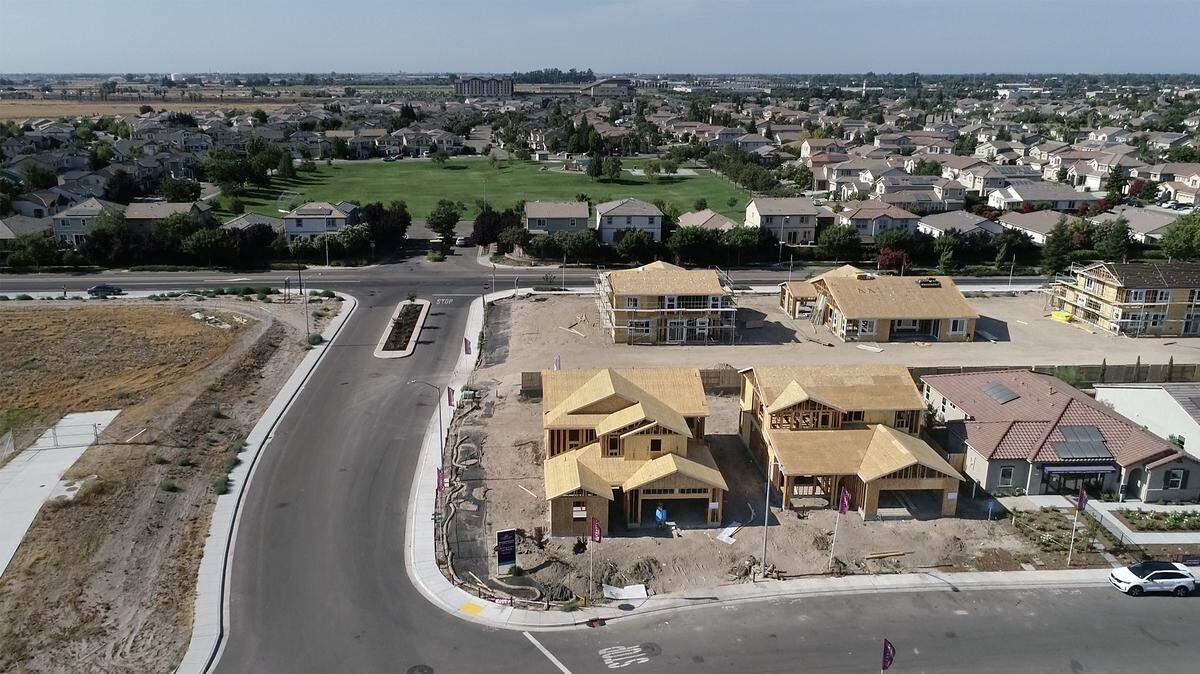
While they may be close geographically, Modesto and Manteca are far apart in their approaches to housing. Manteca has been steadily growing, adding hundreds of new homes each year. Modesto views development as riskier, leading to a perennial shortage of housing units.
The Central Valley’s housing market was first decimated by the 2008 financial crisis, and California was one of the states most affected by the housing bubble.
In Modesto, construction nearly stopped. According to a report from the Public Policy Institute of California, housing permits fell 63% from 2004 to 2007.
City data show that in the late 1990s and early 2000s, Modesto was issuing between 400 and 1,800 permits annually, with a spike around the turn of the century. By 2006, the city was issuing 415 housing permits annually; in 2007, the number went up to 574.
Then came the recession: In 2008, only 113 permits were issued citywide, and the numbers dropped into the double digits by 2009. It took until 2016, over half a decade later, for Modesto to once again issue over 100 permits.
In 2020, the city awarded 224.
But not every Central Valley city went down the same path.
Steady development in Manteca
Located in San Joaquin County next to Tracy, Manteca has a population of 83,000, according to the most recent Census data. Modesto, meanwhile, boasts a population of 212,600.
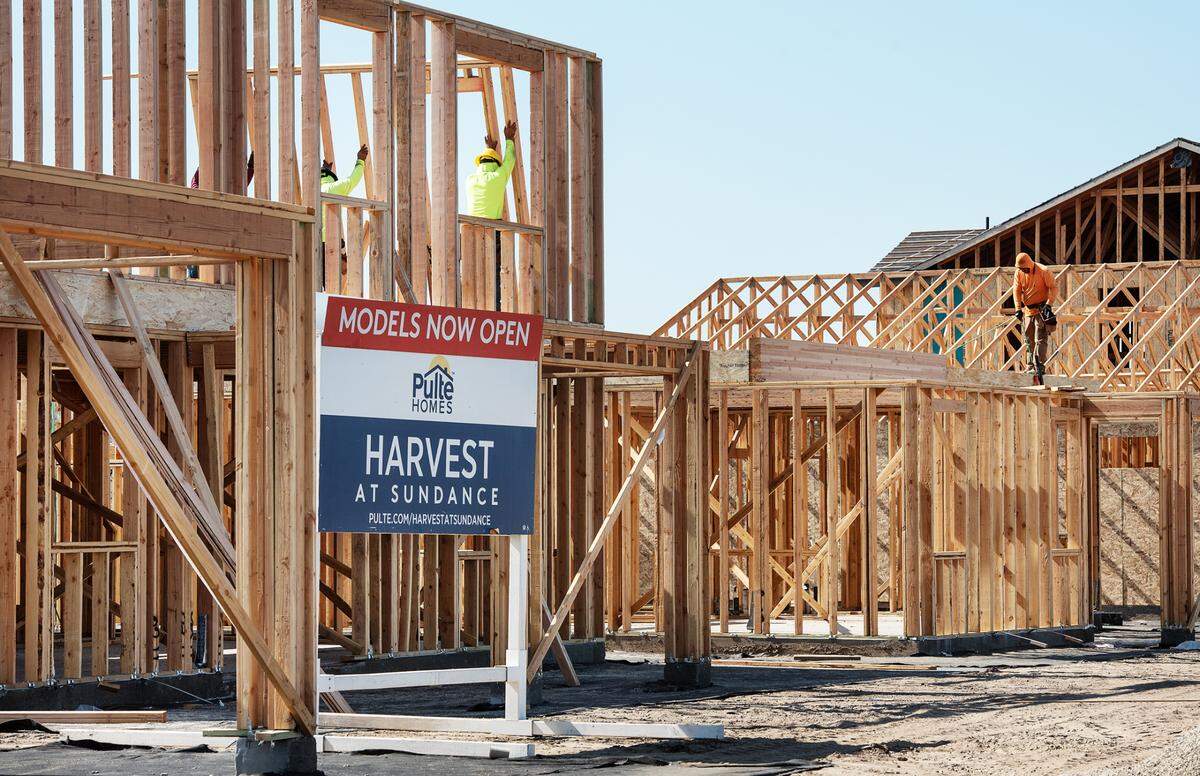
Unlike Modesto, Manteca has been steadily growing its housing stock over the past decade, without any dips due to the recession or COVID-19 pandemic. The city has been steadily adding between 500 and 700 new housing units annually for the past five years.
“The city leadership has always been really pro-development,” said Brad Wungluck, deputy director of the city’s development services department. “They’ve always looked for opportunities for growth and development. We’ve always really sought a collaborative relationship with the developers to help them through the process.”
Wungluck, who has been with the city for 13 years, said city leadership has consistently prioritized development, even during the 2008 financial crisis, where demand was high but building was difficult.
Still, Manteca was able to add around 300 units annually during the worst of the recession. That same commitment has continued during the COVID-19 pandemic, Wungluck said; currently, Manteca has over 8,000 units in various stages of development — from land that’s in the entitlement process to shovel-ready lots.
One of Manteca’s strategies, he added, is to have as many projects in the development pipeline as possible and to ensure that the process itself is as easy as possible for the developers.
Laurin Sephos, a land development manager at Raymus Homes, a local developer in Manteca, said her company’s experience working with the city has been largely positive.
While Sephos said that staff turnaround at a city level has factored into the process, “the city is very open to making sure they can provide housing to those who need it.”
Since the city moved its permitting process online, Sephos said, things have gotten simpler, especially when the pandemic forced certain offices to transition to online services or reduce their capacities.
“One of the positive things is that they’re working on issues here,” she said. “They don’t just linger, they’re always trying to improve, which is good, and innovate.”
Even with an accelerated permitting process — Sephos said typically permits will be approved in a matter of weeks — land entitlement, or the process of getting a parcel to the point where it can be developed on, can still take time. Local and statewide regulations, which often include environmental impact reports and compliance studies, among other steps, can drag out the entitlement process over several years.
But Sephos said Manteca has done its best to support developers along the way.
During the 2008 financial crisis, she said, city officials and staff worked to make sure that no matter the state of the housing bubble, development would be able to continue — and Manteca kept its numbers steady.
The same thing happened when the pandemic hit: Developers initially drew back and slowed down, but “no one stopped,” and the city assisted builders in the various stages of the development process.
Still, the pandemic proved to be a “learning curve” for everyone, Sephos said. With construction costs increasing and the number of available lots shrinking, she said, the COVID-19 pandemic brought to light the challenges in the development process, as well as the resources needed to support builders.
“Everyone tries their best,” Sephos said. “Everyone’s giving it their best shot. … The majority of the people working in the city want to do a good job and want to be a good city and want to make sure there’s enough housing available for people who want to live here.”
A drawn-out process in Modesto
Not every city is as proactive about its development.
Cary Pope, a commercial Realtor and developer with PMZ, said Modesto’s historically hands-off approach to development has led the city to a place where developing a new parcel is a cumbersome, drawn-out process.
Pope said there isn’t any one factor that delays development in the city, but from annexation through to the eventual development, different challenges come together to make the process harder. Mike Zagaris, the president of PMZ Real Estate, said developments in Modesto can often take decades to get off the ground.
Zagaris said the resulting pipeline issue makes the housing crisis in Modesto worse “than in most other parts of the country.”
“In terms of the supply of entitled land, it is a political and legal quagmire we have here that is not going to go away,” he said. “It is so challenging that many folks who own land in what is called the path of growth in Modesto ... have decided ‘We’re not going to pursue this.’ ”
Pope traces many of the city’s development challenges back to Measure M of the Urban Growth Policy, which was enacted in 1997 to amend the city’s existing legislation. The measure allowed voters to decide whether they approved all sewer line and trunk line extensions for new developments, complicating the entitlement process.
“If you can’t serve the property with utilities, then it really is undevelopable,” Pope said.
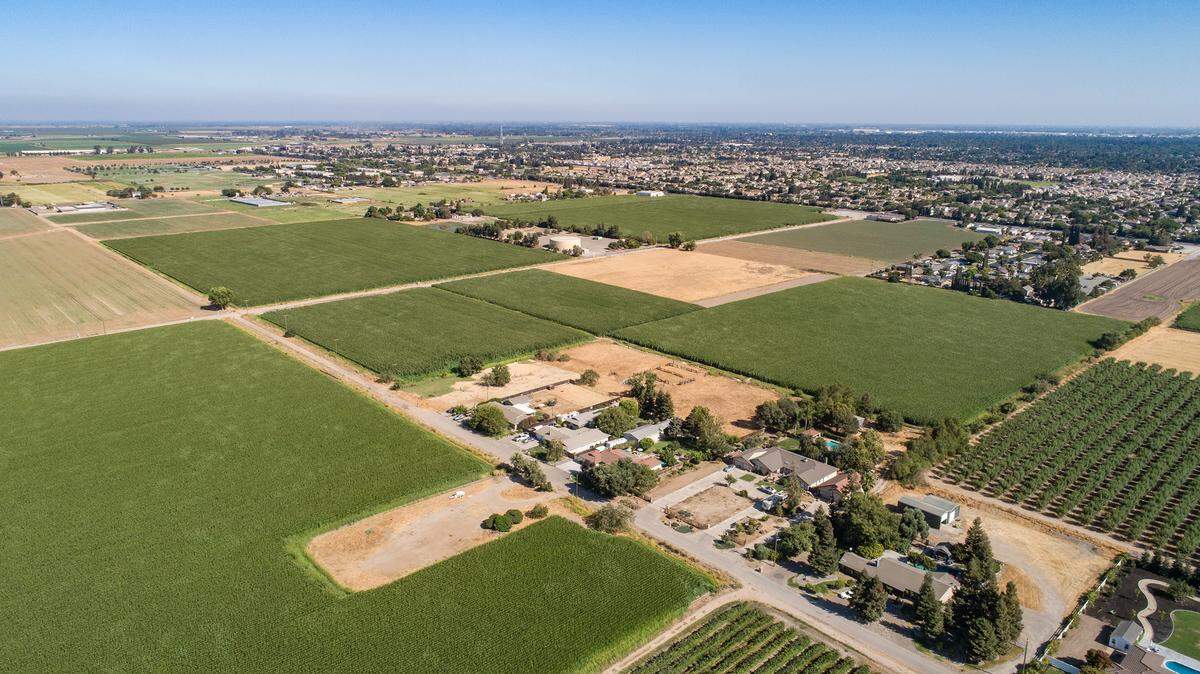
On the big projects currently under construction in the city — like Tivoli, which is being developed by PMZ and was approved by the city council in 2008 — progress has been slow, Pope said. Some developments, like the Johansen neighborhood near Johansen High School in east Modesto, have lain dormant for some time.
Measure M, Pope said, is just “one more step in the process” that developers often don’t want to have to deal with.
“That’s just one more layer of things that you have to go through that cost a lot of money and oftentimes developers ... are unwilling to do this (anymore) because it’s a maybe,” he said. “It costs millions of dollars to do that for a maybe.”
Add to that the other hoops developers need to jump through before breaking ground, from environmental reports to soil checks that ensure the development doesn’t sit on potential farmland, and the whole process, Pope said, is “very cumbersome” and “very lengthy and time-consuming.”
He said these steps aren’t unique to Modesto, but combined, they take a lot of time and a lot of money to complete.
“These things, when you gather them all up into a bundle, you can’t necessarily do one before another, and so, or sometimes you have to do one before another, and then therefore it takes just a lot longer,” he said.
Pope said the city staff he’s worked with in Modesto have been knowledgeable and helpful, but oftentimes, “their hands are tied depending on what it is that you’re trying to do.”
Jaylen French, Modesto’s economic development director, said developing new land is always risky for a city. Because entitled land needs to be fitted with utilities and maintained in perpetuity, embarking on a large-scale development typically results in a “net negative” for a city’s budget.
City incentives for residential development are rare, French said, and Modesto is focusing its efforts on developing more affordable housing, rezoning existing parcels and exploring alternative housing options.
Pope said that isn’t enough.
“The only thing that really can be done is that the city would have to take a proactive approach with regards to future annexation, along with just being very timely in processing tentative maps on property that is already annexed,” he said. “As long as they process those maps in a timely fashion, it will definitely help.”
A backlog that’s ‘way behind the eight ball’
John Beckman, the CEO of the Building Industry Association of the Greater Valley, a trade association for developers, also stressed the importance of a proactive approach to development.
“What you need is a city council who is not merely going to say, ‘Yeah, we would like to see some more housing,’” he said. “Unless they’re willing to say it’s their No. 1 goal to get more housing built and aggressively go after all of the little nickel and dime things that slow everything down and make it very difficult to build, I don’t see anything changing.”
Ultimately, Pope, Wungluck and Beckman agreed all the fees and costs associated with drawn-out development “just get passed right on down to the home buyer.”
With housing prices spiking — in Modesto, median prices for single-family homes recently broke the threshold of $400,000 — and more and more families looking to move into more affordable areas of the state to upgrade their homes, local buyers are often left in the lurch.
Nationwide, housing stock has been depleted for decades. The U.S. had a supply deficit of 3.8 million units as of the fourth quarter of 2020, according to a recent FreddieMac report, which found the housing stock deficit increased by over 50% between 2018 and 2020.
Beckman puts the estimate even higher. He said California is 5 million units short of its housing needs, 100,000 of which are needed in the Central Valley.
Estimates show Modesto alone shorting over 1,000 units annually since the recession.
The pandemic has only served to exacerbate the backlog.
“We’re way behind the eight ball as far as the number of units that needs to be produced, to be able to satisfy the demand,” Pope said. “COVID did not help matters any because everybody hunkered down and they stay at home and they realize, ‘I like being home and if I’m gonna have to be home and work from home.’ ”
If Modesto doesn’t make changes, Pope said, it’s only a matter of time before developers begin to look elsewhere.
Zagaris has already predicted that Tivoli will be among the city’s last large-scale developments, unless something drastic happens.
“We’re going to have to come together and find some solutions,” Pope said. “It’s going to end up taking the development community working with the cities and the county and the state, for that matter, to be able to come up with solutions to be able to make this happen.”
‘This story was produced with financial support from the Stanislaus Community Foundation, along with the GroundTruth Project’s Report for America initiative. The Modesto Bee maintains full editorial control of this work.
To help fund The Bee’s economic development reporter with Report for America, go to https://bit.ly/ModestoBeeRFA
This story was originally published September 8, 2021 at 6:00 AM with the headline "A tale of two cities: Modesto and Manteca’s contrasting approaches to housing development."