Sac-Joaquin Section board to vote on new football playoff format
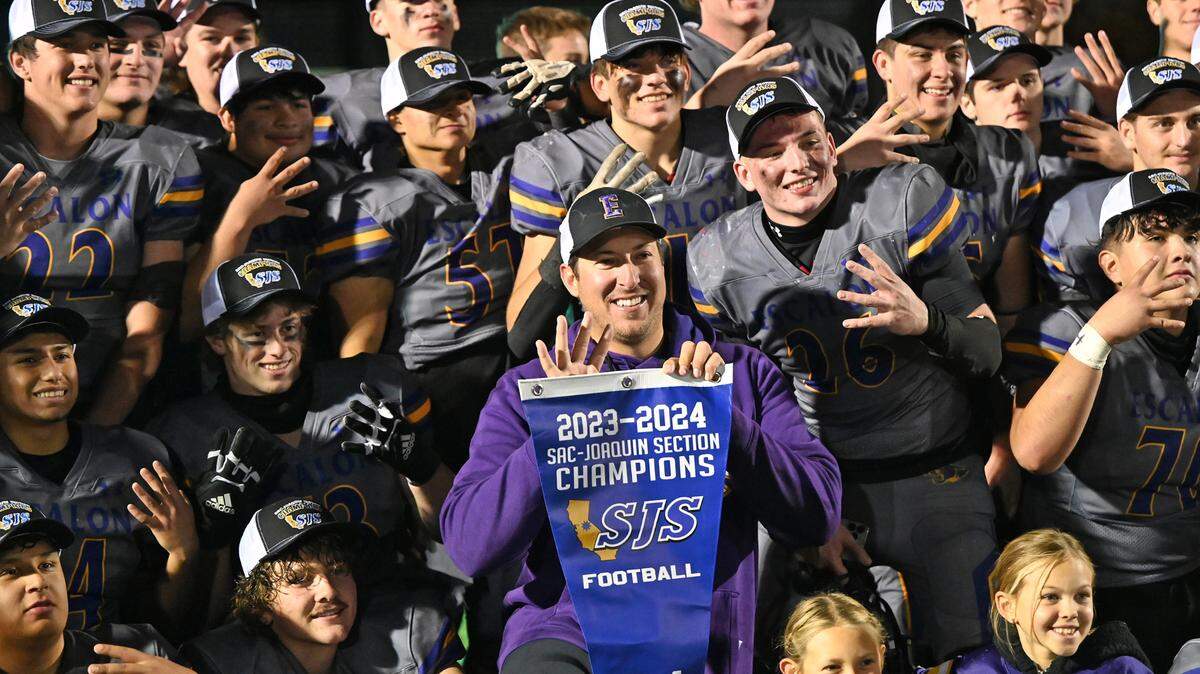
There could be a drastic change coming to the Sac-Joaquin Section high school football playoffs as soon as this year.
The Sac-Joaquin Section Board of Managers will vote on a proposed amendment to Bylaw 2207.8 regarding the football postseason. The football advisory committee brought forth the idea of reducing the traditional postseason bracket from 12 teams to eight and adding “bowl games” for teams that finish the regular season as the No. 9 through No. 16 seeds in their division.
In order to take effect, the proposal has to pass with a majority vote. There are 59 total votes on the board of managers. Each of the section’s 25 leagues is represented by two votes, then other elected officials like the president, school board and superintendent representatives, etc., receive one vote.
The board meets Wednesday, Oct. 8, at Wine & Roses in Lodi.
In the 2024 postseason, there were seven 12-team brackets, one for each of the divisions. If passed, the bracket size would be reduced to eight teams with a traditional playoff matchup format (No. 8 at No. 1, No. 7 at No. 2, etc.). Bowl games will likely be played at host sites and offer a one-time postseason matchup between two teams with similar skill levels from the same general region in the section. All teams ranked No. 1 through No. 16 can say they made it to the playoffs, whether you played for the shot at a section title or played in a bowl game.
The top eight will be eligible to advance to section, NorCal and state championship games while those who play in bowl games will see their season end whether they win or lose.
Playoff qualification could be discussed at the board of managers meeting as well. Currently, teams need four wins to qualify for the SJS playoffs.
Sac-Joaquin Section assistant commissioner Will DeBoard said in a phone call with The Bee last week that the goal is to make the high school football season shorter.
“The main drive here was figuring out how to shrink the season by a week,” he said. “Having a 12-team bracket means the postseason is still four weeks long. So you look at what’s the most amount of teams in a bracket to get to three weeks? Well, that’s eight.”
Historically, lower-seed teams have struggled to get out of the first round. In 2023, the nine through 12 seeds went 5-20 in the first round and 0-5 in the quarterfinals and in 2024 they went 3-25 in the first round and 0-3 in the quarterfinals.
Teams that make it to the very last game of the California high school football season, playing for a state championship, play nearly the same number of weeks as an NFL regular season. Last year, Division 4-A state champion Sonora played 15 games, but when you count the regular season bye and the first-round bye in the section playoffs, the Wildcats were in the season preparing for and playing games for 17 weeks. There were also preseason practices that started in late July that add onto the high school football calendar.
To keep that three-week postseason for the one through eight seeds, when the regular season ends and brackets are released, the top eight teams will likely not play that first Friday. That is when postseason bowl games will be played. The playoffs for the top eight teams will likely start the week after.
While other sections across California have eight-team playoff brackets and three-week postseasons, the Sac-Joaquin Section is a pioneer in the high school bowl game format. It is a system used at the California Junior College football ranks, however. When Modesto JC missed the eight-team state playoffs in 2021, the Pirates hosted the Grizzly Bowl, beating Diablo Valley College, 36-14.
DeBoard said the plan is for bowl games to be at individual schools, giving one team the chance to host one final time.
“We’ll have a lot of teams ending their season on a win and moving on to the winter, whereas normally they either wouldn’t make the playoffs or they would be losing in the first round, given how we currently do playoffs,” DeBoard said.
Though early signs lead toward this passing and going into effect in November, DeBoard cautioned that until officially voted on, this new format is not set in stone.
“Ultimately, it’s up to our schools if they want to pass it,” he said. “If they decide, ‘No, we like things how they are,’ they’re going to tell us by vote at the board of managers meeting and then we’ll keep things the same. That’s perfectly fine.”