Prep like pros: How Stanislaus District playoff football teams use NFL-level tech, safety
As the 2024 Sac-Joaquin Section high school football playoffs got underway a month ago, Patterson High football coach Rob Cozart made a request he wasn’t sure would be honored by the end of the season.
Patterson High asked the school district to make a purchase they felt was important to the health and safety of the team at all levels: Guardian Caps for all 125 players in the program.
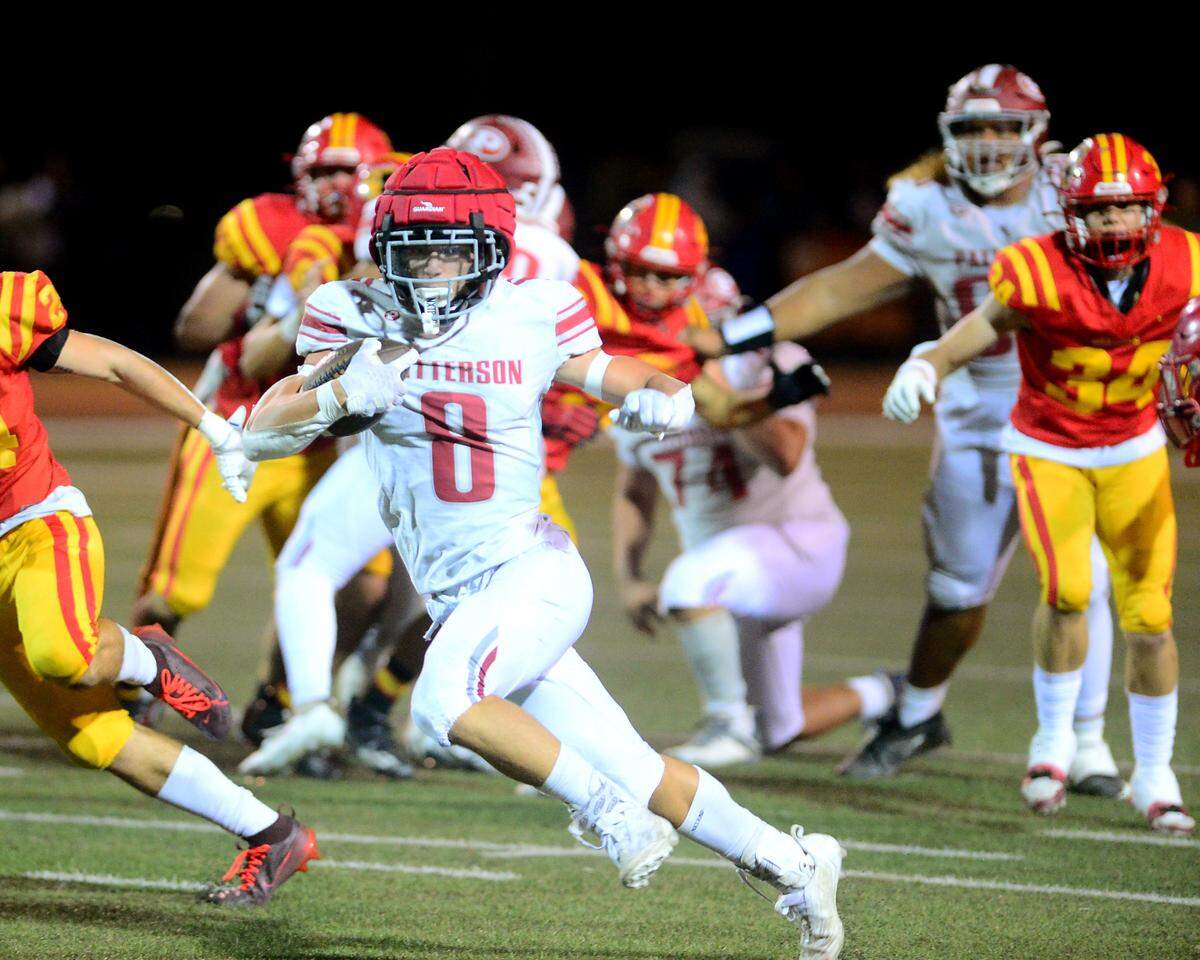
The caps — padded, soft-shell covers attached to helmets — are used to help reduce the risk of head injuries. They have become increasingly popular at all levels of football, but interest grew even more after NFL players began wearing them in games this season. The caps were featured in articles by sites like ESPN and CBS.
Some oppose them, some revere them.
Cozart said players originally made the push for the protective headwear, which can cost anywhere from $70 to $100 a pop, prompting him to go to his district. The school district paid for the headwear, which Cozart said cost between $6,000 and $7,000. They got a $15 discount on each one. The players received the caps during their playoff bye and have been using them for practices.
“That was big. They didn’t have to do that,” Cozart said. “They could have easily said we’ll have to wait. … They turned it around pretty quickly and it was a good feeling that the district stepped up because they saw something that would benefit the student-athletes.”
According to an ESPN article published in September, NFL research revealed that the cap can absorb at least 10% of the force of a hit. That was all Cozart needed to make the request.
“If you put something on the helmet and it’s 10% or 5% safer, why not have that available to your kids and somebody who feels like they’re a little bit safer with it.”
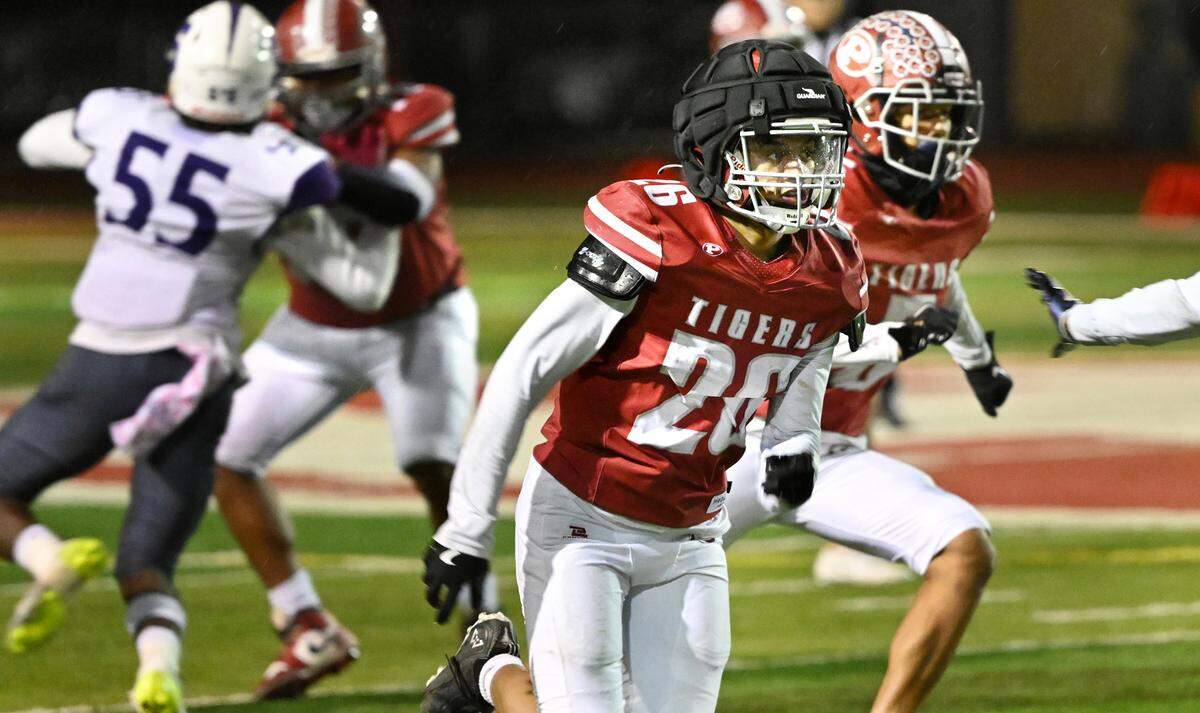
The Tigers put them right to use, running 62 live plays during their playoff prep. Each player wore a cap.
Teams across the Stanislaus District use them in practice. Cozart said that after the district purchased them, they are now required at Patterson practices. For linemen at Hughson High, head coach Shaun King said they also are required.
In the NFL, according to ESPN, if players do not have one of six new helmet models that provide equal or better protection, they are required to wear them during training camp practices.
A few players across the Stanislaus District took it a step further, though. Patterson’s Coby Joseph and Romeo Manu decided to wear them during games as well. They will play in Patterson’s second straight section title game. Likely with Guardian Caps on their helmets.
Guardian Caps are just one of the many new advancements football teams across the Stanislaus District have taken advantage of. Extra head protection and other technology have helped many schools across the area find success and aided Oakdale, Patterson and Hughson on their journeys to this weekend’s section championship games.
Oakdale reached the Division III title game as the top seed and will face No. 3 Vanden Saturday at 3 p.m. In D-IV, No. 2 Patterson will take on No. 1 Twelve Bridges on Friday at 3 p.m. And in D-V, No. 1 seed and undefeated Hughson faces No. 2 Sutter on Saturday at 11 a.m.
Extra eyes in practice and at games
Shaun King has coached Hughson to its third straight section title game but still was looking for ways to improve.
He wanted an extra set of eyes on his Hughson High practices.
Though he has a full staff equipped with offensive and defensive coordinators and position coaches, he wanted something more. A different angle. A different perspective.
So he invested in a drone.
Starting with this season, an object hovers over Hughson’s football practices. Controlled by a volunteer on the ground, the drone goes from one position group to another, bouncing from drill to drill to give the coaches a bird’s-eye view of how practice goes.
“You can get whatever angle you want,” King said. “Looking at the defense or looking away from the defense. We even do it in our (independent) drills, team drills, 7 on 7. We use them throughout the day.
“We upload it after practice, review it and we can make notes on it so the players can see we’re making corrections. … It’s just another eye in the sky.”
He got the idea from Downey coach Jeremy Plaa, who like many other high school football coaches has been recording practices with drones for a few seasons.
While they can’t fly drones during games, each team has its own end-zone camera that records each play and transfers it to an iPad where coaches can make offensive and defensive adjustments on the fly. Nearly every Modesto-area school uses a program to transfer clips to iPads on the sideline.
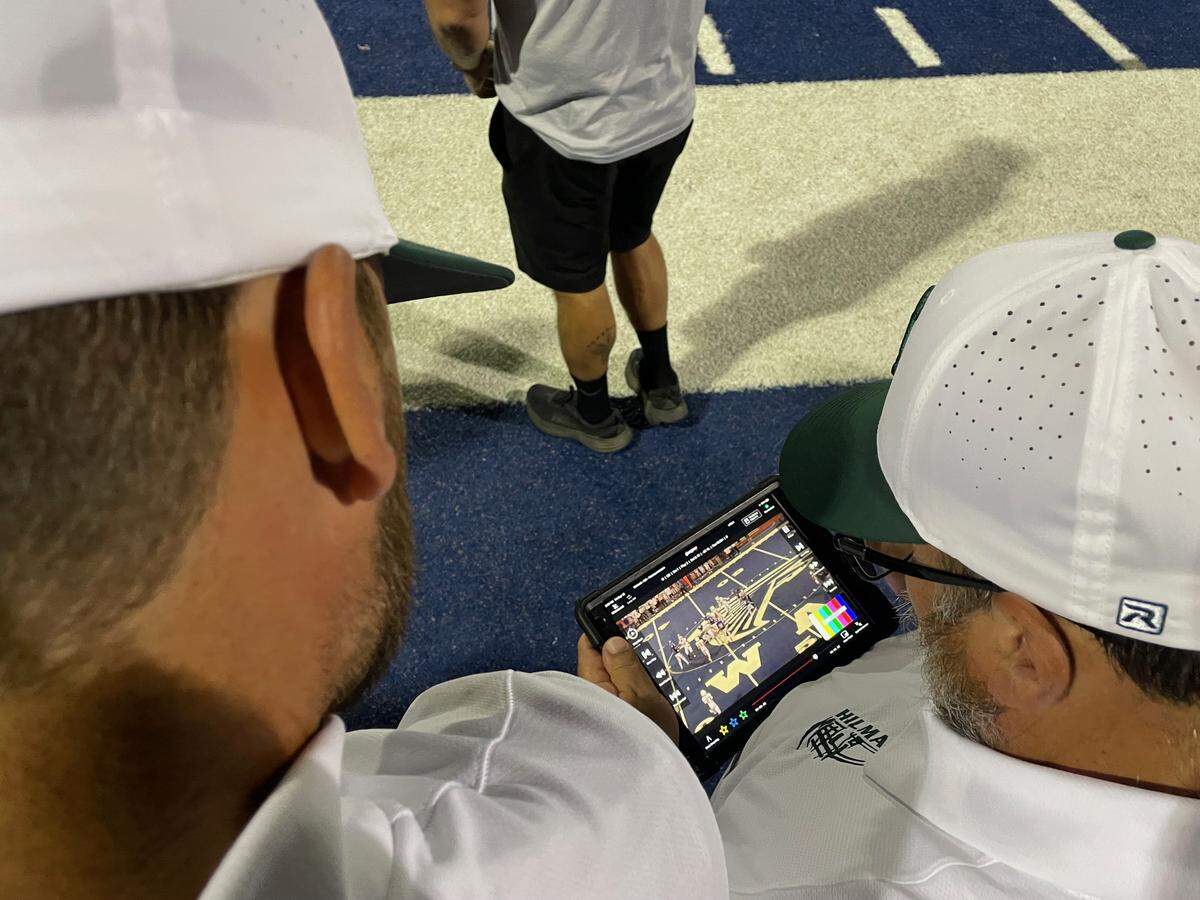
So, no, your starting quarterback is not playing iPad games when he comes off the field, your star linebacker isn’t watching the newest music video with his coach. They’re most likely dissecting every play from the last drive.
It’s an entire production for Hughson. The Huskies have a guy inside the press box with a laptop, an end-zone camera and a camera on top of the press box.
“When we run a play on first down, by third down, we can see what happened on the first-down play,” King said.
For Oakdale, a run-heavy team on which there is even more of an emphasis on play within the trenches, the extra angle of an end-zone camera helps in games.
“It’s nice to be able to make sure you know what you’re seeing,” King said, “because your angle is not good on the sideline. Football is played in those gaps and it’s hard to see from where we’re at.”
It all comes down to a common belief in all levels of sports across the world.
“The tape doesn’t lie,” King said.
Tech is helpful, but knowing the game is key
Oakdale head coach Garrett Martin is in just his second season as Mustangs head coach and already led them back to their first section title game since 2021. But he was an assistant for years.
He remembers when former Mustangs head coach and section coaching legend Trent Merzon would join coaches for film meet-ups.
Opposing coaches of old had to meet each other in person on Saturday mornings if they wanted film of their next opponent to break down. When they got back to campus, they rolled out the TV, slipped in the VHS tape and started their breakdown.
What once took up to a few hours now takes just minutes thanks to Hudl.
Hudl is where nearly every high school football game across the country is stored. The online sports video library makes it easy for coaches to exchange film with the click of a button. It is easy to sort, manage and review game film of not only your team but any team you exchange film with. Coaches and players can arrive at Saturday morning team film sessions with two or three chopped-up game tapes from next week’s opponent.
“The ability in Hudl to go through so many game tapes so quickly really allows you to game-plan so differently.”
Martin has seen both sides of the coin. As a defensive coordinator for Merzon, he spent a lot more time looking at the iPad, seeing opposing offenses and creating a game plan to slow them down to relay to his players.
As a head coach and offensive play caller, he does not look at the iPad as much as he used to. But now and then, he will use a break in action to walk over to watch a few plays. He’s seen the film on how defenses try to stop the Mustangs’ potent run-first offense from every angle since he began in 2014.
“Coach Merzon was always talking about how to attack this defense with this play and the adjustments because he had so much experience,” Martin said. “It’s all about recall and using the technology to see what it is then going ahead and attacking it.”
You can have all of the technology you want, you have to take what you’re seeing on the screen and make it translate. Football is still football.
“Pretty much everyone we play has some form of instant replay on the sideline,” Martin said. “At the end of the day, you still have to know the football side of it. It’s about melding those two together to figure out how it all works.”