
Modesto expert: This sounds like an eco-friendly solution, but it’s really a bad idea
Removing carbon dioxide from our air is a good idea, and something we should all take seriously. But the thought that you can somehow inject CO2 deep underground with no consequences of any kind is, well, a pipe dream.
I read in The Modesto Bee that a company from Cupertino is requesting a federal permit to sink wells up to 8,000 feet beneath our Valley so that they can pump carbon dioxide removed from the atmosphere into the Earth.
That’s a singularly bad idea.
I spent my career with the U.S. Geological Survey studying the Earth’s geology and hydrology. I am the author, or co-author, of numerous scientific papers published in scholarly journals.
As regulators consider permitting wells to inject retrieved carbon dioxide underground, here are a few basic scientific facts they should keep in mind:
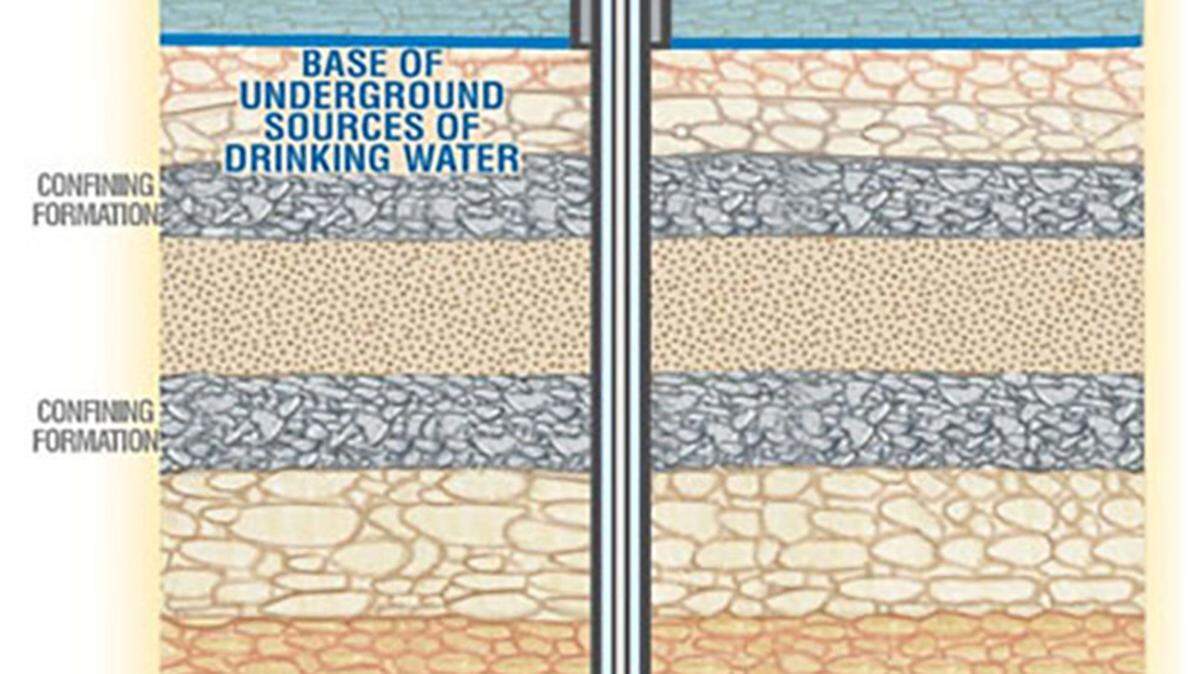
Earth beneath the Valley is made up of many strata of shale, sand, gravels and, closer to the surface, some organic materials. Water fills in the many gaps between the sands and gravels in layers we call strata.
Deep beneath the Valley is a remnant of an ancient, salty ocean that millions of years ago covered the Valley floor. Closer to the surface is fresh water that has collected in the alluvial gravels and sands that washed down from Sierra mountains over many thousands (not millions) of years. Almost everyone in the Valley relies on this fresh water for drinking and growing things to eat.
Carbon dioxide is only very slightly soluble in water. That means however much carbon dioxide you pump into the crevices and gaps in the strata of the Earth, very, very little of it will be absorbed by the water into which it is injected. Instead, the water will be displaced, or simply pushed aside and upward.
Water is incompressible, meaning unlike a gas, you can’t force more of it into the same space where water is already existing. If you try, the original pool of water will simply be displaced. So, if you add insoluble carbon dioxide into vast pools of salty water deep underground, an equal amount of that salty water will be displaced — moving up or sideways, wherever the path of least resistance allows it to go.
These are basic facts. Knowing them, we can see that injecting carbon deep into ancient water beneath the surface will push some of this salty water into other spaces above. Eventually, this displaced salty water will find a pathway upward into our freshwater aquifers. When that happens, freshwater will be ruined.
You and I cannot drink salty water, and we can’t grow food with it, either.
It should be noted that to pump CO2, a gas, under ground it must be liquified under intense pressure to negative-87 degrees, which would instantly freeze any water it contacts, blocking further injection.
What is being proposed here is similar to the fracking that oil companies are doing. And similarly, this fracking has ruined freshwater aquifers around the world, including in California, as demonstrated in a study done at Stanford University and reported on extensively in Scientific American, Consumer Reports and NPR.
There are some good ideas emerging from the scientific community for removing carbon dioxide from the atmosphere, though the best solution is not to put it there to begin with. While I support finding ways to remove carbon dioxide from the atmosphere, once removed it must be disposed of carefully — not simply pumped below ground where it can ruin our aquifers. If we do that, we’re just trading one problem for another.