
Schools in Hughson and Denair focus on protecting educators’ mental health
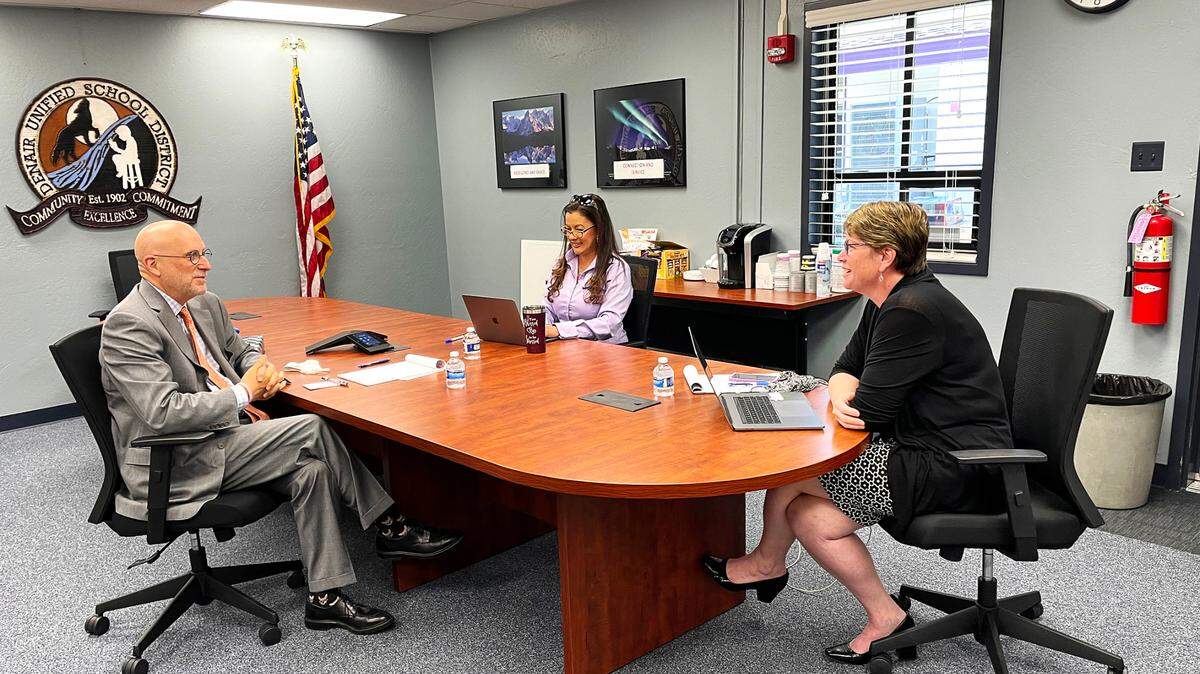
With constantly changing teaching and learning conditions during the pandemic, teachers and other public-school employees face enormous challenges. Support for educators’ behavioral and physical health is essential to ensure that teachers and staff support effective student learning.
Two rural California school districts, Denair and Hughson, are tackling the challenge.
Since mid-2020, when COVID started, public school administrators and staff at Denair Unified School District (Terry Metzger, superintendent) and Hughson Unified School District (Brenda Smith, superintendent) received philanthropic funding from EMC Health Foundation and Legacy Health Endowment to support mental health wellness. These resources allowed both districts to access a multi-faceted team of coaching and behavioral health professionals to aid their efforts in navigating the ever-changing landscape of educating children during the pandemic.
From school superintendents to front-line staff, assistance was offered and accepted. The theory: If the school’s human infrastructure was healthy, students would benefit academically, socially, and emotionally. We wanted staff to know that it was OK not to be OK, but it was not OK to stay that way.
Then, when most educators were adapting on the fly to ever-changing expectations both at work and home, they could benefit from a district’s culture that removed the stigma regarding struggling with your mental health and offered the needed support.
Denair Unified decided to extend its program beyond faculty and staff to include grades 6-12 through a mandatory mental health seminar taught by a child psychiatrist and supported by the district’s mental health team of counselors and clinicians. Students learned the basics of mental health, questions to ask, tools to use, and available resources.
The program started in September 2021 and was completed in December. And to ensure the student voice would be heard, Metzger launched her own student mental health council to receive continuous input from students and empower them to partner with the district to find practical solutions and support for students’ needs.
By November 2021, Superintendents Metzger and Smith saw that their entire teams — administrators to line staff — were nearing burnout. COVID, the delta and omicron variants, contact tracing, testing, masking, quarantining, and isolation protocols constantly changed, leaving the team exhausted.
We began talking about solutions to combat exhaustion, anxiety, and fear. After the holidays, the superintendents reengaged with staff and found the challenges had grown again. We have partnered with psychiatrists and mental health professionals to combat this by giving all staff remote access to mental health practitioners.
Their health insurance will cover costs, and where copays or deductibles may be financial roadblocks, or the health insurance coverage is limited, foundation dollars will be used. The goal is to eliminate all possible financial barriers and promote a healthy staff infrastructure.
Public education is the bedrock of our country’s success. It prepares our children to become informed and productive citizens, engaging effectively in our democracy and economy. And while the pandemic continues to threaten the capacity of that system, we must continue to create solutions to address the pandemic-induced stress placed on rural public schools.
Teachers, administrators, and other staff are education’s first responders. If they are not healthy, both mentally and physically, public education will collapse. Nothing could be more tragic. Nothing could be more wrong.