
What will spacing between students look like in Stanislaus schools?
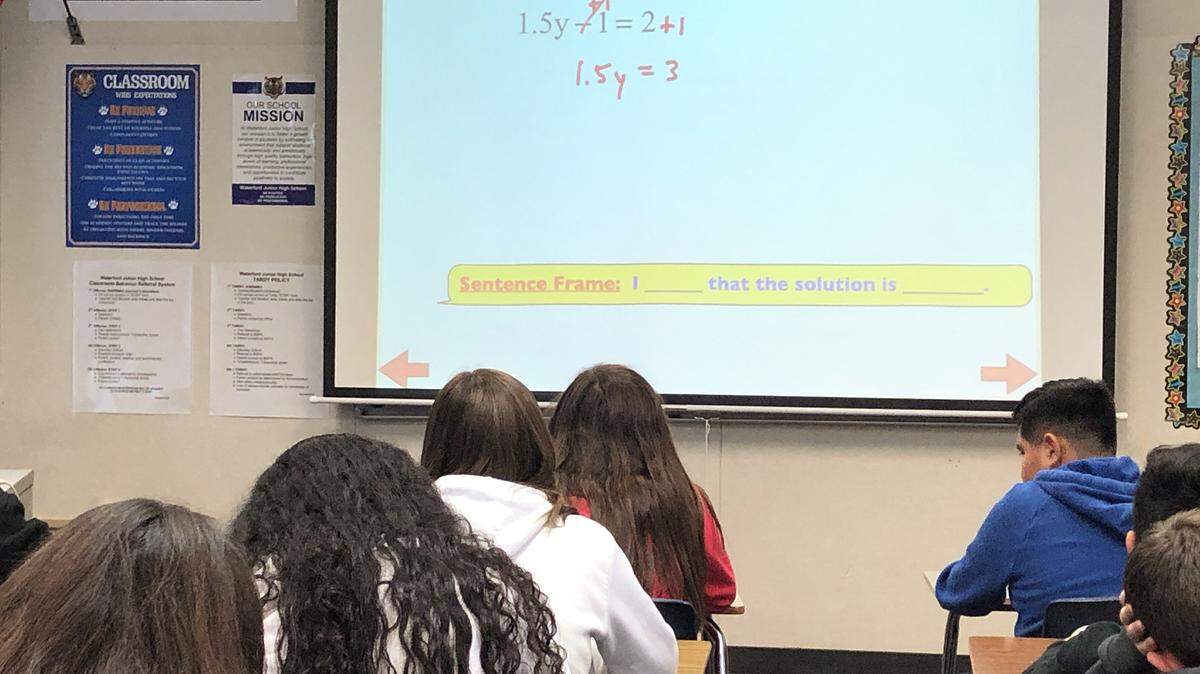
For the past week or so, the headline news story of almost every major news network was about schools starting up again. Most school districts were about a month away from starting and were scrambling to determine just what type of learning format they would be implementing.
A bunch of different models were talked about. There was talk about doing online learning like we did in the spring, of having students attend virtual academies, of attending partial days of the week or reduced hours, of hybrid models, and of course, about having a traditional return to the classroom. Districts were asking families to commit to a model so they could determine staffing and come up with a workable plan.
One thing was for sure, however. No matter what school official you talked to at the time, no one really knew what would be happening.
Then on Monday we were told we would be returning to an online format to begin the school year. The 25 different school district superintendents along with Dr. Julie Vaishampayan, Stanislaus County’s public health official, determined that the risk of in-school education wasn’t the safest choice right now.
I’m good with that. But what about when we are able to go back? What will classroom conditions look like then?
Until Monday, a 15-page document entitled School Year Planning: A Guide to Address the Challenges of Covid-19 was the rulebook when it came to having a plan to return to the classroom in Stanislaus County. Created by the county Public Health Department along with school district superintendents and the Stanislaus County Office of Education, it discusses conditions that students and teachers would face upon returning to school.
One thing that jumped out at me was what it said about social distancing. It said students would be three to six feet apart.
That’s right.
Not six feet, but three to six feet.
I’ve listened to a lot of news coverage over the past few months and I’ve never heard anyone advocate for less than six feet of spacing. The Center for Disease Control, the World Health Organization, media sources, and doctors around the world all say six feet of spacing.
So why do our public health official, SCOE and school superintendents say otherwise?
Honestly, I think it’s because most classrooms simply don’t have the capacity to maintain the six-foot distancing guideline. Classrooms are small, student rosters are large, and there simply wouldn’t be enough room for everyone.
The classroom I teach in, for example, is approximately 24-feet-wide by 41-feet-long. That means that if there were nothing in the classroom except for desks and people (which would be completely unrealistic and require moving all furniture out of rooms), you could fit approximately 22 people at six feet of spacing. With a classroom roster of 34, that equates to roughly two thirds of a normal classroom’s capacity. In other words, one third of my class simply wouldn’t fit.
Unless you change the spacing.
So what’s that have to do with the eventual return to the classroom?
Once we’re cleared to return to brick-and-mortar learning sometime down the road, families will again be asked to make a choice about what type of program they’ll want for their children. If families opt for a regular classroom return model, then they need to understand what they could be getting themselves into. They need to understand that spacing may indeed be only three feet apart in order to house everyone.
And that, to be quite honest, is no more than it was before COVID.