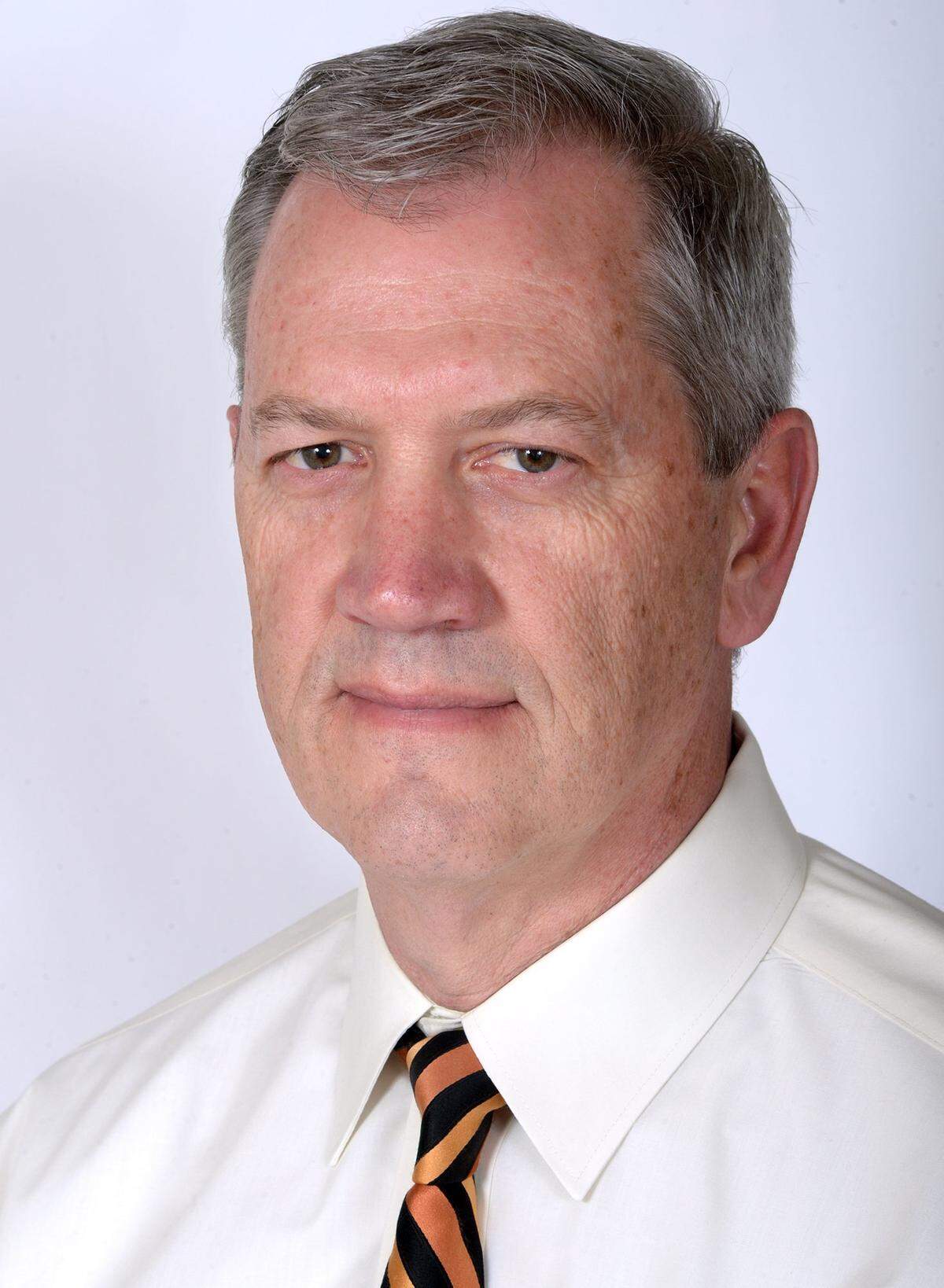
Tears, yes — but courage and compassion also abound in Ukraine, Modesto man’s homeland
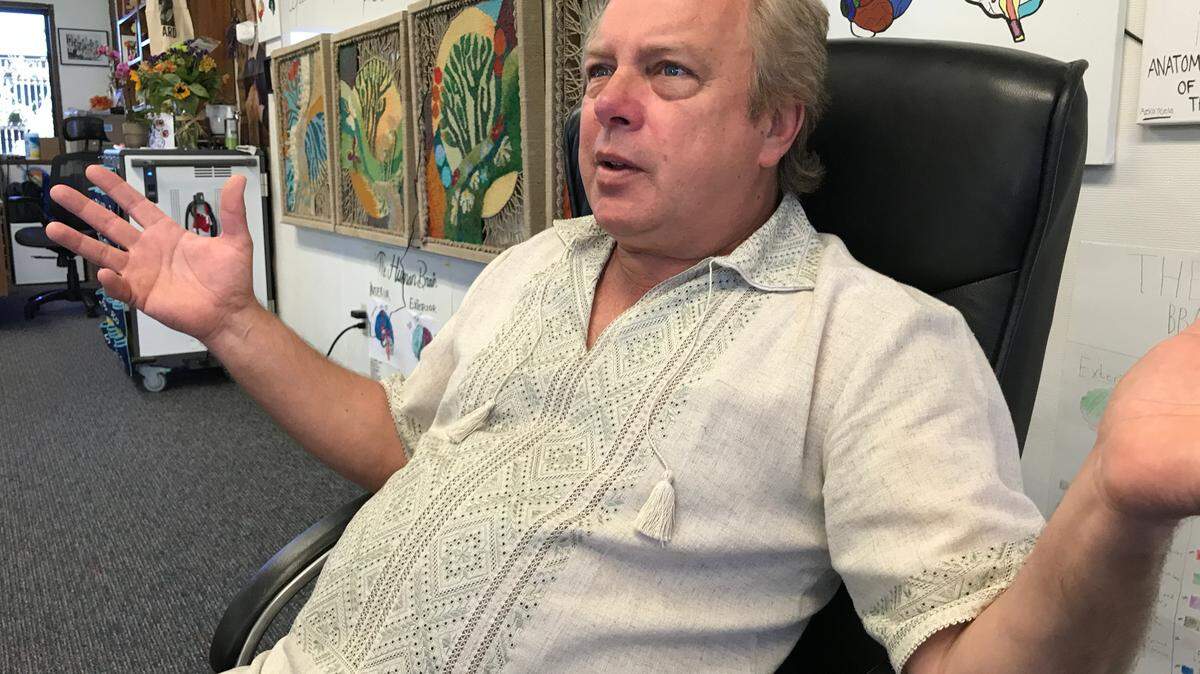
Every morning, Sergei Samborski awakens, his 61-year-old body safe and sound in his bed in Modesto. But his soul is 6,000 miles away in his native Ukraine, pounded and pummeled since Russia began its invasion.
“My mind perceives this as a long nightmare,” Samborski says. “I can’t fathom that this is possible, in the geographic center of Europe, in 2022. It’s unbelievable.”
Every evening, Samborski telephones loved ones in the war zone, frantic to learn that they’re still alive, still keeping faith that Ukraine can hang on despite sirens and tanks and exploding missiles. He calls the house he still owns in relatively safe Western Ukraine now harboring eight family members, friends and a dog. All are internal refugees who, with Samborski’s help, fled the violence in Central and Eastern Ukraine.
The house is in Khmelnytskyi, where Samborski was born and raised. You might know that Khmelnytskyi (say mel-NIT-ski) is a sister city to Modesto and so far has been spared the catastrophic airstrikes you see on TV that are destroying less fortunate cities, although a military airfield a few miles away was quickly leveled when the war began Feb. 24.
These daily calls can last hours. They are both heart-breaking and heart-warming, because they’re about people — his people, his land. A land under fire and filled with fire, and tears.
“My soul, the feelings in my wounded chest,” Samborski says, apologizing for an emotional tirade against “Putler” and the “Russists” — the first term combines Putin and Hitler, the second, Russia and fascists. Both are put-downs meant to show contempt for those ripping apart his homeland.
Refuge in Modesto’s sister city
He didn’t get much sleep last night, Samborski says, talking till 2 a.m. His 7-month-old grandniece has pneumonia. An aunt receives chemotherapy for cancer. A nephew is in the Ukrainian military, commanding a special forces unit that neutralizes Russian units trying to win control over infrastructure like nuclear power plants. Family members shivered in a basement bunker five nights before fleeing Kyiv for his home in Khmelnytskyi, a trip usually lasting four or five hours that this time required 20.
On her recent 84th birthday, another aunt told him, “I’ve never had such a celebratory birthday,” equating exploding shells and missiles with the kind of fireworks that provoke oohs and ahhs of admiration in happier times. Samborski loves that spunk, that spirit — and he does everything he can, he says, to pump it up from afar.
“The best therapy,” he tells me, “is to infuse them with optimism and hope.”
He’s an expert in that department. Samborski teaches psychology at Stanislaus State University in Turlock and at Ripon High School, and used to teach at Modesto Junior College. In his Ripon classroom hangs a blue plastic shovel with a hand-scrawled inscription: “Dig deep.” A sign above the whiteboard belies more of his philosophy: “You don’t have to be where you came from.”
Psychology brought him to the United States in 1991, just before Ukraine split from the then-crumbling Soviet Union. He was invited to give presentations here on what he had learned while helping to relocate youth who might have been exposed to radiation in the 1986 Chernobyl nuclear power plant disaster, from the tainted region to safe summer camps, with their families’ permission.
Appearances took Samborski to various schools and institutions, including Modesto. He continued studying here, eventually married and stayed except for annual trips to visit friends and family and his property in Khmelnytskyi. Over many years since, dozens of people have participated in delegations arranged with Samborski’s help for people in Modesto visiting Khmelnytskyi, and vice versa.
So roughly half of his life was spent in Soviet-occupied Ukraine, and half in Modesto. And now, Ukraine once again is occupied by invaders.
America saw it coming
The current war was not unexpected. Samborski gives President Joe Biden high marks for warning the world that Russia was amassing military near its Ukraine border back in December. And Samborski is critical of Ukrainian leadership for not doing enough to prepare, and of NATO for not doing enough to react.
“They say they are extremely concerned. Well, Ukraine is fed up with `extremely concerned.’ If they’re so concerned, do something.”
Like declare a no-fly zone, to prevent Russian planes from bombing Ukraine cities, Samborski says.
“Biden says if there is a no-fly zone, it will be World War III. But World War III has already started,” he says, “because Putler was allowed to invade Georgia in 2008, and he was allowed to take Crimea in 2014. Dictators like him, they do not stop. And all the sanctions against Russia, they do nothing.
“So No. 1, close the skies. And if they can’t close the sky because they’re so concerned, then give us something to protect ourselves. We can do it.”
Samborski is rightly proud of Ukraine’s resilience. No way should officials promise anything at the bargaining table, he says, now that his people have proven they can hold back the mighty Russian military, which might not be so mighty after all.
“We don’t want the negotiators to make any deals with Russia. We don’t trust them anyway,” he says.
Meanwhile, Samborski keeps making nightly calls to lift his people. He sends photos of poppies blooming in California springtime, tells them of the pastor neighbor who comes weekly to pray in his Modesto driveway for Ukraine, describes flower bouquets left by well-wishers at his Ripon High classroom.
And I wonder, when Samborski says nightly calls are “the best therapy,” does he mean for them? Or for him?
Bears and elephants
His wife raised money here for 600 tickets to a zoo in Ukraine — not because anyone will use them, because the war has closed it. But income is needed to keep animals from starving, and to sedate them when shelling makes them frantic.
Two nights ago, Samborski talked with an aunt near Mykolayiv who gathers villagers to drive into the countryside to milk stray cows that fled bombardments. They donate the milk to soldiers and homes for the needy.
Unlike relatively safe Khmelnytskyi, miles away, Mykolayiv has been ravaged by the Russian missile onslaught, killing 80 and wounding 450 since the war began, its mayor said. When Samborski’s aunt arrived at a checkpoint staffed by Ukrainian soldiers, he asked her to pass her phone to the guard — who turned out to be from Khmelnytskyi, they discovered upon hearing each other’s regional accents, setting off a joyful greeting. The soldier gushed gratitude for American javelin anti-tank missiles, Samborski says.
“It was a very powerful moment,” he says.
The next day, using a fancy breadmaker Samborski gave his aunt last year, she and her husband and their granddaughter took 10 loaves to the checkpoint soldiers, saying, “Here is a present from America,” he says.
“Every gesture boosts morale big-time,” he says, “so they understand they are not alone. That’s what people do.”