Three young Modesto lives taken by a ruthless, undiscriminating killer: fentanyl
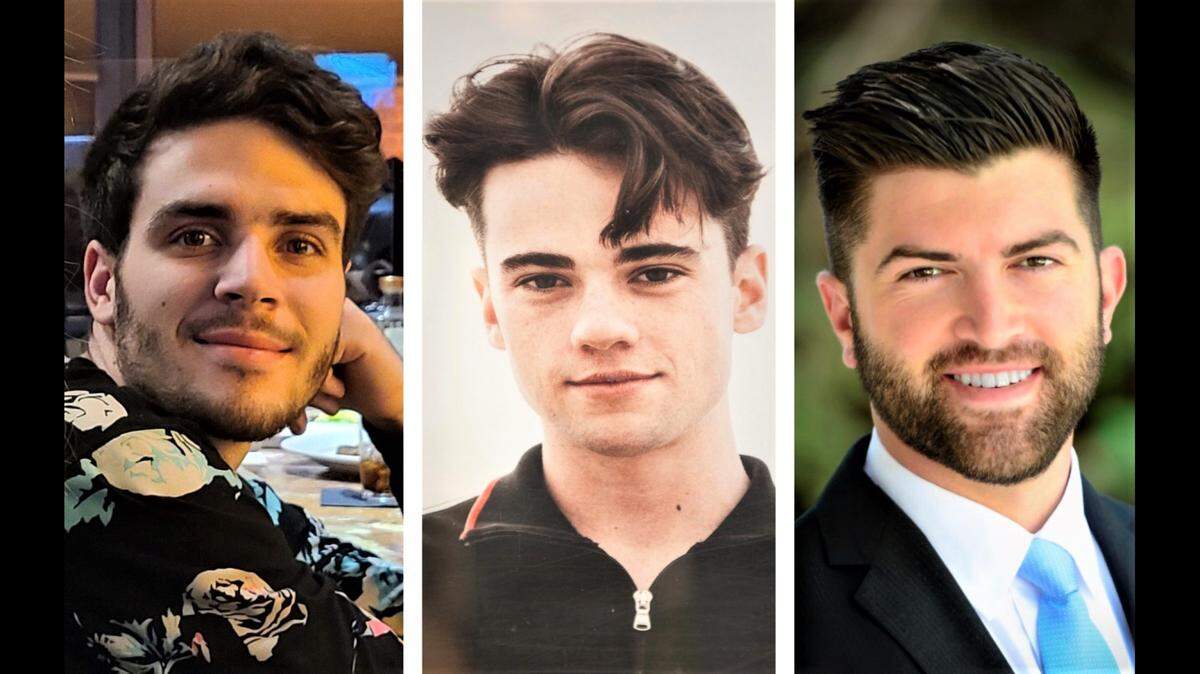
Connor, Jason and Jordan.
Three young men with all-American names who grew up in solid, loving, church-going families right here in Modesto.
I got to know Connor, Jason and Jordan through their parents, because none is here to tell his own story.
All three are dead.
Connor, Jason and Jordan and more than 50 other Stanislaus County residents died this year at the hands of an increasingly efficient, undiscriminating killer with no conscience: black market fentanyl.
Chances are you’ve read or heard about the fentanyl crisis. Last month, President Joe Biden outlined a strategy to counter a spike in overdose deaths marked by a 30% jump over the previous year. The Sacramento Bee predicts 2021 will be the first year that more people die there from fentanyl than homicide.
Fentanyl slams Modesto
The odds that illicit fentanyl has darkened your life — hurting or killing someone you love or know, here in Stanislaus County — increase every day. In 2018, six Stanislaus residents died of fentanyl poisoning; so far this year, 55 have, an 800% increase in three years.
Do not fall into the trap of thinking this only affects other people and could never happen to you.
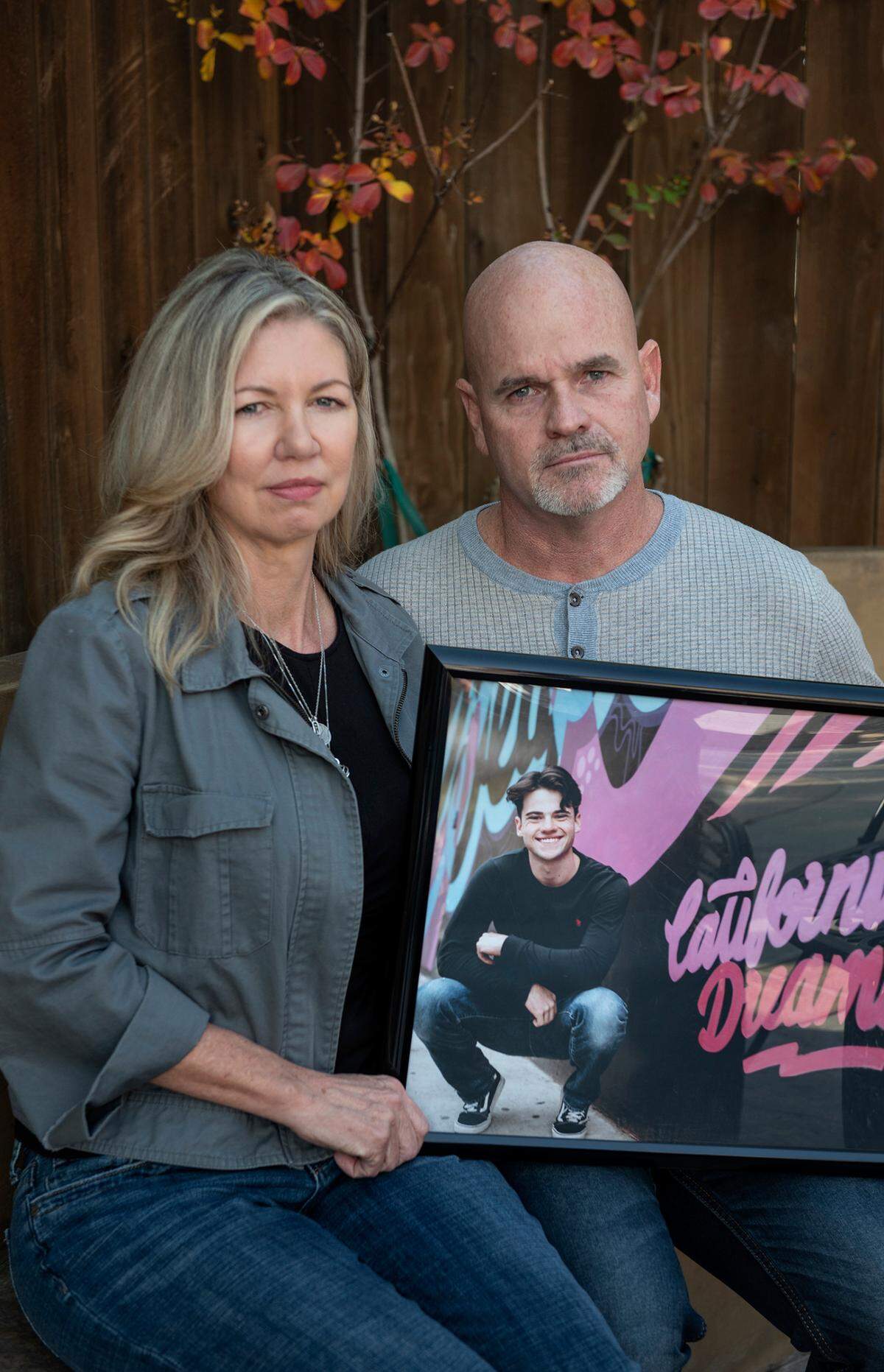
“Fentanyl doesn’t care what side of town you live on, or how much money you make,” said Kristi Ah You, whose 29-year-old son, Jordan Herr, is the Jordan I’ve mentioned.
You’ve heard her name because it’s been in The Modesto Bee about 400 times in the past two decades, mostly for positive public service reasons. A year ago, Ah You was a Modesto City Council member running for mayor, and the managing partner of prominent Modesto mortuary Franklin & Downs, and Stanislaus’ former deputy chief coroner.
But like she said, fentanyl doesn’t look at your status. It took Jordan — an Army veteran, karate black belt and new father — in the prime of his life. Ah You suffered the unimaginable pain of finding her son’s body, in July, moments after he was gone.
Ditto for Christie Hoffmann, whose son, Connor, a former Downey High student, was 21 when he died in May after getting $10 worth of fentanyl from a guy on SnapChat.
“I still have spinning images in my head,” Hoffmann said. “First, Connor giving me a hug, then the next image is of me finding him, then at Lakewood (Memorial Park) after the autopsy, then an image of me holding his ashes. I spin in pretty much those four images all the time.”
Jason Abney, who had attended Enochs High, was even younger — only 20 — when he sought Xanax on SnapChat in April, took half a pill and died.
Don’t call it a drug overdose, says his mother, Brandy Abney, “because that means he took too much of something. You shouldn’t die from a pill, so I call that poisoning. When somebody doesn’t know what’s in the pill, it’s drug-induced homicide.”
Most people killed by illicit fentanyl didn’t know what they were getting, authorities say, making the spike in deaths more maddening, and perhaps harder to accept.
A 14-year-old Waterford girl, for example, may have been experimenting when she recently died from fentanyl. “One pill can kill,” goes the true slogan that should put fear in parents’ hearts.
“Some parents have varying perspectives: `Kids will be kids.’ `They’re going to do crazy things in high school or college,’” Stanislaus Sheriff Jeff Dirkse told me. “But when you’re talking about something that could be laced with fentanyl, you’re talking about a potential death sentence.”
COVID plays role in fentanyl cases
The COVID-19 pandemic is partly to blame for this crisis, forcing people into isolation while reducing the availability of treatment. When everything shut down, Connor’s mother said, so did he.
To avoid giving the wrong impression, I should clarify that Connor, Jason and Jordan all struggled with varying degrees of addiction.
Connor was three days out of rehab, and Jason had recently left a sober-living facility, when they died. Jordan, who suffered a traumatic brain injury from an explosive device during his tour in Afghanistan, had been in and out of 20 substance-abuse programs sponsored by Veterans Affairs, Ah You said.
Connor, Jason and Jordan were and are deeply loved, and if not for fentanyl, likely would still be among us.
So this warning goes out not just to those who pay the ultimate price upon being tricked once. It’s also for users, whether casual or hard core, who think they know how to spot a “bad” pill or powder. Because they can’t.
Fentanyl, a synthetic opioid, can’t be detected by sight, smell or taste.
Narcotics prescribed by a doctor and issued by a pharmacy are meant to relieve pain, safely. Those mixed by a drug dealer are meant to make money.
Fentanyl is relatively cheap and 100 times stronger than morphine. So dealers “cut” or mix fentanyl into other drugs — cocaine, heroin, even marijuana — to produce more euphoria, quickly hooking the user.
“Making money becomes the sole focus, not necessarily the health or well-being of the consumer,” said Lt. Richard Gonzales of the Stanislaus Sheriff’s Department.
When counterfeit pill makers or drug cutters get sloppy, too much can go into a pill or baggie. That’s why too many die.
As much as 42% of counterfeit fentanyl pills seized in 2020 by the U.S. Drug Enforcement Administration contained enough fentanyl to kill someone, the agency said.
“You’re playing Russian roulette because you have no idea what dose you’re taking,” Ah You said.
Solving an impossible puzzle
The recent “extraordinary proliferation of fentanyl” in our neighborhoods, said Stanislaus District Attorney Birgit Fladager, has her thinking about murder charges for drug dealers who ignore specific warnings and sell fentanyl to users who overdose and die. Ten other California counties already are doing this.
What else can be done?
Modesto police and Stanislaus deputies carry Narcan, a nasal spray that reverses overdoses. Some advocates say all families should have kits, just in case.
Parents should be engaged in children’s lives, and seek help at stanrx.net, 800-662-4357 or 888-376-6246.
The Stanislaus County Opioid Safety Coalition has a public awareness campaign, including radio and bus bench ads. The group is preparing video clips featuring loved ones of those who died will be shown in local theaters before movies during the upcoming holiday season, and shared on social media.
They will include survivors of Connor, Jason and Jordan sharing the young men’s tragic stories in hope of saving others similar pain.
“I don’t want to see this happen to anybody,” Brandy Abney said. “It is the most painful journey.”
This story was originally published November 21, 2021 at 4:00 AM.