Insights on new Modesto Mayor Sue Zwahlen, from her own lips
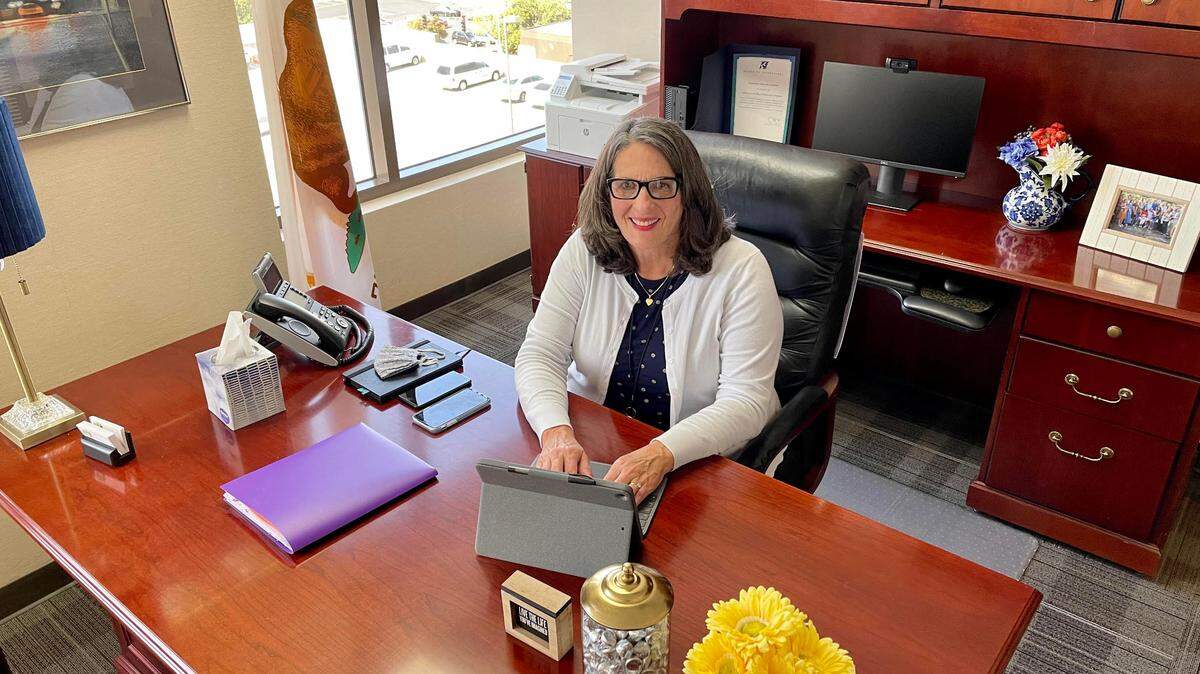
Four weeks after she became Modesto mayor — beating former Mayor Ted Brandvold, former Vice Mayor Doug Ridenour and five other candidates — Sue Zwahlen sat down with me and Bee Editor Brian Clark for a properly distanced, wide-ranging conversation.
We knew, of course, that Zwahlen, 66, had served eight years on the Modesto City Schools Board. We knew that she is a lifelong Modesto resident and the mother of record-setting Downey High quarterback Aaron Zwahlen. We knew that she worked four decades as an emergency room nurse here in town.
Many are counting on her to help heal what was a deeply divided council beset by distrust, and we’re aware that restoring confidence in City Hall is one of her top priorities.
We knew that no sooner had she been sworn in as mayor on Feb. 23, friends and family of an unarmed man shot and killed by a Modesto policeman unloaded on the City Council with heart-wrenching grievances that stretched for hours over three meetings as Zwahlen quietly listened. She since has met with some of them in private, the officer was fired (she was not involved in that decision) and Zwahlen will spearhead a community effort to address relations with police.
We had no idea that Zwahlen dreams of one day occupying an apartment above a shop in some future downtown Modesto housing project, a vision floated by so many over several decades and realized by none. “This is my turf!” she said.
We learned that after her latest political victories — Nov. 3 in the general election, and Feb. 2 in the runoff — she spent time with Brandvold in his architecture office, and drove to Patterson with Ridenour to view tiny homes as a potential partial solution for homelessness. She said both were respectful, perfect gentlemen.
We didn’t know that as a girl, Zwahlen saw Robert Kennedy as he campaigned in Modesto in 1968, and that his message inspired her to a lifetime of community service.
We learned that Zwahlen is quietly encouraging young people to get involvement in city government, in a form to be determined by youth and not adults. We learned that the mayor intends to speak to her people in a state of the city address, perhaps in a month or two.
We certainly didn’t know that Zwahlen’s husband, Lynn, privately refers to her as “your royal highness.”
Modesto mayor opens up
Here are some excerpts from our discussion, in Zwahlen’s words.
On hearing out Trevor Seever’s survivors at City Council meetings: “I’ve worked with people grieving deeply my entire life, from the moment they’re told the news that their loved one has died. This is what I heard from (his friends and family). I know from experience there was not one word I could say to help or to take that away. So that was their time to grieve. That’s the way I saw it.”
On the city’s announcement that Zwahlen will convoke a committee of regular people to consider police “policies and practices,” which could take several months and lead to something like civilian review: “No decision has been made yet. It’s to be a very community-driven process. It’s not all mapped out. (Soon) the City Council will vote to go forward or not. We haven’t named it yet. I anticipate the community will decide and recommend group representatives which the council would approve, then they will do the work. That process will decide whether it’s a civilian review board or something else.”
On her personal approach to work: “There is no 100-day plan. Those are things that politicians do — bullet points and talking points — and that’s all you hear. I’m here all day, every day, grinding out the work. At first it was 18-to-20-hour days. Now it’s 12-to-15-hour days. I’m getting a grip on the job. I know how to schedule 14 games on a Saturday plus eight loads of laundry and everything else. I get the hard work part. It’s familiar.”
On what others think of her so far: “I think people see drive and optimism. People say, ‘Sue, we know you can do this.’”
On how to know when a goal is reached: “It’s not ever `done,’ but over time, hopefully, there is improvement. We’re still talking about things (like downtown housing) that were important to me in 1968.”
On guiding the council as teammates: “I came in and said, `I’m here to get work done. I’m not here to get anyone fired or to be critical.’
“I’m in my lane to get the job done. I can’t keep track of who hates who. That’s over. This is a new day.”
This story was originally published March 29, 2021 at 4:00 AM.