
One way or another, you’ll pay more for roads
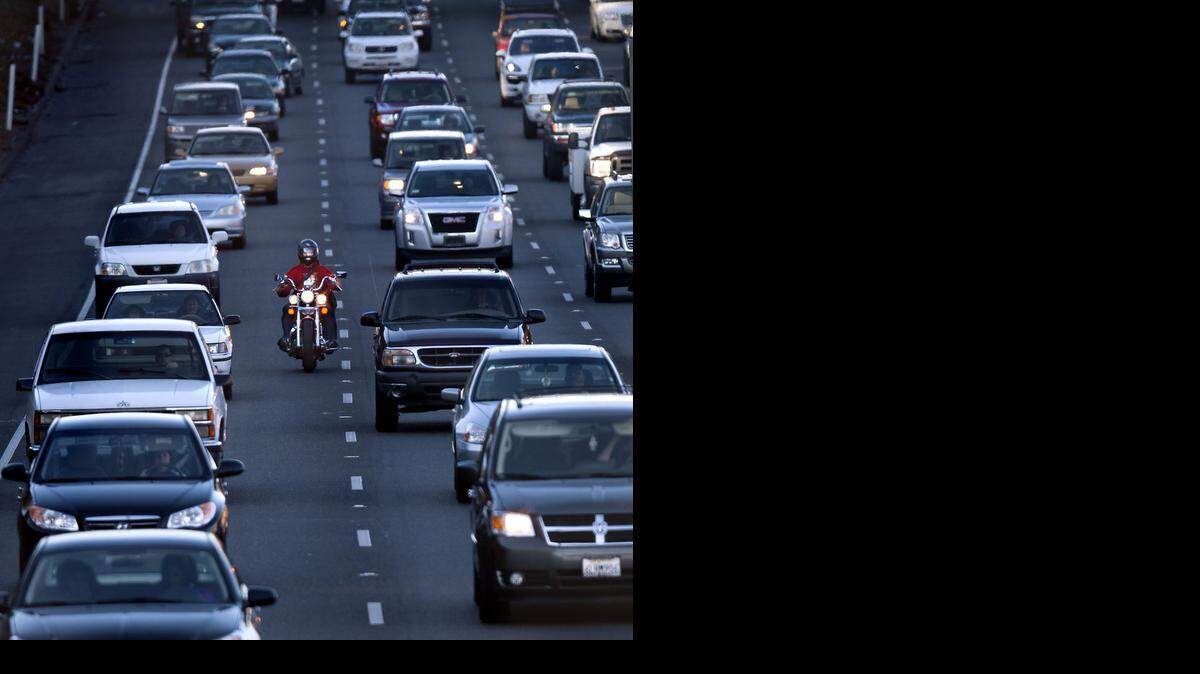
Any California commuter can feel the problem. Drive, or more accurately bounce, on westbound Interstate 80 through West Sacramento, or play dodge-the-ruts on stretches of Highway 99 and Interstate 5.
By Gov. Jerry Brown’s estimate, Californians have $59 billion worth of maintenance to do in the coming years on the state’s roads, freeways and bridges, 30 percent of which are not up to current-day standards.
Something must be done.
California Transportation Secretary Brian P. Kelly released a series of papers last week focusing on the issue, and he will convene meetings this month to come up with solutions.
In other words, prepare to pay more. The question: How will those charges be apportioned?
In a sense, the problem is one of our own making. The state offers incentives to consumers who buy electric vehicles. Greater fuel efficiency reduces air pollution and perhaps climate change, a grand idea. But as people purchase less fuel, gas tax collections decline – by a projected $16 billion between now and 2030.
In Washington, D.C., Republicans, including Senate Finance Committee Chairman Orrin Hatch of Utah, are floating the idea of raising the federal gasoline tax, which has been fixed at 18.4 cents per gallon for the past 22 years.
Additional money from Uncle Sam would help. But California cannot depend on a federal bailout. The state needs to act on its own.
The simple solution would be to jack up the state gasoline tax. What’s simple isn’t the best alternative. When combined with federal and local taxes, California levies one of the highest gas taxes of any state in the nation, 63.79 cents per gallon. Texas motorists, by comparison, pay a combined 38-cent-per-gallon tax.
We don’t advocate using Texas a model. But the per-gallon tax falls heaviest on poorer people who rely on their vehicles to get to and from work. There ought to be a better way.
State transportation officials have raised several other ideas:
▪ Make heavier use of toll roads; this editorial board’s least favored option, especially if tolls are imposed on roads that were built with taxpayer money. Wealthier motorists who can pay the tolls end up zipping along while working stiffs battle in bumper-to-bumper traffic.
▪ Impose charges based on miles driven; Oregon is testing mileage fees now. That makes sense, although the state would need to keep track of miles driven. That could entail placing devices installed in vehicles, which would raise privacy concerns.
▪ Raise registration fees, or car taxes levied on the value of vehicles. People who can afford more costly vehicles would shoulder greater cost. That’s an idea worth revisiting.
▪ Increase weight fees. A Prius would pay less than a pickup or an SUV, or an 18-wheeler.
A lobby fight is coming. The California Trucking Association views fuel tax increases as “the most equitable way of raising revenue for infrastructure,” said R.J. Cervantes, director of the truckers’ legislative affairs operation.
Cervantes said the trucking industry makes up about 5 percent of the total miles driven in California, but pays about 20 percent of what the state collects in taxes, weight fees, and licensing and registration fees. That amounts to about $2 billion a year, he says, about half of that in weight fees.
Weight fees, Cervantes said, are being used now to pay debt service on past state transportation bonds. He and his members think that revenue should be be shifted to maintenance before more fees are imposed.
Critics of high-speed rail home in on the cost, $68 billion. That is a huge number. Over time, it probably will rise. But good roads come a steep cost, too. Those of us who drive ought to anticipate paying more for the privilege, in one form or another.
This story was originally published January 19, 2015 at 11:47 PM with the headline "One way or another, you’ll pay more for roads."