
Will CARE Court be a game changer in helping the homeless with mental illness? | Opinion
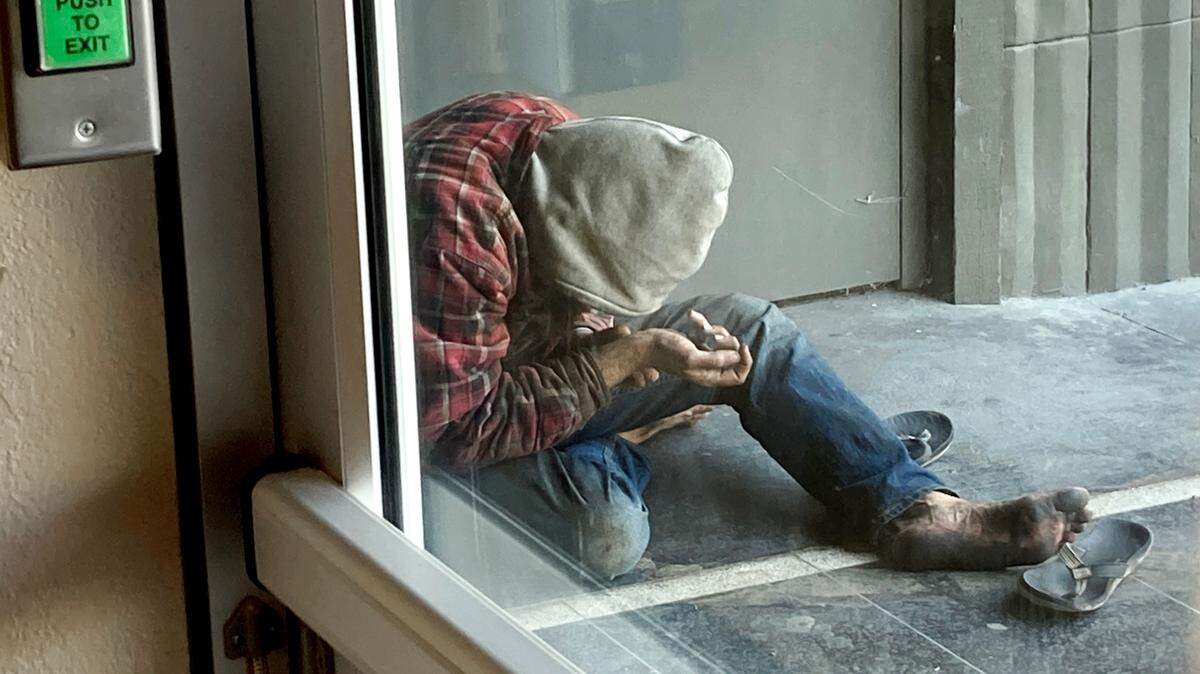
We see them on the street, pacing, arms flailing, talking to themselves or shouting at someone who isn’t there, sometimes wandering into traffic. We know they are someone’s daughter, someone’s brother or cousin. They are human beings in need of help.
But they might not know that.
How can they ask for help if a mental illness keeps them from recognizing they need it?
They can’t. But someone who cares might.
In six weeks, family members of people with psychotic disorders will have a new, legal avenue established by the state that makes it possible for family members to get their suffering loved ones into treatment.
CARE Court represents new hope for a segment of California’s population who are homeless and suffering, perhaps as many as 12,000 people. It deserves a chance to work. Championed by Gov. Gavin Newsom and heavily supported in the Legislature, the Community Assistance, Recovery, and Empowerment (CARE) Court works this way: Family members, first responders and others can petition a newly formed court to intervene in the life of someone with schizophrenia or other untreated psychotic disorders.
Depending on the circumstances of the individual, the court can order an evaluation and recommend treatment. Medication cannot be forcibly administered but the individual must attend meetings to determine if progress is being made on a specified treatment plan tailored to the individual. Getting CARE Court up and running has been a heavy lift because eventually, all 58 California counties will have to offer these services.
Stanislaus and Tuolumne are among only seven counties kicking off CARE Court in October; Los Angeles County will come on board in December, and California’s 50 other counties will follow in October 2024.
As evidenced by the bipartisan support for CARE Court in the Legislature, California is anxious for a game changer in the never-ending battle against homelessness.
Soon, concerned Stanislaus residents will be able to visit a website and enter information about someone who is homeless and psychotic. A judge dedicated to CARE Court can then order a clinical evaluation, and if criteria are met, a team of experts develops a treatment plan that includes stabilizing meds and housing.
Some civil rights activists denounce CARE Court as an infringement on rights. But California legislators were careful to draft the CARE Act — passed and signed by Gov. Gavin Newsom, a big supporter, last year — to walk a fine line between providing help to those unaware they need it and forcing them into treatment.
Those laying the groundwork for the Oct. 1 rollout warn that CARE Court is not a silver bullet for homelessness. It’s specifically tailored to the unhoused with “schizophrenia spectrum or other psychotic disorders” who have not been caught up in the criminal justice system. The hope is to divert them from a path that could end in commitment to a state mental hospital or conservatorship, which does entail involuntary treatment.
About 150 people should immediately qualify in Stanislaus County, The Los Angeles Times reported. That’s a start, said Terry Withrow, an elected Stanislaus supervisor who has pushed innovative approaches to meeting the homeless epidemic.
“We call them homeless encampments, but we need to start calling them death camps, because that’s what they are,” Withrow said in a recent interview. “The longer they are in these death camps, the sooner they’re going to die.”
Modesto’s Linda Mayo, a longtime mental health advocate, said she hopes that the “robe effect” — when someone is brought into court before a robed judge — will be sobering enough to convince people to accept help.
In Stanislaus County, that judge will be Ruben Villalobos, who has been actively preparing for the October rollout. He sees CARE Court as an attempt to reduce barriers.
“Will this eradicate the chronically mentally ill and homelessness? Absolutely not,” Villalobos said. “Could this change individual lives? Yes.”
Sue Zwahlen went through psychiatric training at an Oakland hospital for her long career as an emergency room nurse, before becoming Modesto mayor in 2000. Patients in Oakland included people who thought they were Abraham Lincoln and Jesus Christ, she said. Upon getting treatment, “they come back to themselves. I know it can happen because I’ve watched this over and over again,” she said.
“CARE Court could potentially have an impact on our city, for the people we see on our streets every day,” the mayor said. “It’s very difficult to watch when I know they can be functioning human beings if they get the treatment they need. But part of the disease is not being capable of making decisions.”
It’s possible that political pressure during the crafting of CARE Court watered down the legislation too much to have the desired impact. If the rules allow too many suffering with substance abuse to slip through the cracks because they don’t also have a severe mental illness, for example, we may continue to see poor souls gesticulating and yelling to the air on street corners.
But the status quo clearly isn’t working. It may be but a step, but CARE Court is a move in the right direction.
BEHIND THE STORY
MOREWhat are editorials, and who writes them?
Editorials represent the collective opinion of the The Modesto Bee Editorial Board. They do not reflect the individual opinions of board members, or the views of Bee reporters in the news division. Bee reporters do not participate in editorial board deliberations or weigh in on board decisions.
The board includes McClatchy Central Valley Executive Editor Don Blount, Senior Editor Carlos Virgen, Opinions Editor Juan Esparza Loera and California Opinion Editor Marcos Breton.
We base our opinions on reporting by our colleagues in the news section, and our own reporting and interviews. Our members observe public meetings, call people and follow-up on story ideas from readers just as news reporters do. Unlike reporters, we share our judgments and state what we think should happen based on our knowledge.
Read more by clicking the arrow in the upper right.
Tell us what you think
You may or may not agree with our perspective. We believe disagreement is healthy and necessary for a functioning democracy. If you would like to share your own views on issues or events important to the Modesto region, you may write a letter to the editor (200 words or less) using this form, or email to letters@modbee.com.
Support The Modesto Bee
These conversations are important for our community. Keep the conversation going by supporting The Modesto Bee. Subscribe here.