New laws offer a real chance at reducing fatal officer-involved shootings
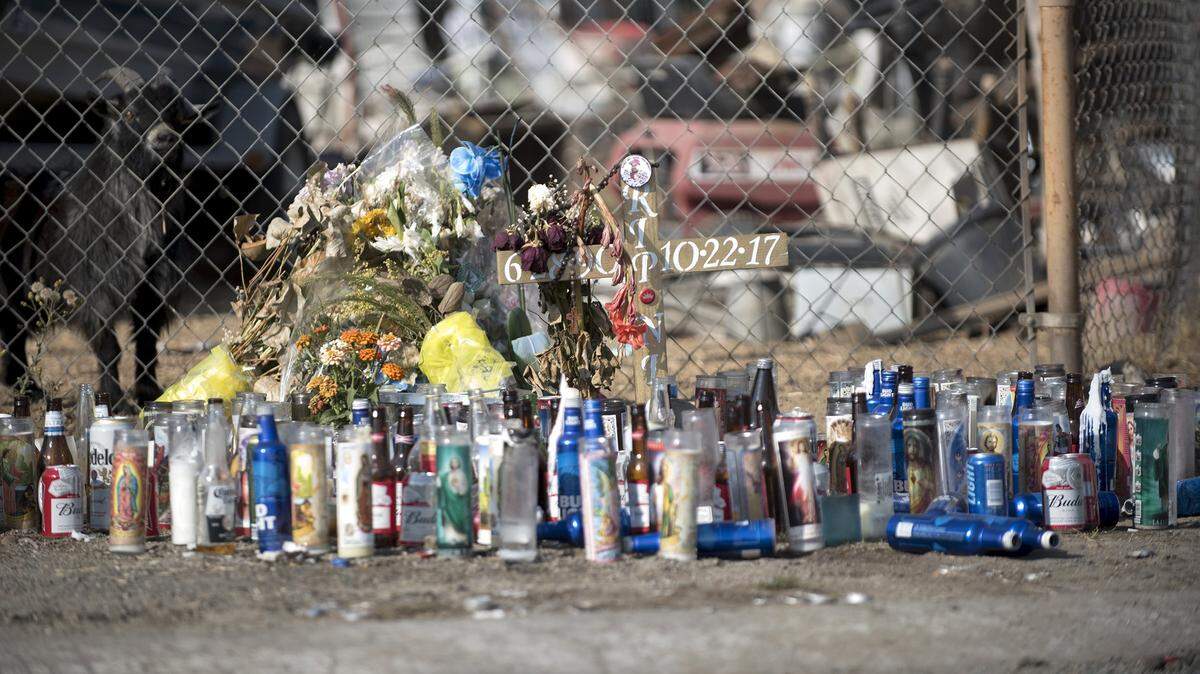
The seeming recent trend of lawsuit settlements involving officers who killed local people probably is more coincidence than anything else.
All are reminders that each life taken is a tragedy, regardless of whether victims’ actions contributed to their demise or they were entirely innocent.
There may be hope, however, that better days are ahead, if two newly adopted laws accomplish their purpose. Assembly Bill 392 and Senate Bill 230, both signed into law by Gov. Newsom a few weeks ago, were specifically designed to result in fewer use-of-force slayings by law enforcement, and some provisions will go into effect in January.
The Modesto Bee has brought news of three settlements in as many weeks, with a combined payout of $11.1 million:
- Stanislaus County agreed to pay $7 million to survivors of a woman fatally shot by a deputy sheriff in Ripon, in February 2017
- Ceres will pay $2.1 million to survivors of a fleeing teen boy shot in the back by a policeman, in August 2018
- Ceres will pay another $2 million to the family of an inebriated man shot while gunning his engine after a high-speed chase, in October 2017
This ends liability for the respective agencies. But the stories are far from over.
The deputy in the Ripon incident, which ended a slow-speed chase that started in Salida, is scheduled to stand trial in January for voluntary manslaughter in the death of Modesto’s Evin Olsen Yadegar. She had bipolar disorder and likely was in mental crisis when she was shot as her car pulled away from the officer.
The District Attorney’s office has not concluded its review of the 2018 Ceres case that ended with the death of 15-year-old Carmen Spencer Mendez of Hughson. The DA said Ceres police were justified in the third shooting that killed Nicholas Pimentel, 27, of Modesto.
Settlements provide closure for government. It’s doubtful that still-grieving families of those killed feel similar finality, despite the money. The lives of officers involved, and their families, also are forever altered.
News of officers hurting or killing people hits hard, even if we’re not directly involved. Colin Kaepernick wasn’t, but his stance — or rather his refusal to stand during NFL national anthems, in protest of inequality and police brutality — famously cost the former Turlock resident his high-profile job. All teams have shunned him in the three years since, although he recently had a tryout of sorts.
This area has not seen the kind of protests that erupted when cops used lethal force in other parts of the country, or even just up the road in Sacramento. The March 2018 death of Stephon Clark, shot by Sacramento police who mistook his cell phone for a gun, did prompt AB 392, which became a cause célèbre for civil rights groups.
The law enforcement community responded by persuading Sen. Anna Caballero, a Salinas Democrat whose district stretches into Stanislaus and Merced counties, to sponsor SB 230. It at first was considered rival legislation, and The Modesto Bee Editorial Board applauded when the two merged in April.
The companion laws require new training for officers focused on de-escalation, dealing with mental illness and using deadly force as a last resort instead of leaving it up to a cop’s discretion, and legislators set aside more than $10 million for new officer courses. This training is considered the most robust in the nation, protecting officers along with the innocent.
Such legislation will not end violence. Law enforcement is a dangerous business requiring split-second decisions with life-or-death consequences, for regular people and officers alike.
Understandably, agencies get defensive when people question their policies and actions.
Another relatively new law, Senate Bill 1421, was supposed to improve transparency, requiring that agencies reveal investigation documents. Unfortunately, Ceres was slow to comply. For several months, the city withheld policy body cam footage in both shootings. City Hall finally released video of one only a few days ago, and said the other is coming soon. Producing them only after settling the lawsuits flouts state law and a sense of accountability to the public.
KQED and the Bay Area News Group recently issued an eye-opening report after analyzing deadly force records of 122 agencies from 2014 to 2018. They found that 10 percent of the agencies did not investigate after their officers hurt or killed people; some admitted that foot-dragging was prompted by fear that results of probes could be used against them in lawsuits.
The news report included two incidents involving the Tuolumne County Sheriff’s Department: a November 2014 fatal shootout with deputies that killed Bruce Snyder, and the nonfatal arrest of Eric Neves in March 2018.
Caballero’s SB 230 won’t allow agencies to look the other way, requiring review whenever an officer fires a gun. Most of the law’s new rules don’t go into effect until 2021, though.
When the new training kicks in, it should be the best in the United States. All should be thankful for such measures, and the chance at reducing these tragedies.
This story was originally published December 1, 2019 at 5:00 AM.