
Bruce Lee is a hero. He still shouldn’t have his own official California day | Opinion
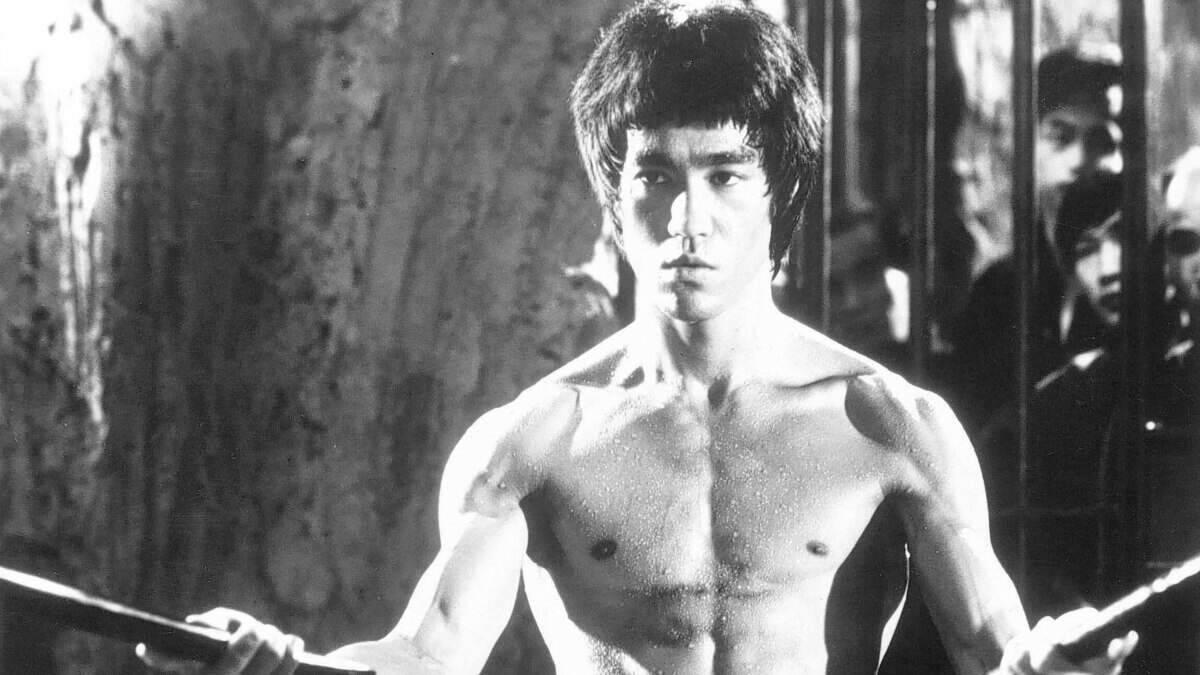
California officially designated May 17 as Bruce Lee Day, making the martial artist and actor the first Chinese American to receive a state day in his honor. It is an understandable decision, but it’s also the wrong one.
History has shown us that when we honor an individual, we lose sight of the community and context that made that person’s achievements possible, and why those accomplishments mattered to so many people. We also place unrealistic expectations on the individual.
This is not an argument against Lee. He changed American culture, shattered racist stereotypes that had long limited Asian men to the exoticized margins of Hollywood and inspired generations of martial artists, filmmakers, athletes and — perhaps most importantly — fellow Asian Americans who finally saw someone on screen who looked powerful rather than submissive.
Lee’s importance to California and to Chinese American history cannot be disputed.
Indeed, that is precisely how California lawmakers described him. In establishing Bruce Lee Day, lawmakers praised him not only as a martial artist and actor, but as a philosopher, humanitarian and advocate for equality who encouraged generations of Californians to reject prejudice and pursue excellence.
Assemblymember Matt Haney called Lee “the very best of California,” arguing that his legacy extends far beyond entertainment to include civil rights, representation and community.
But Bruce Lee Day does a disservice to these aspirations.
The problem is naming public commemorations after individuals. It is head-scratching that we have not yet learned this lesson.
Only months ago, California was forced into a painful public reckoning after decades-old allegations of sexual abuse against political activist Cesar Chavez emerged through investigative reporting from The New York Times. The allegations have prompted schools, organizations and public officials to reconsider monuments, celebrations and even the future of Cesar Chavez Day. We should have recognized the farmworker movement — not the one flawed man that we inevitably focused on.
Bruce Lee is not Cesar Chavez. But Lee himself was hardly a saint. Friends, colleagues and biographers have described a man capable of explosive anger, fierce competitiveness, drug use and a complicated personal life that included marital infidelity. None of this erases his achievements. It simply reminds us that hero worship — which public holidays inevitably become — is a poor foundation for a permanent public.
The purpose of government-designated days should not be to canonize individuals. Instead, they should celebrate ideas, communities and movements that transcend any one person.
What California ought to be celebrating is the extraordinary story of Chinese Americans in the struggle against exclusion and stereotyping, and how they have furthered American civil rights in the process. Ironically, that is exactly what supporters of Bruce Lee Day say they hope to accomplish.
The legislation encourages schools to teach students about Chinese American history, representation, equality and the contributions of Lee to California’s cultural life. Those are worthy goals. And Lee belongs in that story, but he should not be the story.
These teachings must also include the Chinese laborers who built the transcontinental railroad, the immigrants detained at Angel Island and Wong Kim Ark, the San Francisco-born son of Chinese immigrants who had to sue his own government simply to be recognized as an American. In 1898, the Supreme Court ruled in United States v. Wong Kim Ark that the Fourteenth Amendment guaranteed birthright citizenship, establishing a constitutional principle that — as affirmed just recently — still defines who belongs in America today.
Long before Lee changed how Americans saw Asian faces on movie screens, Wong Kim Ark helped secure the legal principle that Chinese Americans were, in every constitutional sense, Americans. The child of Chinese immigrants born in the United States, Wong Kim Ark’s citizenship was affirmed by the Supreme Court in a case that stands to this day. That is something to commemorate and to celebrate.
Lee’s story is indebted to this history, just as later achievements are indebted to Lee. He should be remembered not as a saintly icon, but as a towering figure in a much richer American story.
Pawan Dhingra is professor of American Studies at Amherst College and the author of the forthcoming book, “Success Won’t Save Us: How Asian Americans Can Fight White Supremacy.”
This story was originally published July 15, 2026 at 5:00 AM with the headline "Bruce Lee is a hero. He still shouldn’t have his own official California day | Opinion."