
The Supreme Court favors gun rights over all other rights | Opinion
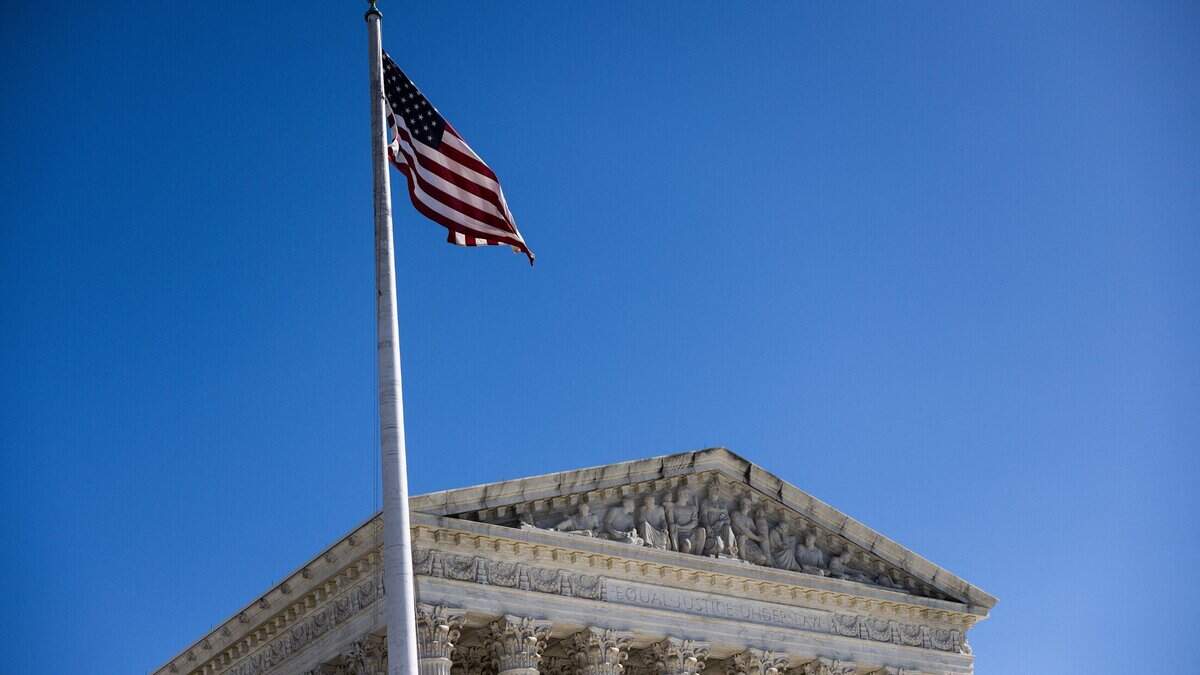
The Supreme Court’s decision on Thursday, June 25, in Wolford v. Lopez, made clear that the conservative justices favor Second Amendment rights even over other traditional conservative values, such as protecting property rights and deferring to state governments.
The court, in another 6-3 decision about gun rights, continued to greatly limit the ability of the government to protect public safety and save lives by regulating firearms.
The case involved a Hawaii law that prohibits bringing a gun on to private property open to the public without the property owner’s permission. In other words, under the Hawaii law, a person can bring a gun into a restaurant or shopping mall only with the consent of the property owner. Four other states, including California, have such statutes.
Second Amendment decisions
Until very recently, there would have been no doubt as to the constitutionality of Hawaii’s law. From 1791, when the Second Amendment was adopted, until 2008, the Supreme Court did not strike down a single federal, state or local gun regulation. In the handful of cases about the Second Amendment, the court said that it means what it says: It is a right to have guns for the purpose of militia service.
This changed in 2008, when the court decided District of Columbia v. Heller and declared unconstitutional a D.C. ordinance that prohibited ownership or possession of handguns. In a 5-4 decision, with the majority opinion written by Justice Antonin Scalia, the court held that people have a right to have handguns in their home for the sake of security.
The court did not decide another case about the scope of the Second Amendment for 14 years, until its ruling in June 2022, in New York State Rifle & Pistol Association Inc. v. Bruen. In that case, the court declared unconstitutional a century-old New York law that prohibited having a gun in public without a permit and required that a person show a need for such a permit. The court split along ideological lines, with the majority holding that there is a constitutional right to have a gun in public.
The court declared that the Second Amendment creates an “unqualified right,” and that “it surely elevates above all other interests the right of law-abiding, responsible citizens to use arms for self-defense.”
The court rejected its traditional approach for dealing with fundamental constitutional rights and discrimination: In all other areas of constitutional law, courts ask whether the government’s action is justified by a sufficient purpose and whether the means chosen are the appropriate way to achieve the goal. But for the Second Amendment, the court expressly rejected this and held instead that gun regulations will be allowed only if supported by history and tradition.
The court reaffirmed this approach in Wolford v. Lopez, saying that a gun regulation will be permitted today only if it is closely analogous to one that existed in 1791.
Historical perspective
This has never made any sense. The world today — and its weapons — are vastly different from that when the Second Amendment was adopted. Besides, why assume that the failure to adopt particular gun regulations in 1791 meant that there was a desire to reject them as unconstitutional?
In striking down the Hawaii law, the court said it was not sufficiently analogous to gun regulations that existed in 1791. Even from a historical perspective, the court’s analysis is dubious.
Justice Ketanji Brown Jackson, in dissent, traced the history of how Hawaii has consistently limited guns in public.
“Since its time as a sovereign kingdom, Hawaii has never permitted the widespread carrying of firearms in its territory,” Brown Jackson wrote.
Conservative values abandoned
What is particularly stunning about the court’s decision is how it ignores other constitutional values, including ones long championed by conservatives. Conservative justices, for example, have consistently stressed the importance of protecting property rights. The Hawaii law is about just that: It gives private property owners the right to decide whether to allow guns on their premises.
Conservatives throughout history have fought to protect states’ rights. Their deference to states should allow Hawaii, and others, to make choices about how to safeguard their residents from gun violence.
The conservative justices often forcefully advocate for deference to the political process, such as in upholding state laws discriminating against transgender individuals. But the six conservative justices showed no deference at all to Hawaii’s choice to give private property owners the ability to prevent guns on their premises.
In less than 20 years, our society has gone from having a government that allows unchecked constitutional authority to regulate guns to protect the public, to now not even being able to allow private property owners to decide for themselves whether to permit guns on their property. This is a court that seemingly favors gun rights over all others.
This is not about abstract principles of law. Rather, in a society plagued by enormous gun violence, our state governments should be able to adopt sensible regulations to protect its residents. The effect of the Supreme Court’s aggressive protection of gun rights will be tragically seen in the ever-increasing toll of those who die because of the ready availability and presence of firearms.
Erwin Chemerinsky is dean and professor of law at the UC Berkeley School of Law.
This story was originally published July 14, 2026 at 6:00 AM with the headline "The Supreme Court favors gun rights over all other rights | Opinion."