
Can California keep leading the electric vehicle transition? | Opinion
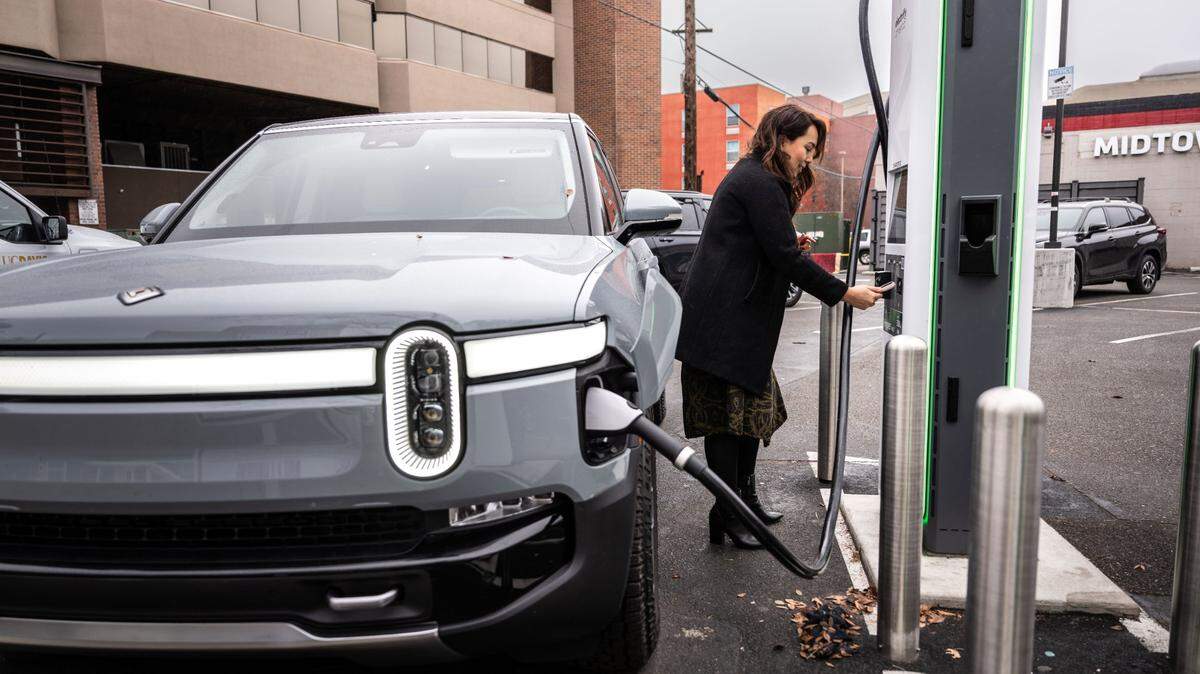
I warned a year ago that President Donald Trump’s rollback of federal electric vehicle (EV) support would be a gift to China and a blow to the American auto industry. I’m sad to say that is exactly what has happened.
The $7,500 federal EV tax credit expired in September. Nationally, EV sales share fell sharply in the fourth quarter after hitting 10.5% in the third quarter as buyers rushed to beat the deadline. California, which had surged to a record 29.1% EV market share in Q3, saw an even steeper decline — falling to 13.7% in the first quarter of 2026, the lowest level in four years, according to the California New Car Dealers Association. Automakers are already signaling production pullbacks.
Gov. Gavin Newsom has stepped in to maintain California’s EV policy leadership by proposing a $200 million zero-emission vehicle (ZEV) incentive program, paired with a required dollar-for-dollar match from manufacturers, to keep EVs within reach of mainstream buyers. The Legislature is now weighing that proposal as part of the budget process.
Newsom’s proposal is taxpayer friendly. The price of vehicles that qualify is capped: The price of new passenger cars can’t exceed $55,000, the maximum price for vans, SUVs and pickup trucks is $80,000 and used EVs must be priced at or below $25,000. Additionally, money only goes to first-time EV buyers. That’s effective because we know over 90% of EV buyers stick with electric vehicles.
Under the current language of the proposal, all first-time EV buyers that are California residents qualify — there is no income threshold for buyers.
This is not just an industry issue. California families are still dealing with volatile gas prices and a high cost of living. EVs offer an escape from constant fuel price swings, but when federal incentives disappeared, that stability became harder for middle-income buyers to access. This proposal helps close that gap.
The question now is whether California will maintain its leadership at a time when the American EV market is under real pressure.
The long-term direction of the global auto industry is clear: electrification. EV sales are booming worldwide, while U.S. growth has lagged.
China already produces the majority of the world’s EVs and continues expanding globally. That strategy is not subtle, and it is not slowing down.
Meanwhile, California has more at stake than any other state: More than 250,000 Californians work in the EV economy. California also represents roughly 30% of all U.S. EV sales. Major manufacturers including Ford, GM, Rivian, Lucid, Tesla, Honda, Hyundai, Toyota and Kia have significant operations here.
California is stepping into the breach to make up for the federal government’s surrender. Projects could move to other states competing for advanced manufacturing jobs or overseas or be canceled altogether. These are high-paying, high-skilled jobs tied to long-term industrial capacity, important for both economic development and national competitiveness.
Some may argue that $200 million is too small to influence a market this large, but that misses the point. In a moment of federal retreat, the immediate risk is contraction. The priority now is to stabilize the market and build on existing momentum.
The program’s structure strengthens its impact. The required manufacturer match doubles the incentive pool to at least $400 million without additional taxpayer cost. MIT research suggests point-of-sale incentives drive a 6% to 8% sales bump per $1,000. At a $3,500 combined incentive, that works out to roughly 110,000 vehicles supported, potentially more.
Newsom has put forward a practical, pro-consumer, pro-jobs proposal at exactly the right time. California families need relief from fuel price volatility and American automakers need a stable domestic market.
The Legislature should pass the $200 million program to stabilize the market now. Other states look to California on these policies and passage here is likely to spur similar action elsewhere.
The consequences of Sacramento getting this wrong are not theoretical. California is at a fork in the road: continue leading the EV transition or follow the Trump administration in retreat and cede the future of the auto industry to China. Mike Murphy is CEO of the American EV Jobs Alliance, a nonpartisan advocacy organization focused on strengthening American EV manufacturing by domestic companies and U.S. allies.
This story was originally published May 15, 2026 at 5:00 AM with the headline "Can California keep leading the electric vehicle transition? | Opinion."