
Holding ICE agents accountable for excessive force is imperative | Opinion
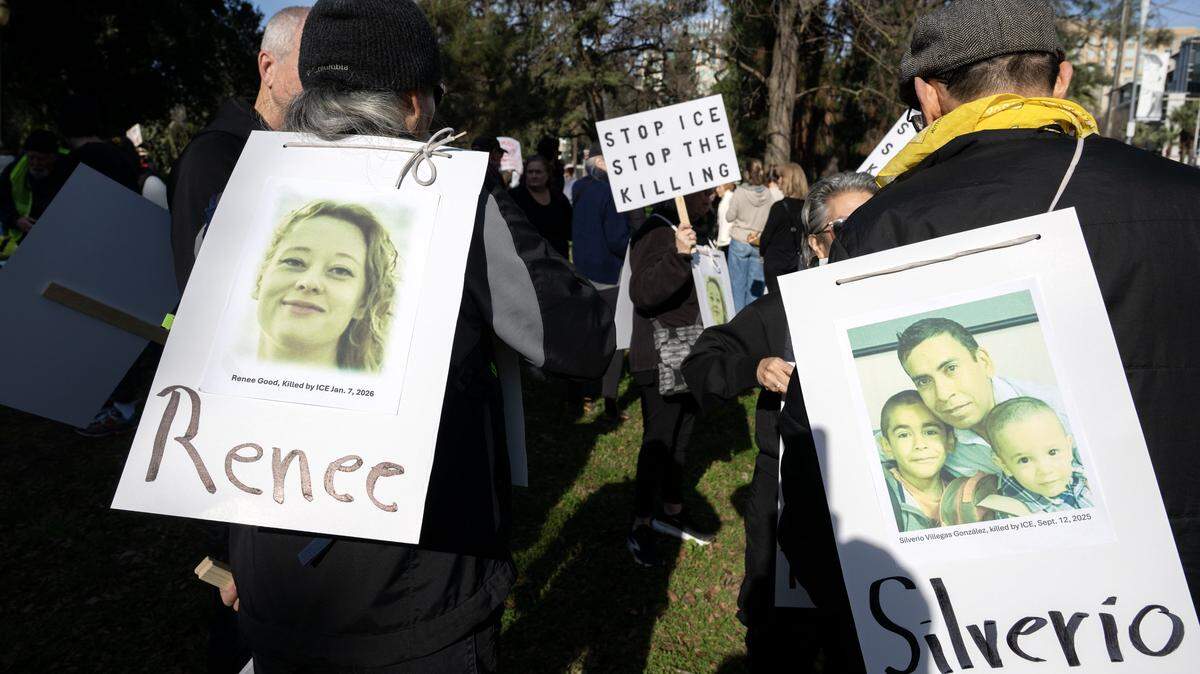
Minnesota should investigate and prosecute the U.S. Immigration and Customs Enforcement officers who killed Renee Good and Alex Pretti. State and local governments have the authority to prosecute federal officials who violate state law when their conduct is “objectively unreasonable.”
An enormous benefit of federalism — having both a federal government and state governments — is that one can act when the other fails. Sometimes this has been called the virtue of “jurisdictional redundancy,” having more than one level of government with authority.
When many state governments dismally failed to protect the civil rights of Black Americans, the federal government acted, including mandating desegregation and enacting civil rights statutes. On many occasions, it prosecuted state and local police who use excessive force in violation of the Constitution.
State governments, likewise, have the authority to prosecute federal officers who act illegally and unconstitutionally. After the death of Renee Good, Vice President J.D. Vance said the officer who killed the 37-year-old mother had ‘absolute immunity’ from state prosecution for actions taken while on duty.
As a matter of law, that is just wrong. Imagine an ICE agent driving while intoxicated on the job. The police can arrest and prosecute the officer for drunk driving. There is no immunity. Indeed, the law has always been that federal law enforcement officers who use excessive force can be sued civilly under state law.
The same is true for criminal liability: If an ICE agent acts in an objectively unreasonable manner, they can be punished under state law. In 1906, in Drury v. Lewis, the Supreme Court allowed Pennsylvania to prosecute two soldiers charged with killing a civilian accused of stealing from a federal arsenal. Several witnesses said the man had already been captured when the soldiers opened fire. If true, the court wrote, “it could not reasonably be claimed that the fatal shot was fired in the performance of a duty imposed by the federal law.”
Many times since, federal courts of appeals have reaffirmed this. In 2001, the U.S. Court of Appeals for the Ninth Circuit came to the same conclusion in a case where Idaho attempted to prosecute federal officers after a standoff at Ruby Ridge turned violent and people were killed. The court explained: “In keeping with the constitutional allocation of powers between the federal government and the states, federal agents enjoy immunity from state criminal prosecution. That immunity has limits. When an agent acts in an objectively unreasonable manner, those limits are exceeded, and a state may bring a criminal prosecution.”
Likewise, in 2006, the U.S. Court of Appeals for the Tenth Circuit explained: “a federal officer is not entitled to Supremacy Clause immunity unless, in the course of performing an act which he is authorized to do under federal law, the agent had an objectively reasonable and well-founded basis to believe that his actions were necessary to fulfill his duties.”
Watching the videos of the killings of Renee Good and Alex Pretti leaves little doubt that the use of force was objectively unreasonable. No matter what spin President Donald Trump and U.S. Secretary of Homeland Security Kristi Noem give, we can see with our own eyes what happened.
It seems highly doubtful that the federal government will thoroughly investigate and prosecute the ICE agents responsible for these killings and other uses of force. Immediately after the killings, the response was to vilify the victims, to investigate Good’s wide and to launch criminal investigations of Minnesota Gov. Tim Walz and Minneapolis Mayor Jacob Frey.
The Justice Department has also now said that it will investigate the killing of Pretti. But it is hard to believe — given the statements of Trump, Miller and U.S. Attorney General Pam Bondi — that it will be a full investigation or that any prosecution will follow from it.
This is not just about Minnesota. It will be important in all states where ICE agents are using excessive force. It will be the responsibility of local district attorneys and state attorneys general to use their authority to investigate and prosecute.
Procedurally, ICE agents prosecuted in state courts will be able to remove the cases and have them tried in federal court. But that does not provide the officers any greater immunity from prosecution than would exist in state court. Nor can Trump pardon them if they are convicted. The president may pardon only for criminal liability under federal law.
Holding ICE agents accountable for excessive force is imperative, and it will hopefully deter similar wrongful conduct in the future. But it is also a crucial way of reaffirming the most basic tenet of the rule of law: No one is above the law.
Erwin Chemerinsky is dean and professor of law at the UC Berkeley School of Law.
This story was originally published February 3, 2026 at 5:00 AM with the headline "Holding ICE agents accountable for excessive force is imperative | Opinion."