
A punishing drought, plus ‘unprecedented’ water cuts, put Valley farmers in tough spot
This week was a rough one for Central Valley farmers.
The California Water Resources Control Board achieved a first: It ordered 5,700 water-rights holders in Northern California and the San Joaquin Valley to stop taking supplies from the Sacramento and San Joaquin rivers and their tributaries.
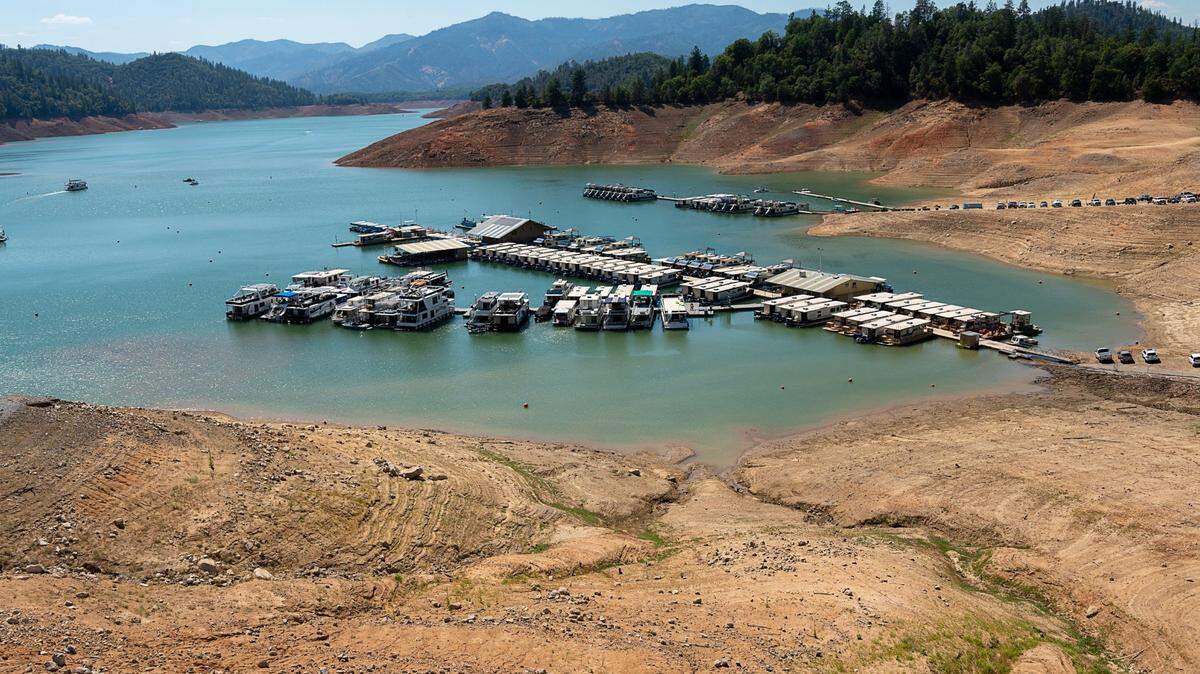
The board acted out of alarm at declining lake levels statewide and slowing river flows, all the result of the punishing drought.
The order will become effective in several weeks, and includes penalties for users who disregard the curtailments. Most of those affected are farmers and irrigation districts.
As reported by Dale Kasler of The Sacramento Bee, “it’s the most dramatic step by state regulators since the drought was officially declared in most of California’s counties — and surpasses any of the moves made during the previous drought.”
“Unprecedented,” is how Ryan Jacobsen, president of the Fresno County Farm Bureau, reacted.
The state board has ordered curtailments before, but not to this degree. Those holding diversion rights are located from Fresno County north to the state border with Oregon. For now, those affected by the order have few options. If they cannot pump groundwater, they effectively become dry-land farmers, relying on rainfall for irrigation. And no rain is expected anytime soon.
The purpose of the order is to stop diversions and so protect the Sacramento-San Joaquin Delta from saltwater intrusion. In this drought year, flows of the state’s two major rivers have slowed enough that regulators worry about salt water flowing from San Francisco Bay and into the delta. If that happened, fresh water in the delta, which millions of Californians depend on, would become contaminated.
Fortunately, most farming operations have completed the irrigating that they needed to do in the current season. But what if this coming winter is dry? What will farming look like next year?
Longer-term, is farming in California as it has been practiced going to be feasible?
The questions are not new, but are now being asked with greater urgency.
Why not dams?
The water board action resurfaced a complaint San Joaquin Valley farmers have had for years: the state has not done enough to build more water storage, and in fact, has opposed such.
“We can’t ignore our state and federal leaders’ failure to meaningfully prepare for this drought,” the California Farm Water Coalition said in a statement preceding the board’s vote.
Opponents of dams have long argued that they harm the environment, particularly fisheries, by diverting water that fish need to survive and by blocking access to spawning grounds.
A few years back Temperance Flat was a dam proposed on the San Joaquin River above Millerton Lake north of Fresno. That $2.83 billion dam was to provide a critical new supply of water to the Valley, both for farmers as well as cities. A water bond, Proposition 1, was on the 2014 ballot in the midst of a crushing drought, and voters passed it handily. Valley officials hoped to get $1 billion for their project.
But nothing more than a trickle of money — $171 million — was allocated by state officials for Temperance Flat. Despite strenuous lobbying by Valley officials, the water board said the dam did not offer enough public benefit to justify more funding. The local effort behind Temperance Flat was ultimately suspended.
Jacobsen noted that 2017 and 2019 had winters with healthy precipitation. If Temperance Flat had been in place, it likely would have filled up with storm flows “and held that water for at least a couple years,” he said. “It would have made a substantial difference.” Temperance Flat would have had a capacity of 1.26 million acre-feet.
There is one major storage project going forward from the 2014 bond — the $3 billion Sites Reservoir, which is intended to capture storm flows of the Sacramento River. Sites is located in Glenn and Colusa counties, about 80 miles north of Sacramento, and is “off-stream,” meaning not built across the river, but west of it. It will hold 1.5 million acre-feet when full.
Water from Sites will be used to augment supplies of the Central Valley and State Water projects.
Climate change impact
The Los Angeles Times reported that last winter’s snowpack decreased by 80% from the start of April to the end of May. That was the equivalent of 800,000 acre-feet, enough to fill Folsom Lake near Sacramento.
“It’s beyond unprecedented,” David Rizzardo, chief of the hydrology branch at the state’s Department of Water Resources, told The Times. Scientists had identified such a possibility in computer modeling, but it was not expected to happen for decades.
If anything, climate change has reinforced the need for more water storage, Jacobsen said. He said more rain is being dropped and less snow. “With us losing that critical reservoir of the snowpack, we need even more reservoirs.
“I know there is a big push for underground storage. We completely support that. But we cannot sink it (water) in fast enough when big storms come.”
What’s next
The board’s order may be challenged in court. A previous, smaller curtailment order was challenged in 2015 by water districts in Modesto, Turlock, Oakdale and San Francisco. They won that case when a judge said the state had not given sufficient notice for its order.
Now the San Joaquin Tributaries Authority is contending the board has exceeded its authority and may have violated due process.
Outside the courtroom, the drought remains. With the implications of climate change on the state’s future water supply, will California’s $50 billion a year agricultural industry be forced to get smaller to survive? Decisions like the one by the water board will be part of the answer.
This story was originally published August 6, 2021 at 10:46 AM with the headline "A punishing drought, plus ‘unprecedented’ water cuts, put Valley farmers in tough spot."