Electric cars are great — charging them when you’re away from home, not so much
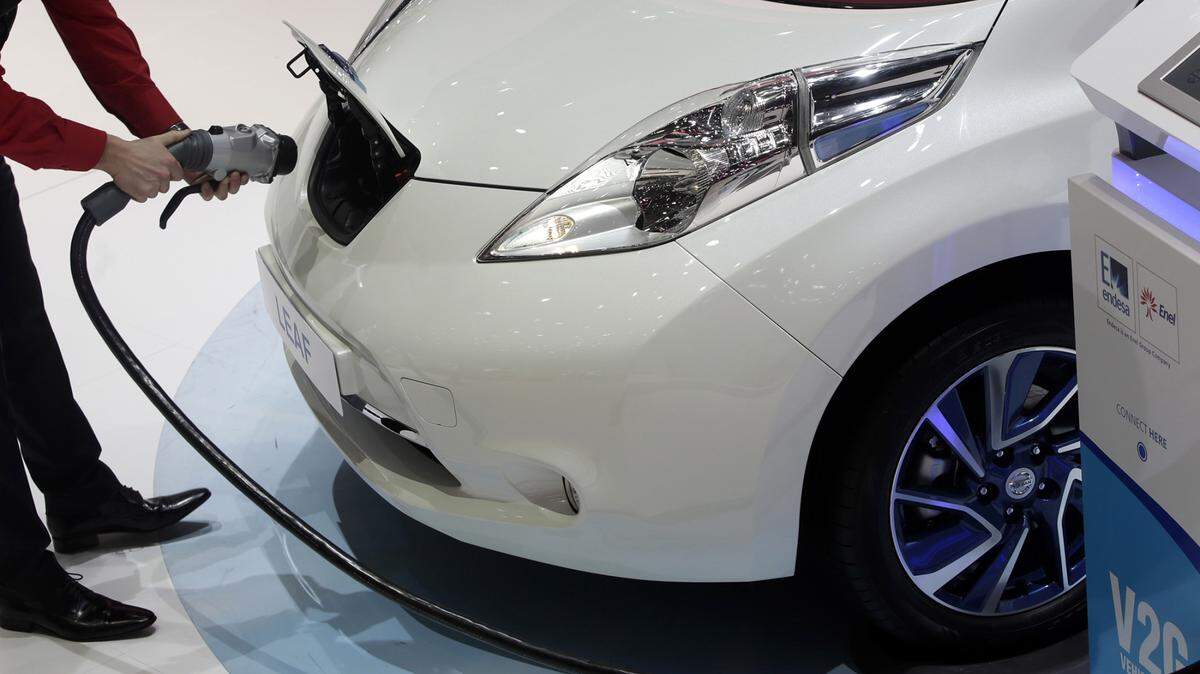
I love my electric car and will never go back to a gas-guzzler, but I’ve got to speak a little truth to power here: Sometimes, public charging stinks.
And that’s too bad, because it’s scaring away would-be buyers.
For instance, as much as I enthusiastically talk up the Chevy Bolt I’m leasing, I’ve never been able to persuade a single person to make their next car an all-electric.
If anything, I’ve turned people against EVs.
This is what I typically hear when the topic comes up: “After I’ve seen what you go through, I would never buy one.”
Then they apologetically mumble something about maybe getting a hybrid next time.
What do I do to alienate them?
I tell stories.
There’s that time I was down to 12 miles and had to choose between spending the night in some dot-on-the-map town or risk being stuck on the side of a road at 2 a.m.
Or the time I had to borrow a car because I forgot to plug mine in overnight and there were no fast chargers within a reasonable radius.
Or the time that .... well, you get it.
Sure, if I wanted to make some converts, I could just focus on the positives — like not having to pay nearly $5 a gallon for gas.
Or I could caution against taking any cues from me, because as EV owners go, I am definitely among the least responsible. I mean, forgetting to plug in the car the night before an out-of-town trip? Who does that?
But here’s the thing: You really shouldn’t have to be a persnickety Felix Unger to be a successful EV driver.
If California is serious about phasing out gasoline-powered vehicles, it’s going to have to accommodate those of us who flunked Organization 101 — probably because we forgot to mark it on our calendars.
That means — are you listening, Gov. Newsom? — we need a lot more public chargers in easy-to-get-to places like, oh, gas stations, rest stops, shopping centers, parks, beaches and workplaces. And definitely apartment complexes, because you shouldn’t have to own a home with a garage in order to have an EV.
This isn’t just about convenience. It’s a matter of safety.
Parts of California are veritable charging deserts where you can go miles and miles without seeing a single dot on those handy online maps that show where charging stations are (or aren’t).
Take Highway 41, for instance. Maps show plenty of chargers, but good luck finding them if you’re in a cellular dead zone and/or your cell phone overheats because you’re afraid that turning on the air conditioner will suck up so many miles that you’ll wind up stranded.
(Hint: If you are ever in this situation, there is a Caltrans fast charger outside Kettleman City — and it’s free. Thanks, Caltrans!)
So whose cage do we rattle to get more chargers?
That, it turns out, is complicated.
There are no requirements for owners of existing buildings to install them, and if they are interested, expense can be a hurdle, though financial help is available in the form of grants and rebates.
CALeVIP runs a rebate program funded by the California Energy Commission and local partners, such as air pollution control districts. The website, calevip.org/find-project, also has information about other resources, such as Charge Up!, a incentive program offered by the San Joaquin Valley Air Pollution Control District.
Utilities such as PG&E also have funds available for charger installations.
If you own a shopping center or restaurant or office complex — basically any public place where people park — please check it out.
You’ll help fill up those blank spaces on the charging maps.
And who knows? EV drivers like me may win over some converts.
This story was originally published June 25, 2021 at 7:00 AM with the headline "Electric cars are great — charging them when you’re away from home, not so much."