
Trump hits the trail, and Biden sticks close to home. Will that matter to voters?
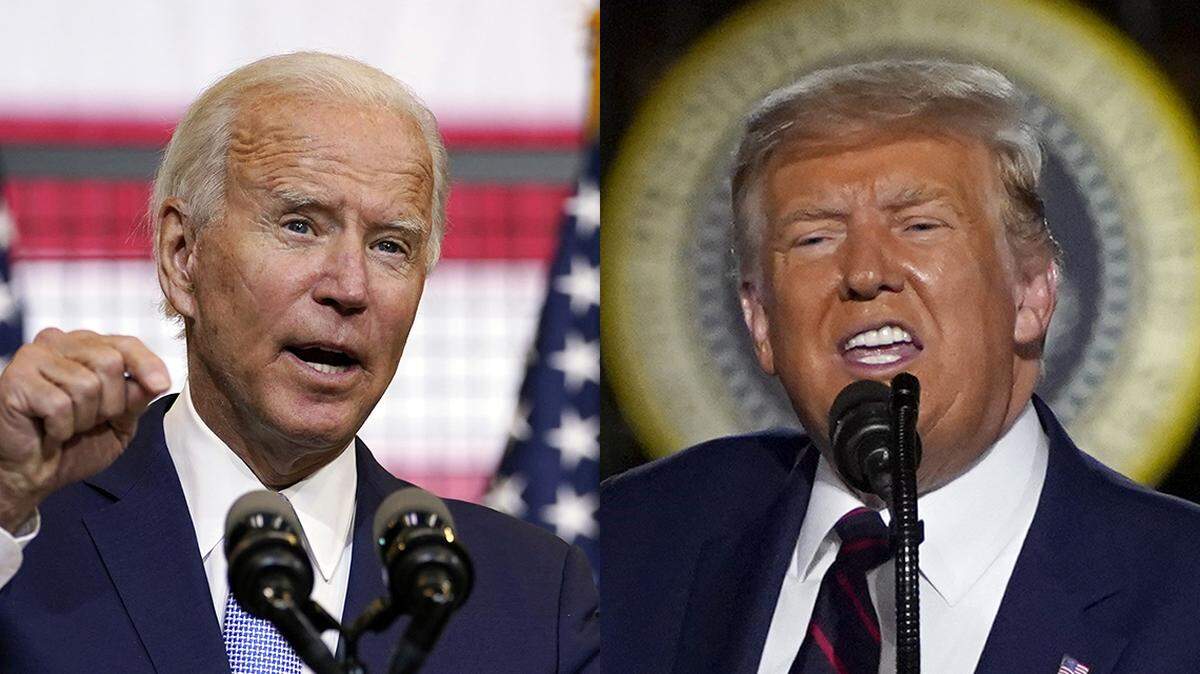
About 18 hours after his convention acceptance speech last week, President Donald Trump was in New Hampshire campaigning. His political partner, Vice President Mike Pence, campaigned the same day in Minnesota, then Michigan.
Democrats’ vice presidential nominee, Kamala Harris, gave a virtual speech to a “Get Your Knee Off Our Necks” march criticizing the American justice system.
Joe Biden, the actual Democratic nominee, took the entire week off at his Delaware beach house, interrupting his respite briefly to tell a virtual fundraising event, “What we’re working on is how I get out.”
Polls show Biden with a slightly diminished lead over Trump. But Democrats might expect that six months into a pandemic with the White House at stake and his own nomination long certain, staff of the soon-to-be-78-year-old would have already figured out how to safely expose Biden to voters beyond a laptop screen.
Or perhaps their unspoken decision is to minimize his public exposure for some reason and rely on anti-Trump sentiment.
One century ago, Warren Harding won the White House for Republicans by not campaigning beyond his front porch in Marion, Ohio. All summer and fall, thousands upon thousands of voters made a political pilgrimage to 380 Mount Vernon Avenue where the former newspaper publisher would address them, no matter how steamy the day.
Harding captured 60% of the 1920 popular vote and 37 of 48 states without leaving his hometown.
That hasn’t worked for presidential wannabes since, thanks to radio, television and air travel. Elections are the only time voters know they have leverage over candidates. And they want to see them, if not in person, then on TV earnestly seeking their ballot approval. In New Hampshire primary campaigns, for example, a town hall questioner might invite a candidate to a living-room coffee with neighbors. A rejection can be damaging front-page news locally.
Biden, who intends to make Trump’s pandemic handling a major issue, has stuck quite close to his Wilmington, Delaware, basement throughout, save for the rare foray to a funeral or nearby event. Biden didn’t even budge to rebut Trump’s acceptance speech, leaving that to Harris.
This week, he ventured to a Pittsburgh steel mill so socially distanced that no voter was in sight. There, he blamed Trump for the violence in cities governed by Democratic mayors.
Such apparent reluctance to perform the kind of in-person campaigning Biden’s supposed to be so good at — despite his two previous failed presidential efforts — has raised eyebrows and concerns among some Democrats, who fear a repeat come-from-behind shocker like the one Trump pulled off in 2016.
Like Hillary Clinton, Biden has minimized media exposure, unlike his opponent. Biden did four interviews in August and 10 in July. But nine of those were with local TV outlets. He’s done no Sunday show interviews, which can be rigorous. Trump has.
The president is only four years younger than Biden. Business and political opponents who have underestimated Trump’s work ethic and abilities have come to regret that. Ask the 16 Republican losers in the 2016 primary field. Or what’s-her-name in that general election.
While Biden’s Democrats were nominating him two weeks ago, Trump spent those four days out campaigning in four key states — Minnesota, Wisconsin, Arizona and Pennsylvania. Biden says he’ll travel a lot once the campaign gets further into September. But he preserves an out, saying that must be done within each state’s health guidelines.
Trump will be on the road again this week while his two sons and Pence fan out to rallies in other crucial states. “We are aggressive,” Trump campaign manager Bill Stepien says. ”That’s the campaign we run.”
Talk to anyone who’s attended a Trump rally. They already like him but are fired up by the communal enthusiasm and experience. Rallies — many of them — are essential to stoke the strong base turnout Trump needs to win with a following that’s loyal but has always been a minority of voters.
With just nine weeks until Election Day and only three before early voting begins, Biden’s team is just now planning his public appearances. Can the former vice president count on Trump antipathy to fuel electoral victory and make up for less public exposure? A large majority of Biden supporters admit they’re not really voting for him as much as against Trump.
After nearly a half-century in public life, ignorance about Biden is at a surprising 9%, while 12% can’t say if he’s honest. This makes Biden vulnerable to definition by opponents as “an empty vessel” filled by radical leftists, an effort already underway.
And while most incumbent presidents win reelection, senators and vice presidents have had real difficulties convincing Americans they should get the top job. Biden is both.
National political campaigns aren’t really national. They’re tightly focused on a dozen or more key states such as Florida, Michigan, Wisconsin, Ohio, Pennsylvania. The others are mostly gimmes one way or the other. Biden won’t waste time in Mississippi or Utah. And Trump won’t likely travel to California, except perhaps for fundraising.
Trump prefers, even on Arizona trips, to return to the White House each night. He tried but disdained virtual rallies because he feeds off the crowds.
Biden’s strength, at least in Delaware, has been in small, more intimate gatherings, which are virtually nonexistent in general election campaigns. He too appears uncomfortable reading his lines with no audible audience reactions, even in a high school gym for his first event with Harris. Should a would-be commander in chief need a script to explain a vice presidential choice he pondered for five months?
The advantage for Biden, though, is that such controlled events minimize opportunities to repeat embarrassing moments such as misplacing his location or misstating how many grandchildren he has, which fuel the GOP narrative about his mental acuity.
Trump, on the other hand, never apologizes or admits gaffes or errors. He just barrels on to the next thought, leaving the count of misstatements and untruths to a Washington newspaper preaching to the anti-Trump choir.
This story was originally published September 1, 2020 at 3:00 AM with the headline "Trump hits the trail, and Biden sticks close to home. Will that matter to voters?."