Snowpack lags in watersheds for Stanislaus, nearby counties. Is it time to worry?
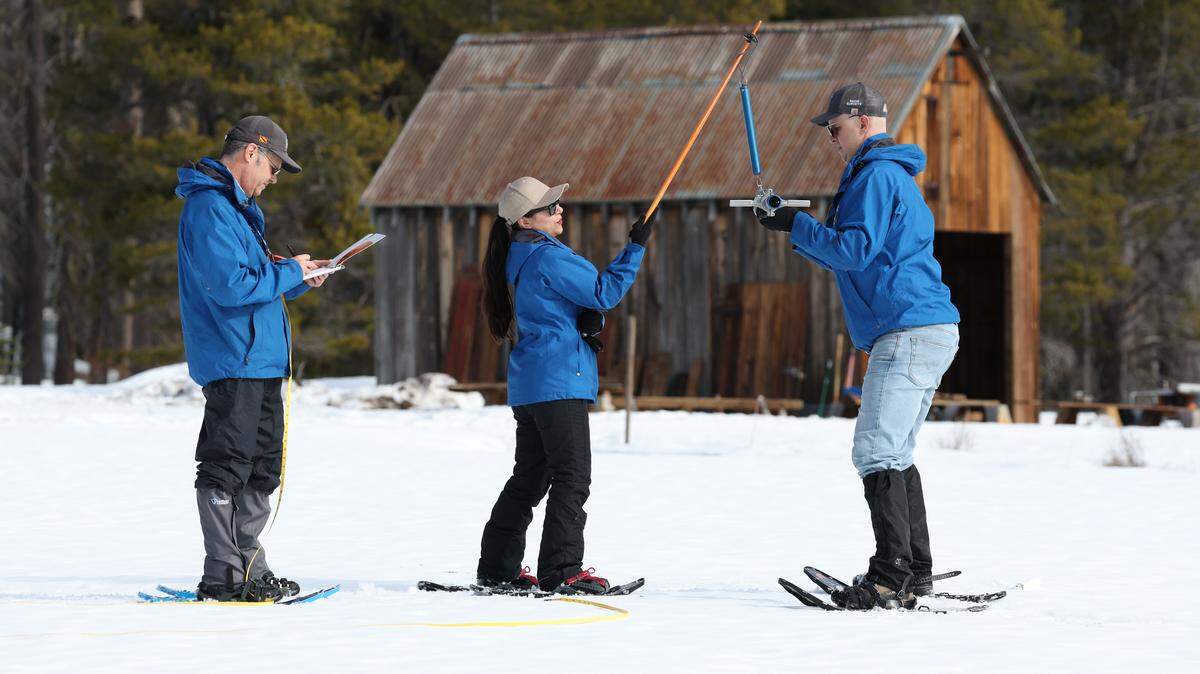
The whiplash winter of 2026 has put the snowpack well below average in watersheds for Modesto and nearby areas.
Two caveats: The main storm season still has two months to go and reservoir storage is above average thanks to recent wet years.
The snowpack was 59% of average in the central Sierra Nevada as of Friday, the California Department of Water Resources said. It supplies farms and cities via the Stanislaus, Tuolumne, Merced and San Joaquin rivers.
October and November storms got the snowpack off to a strong start, but a dry spell dropped it to 14% of the historical average for Dec. 22. Then came the holiday storms, raising the figure to 90% as of Jan. 9.
The rest of January was dry. Some of the snowpack even melted at a time when it should be building, said David Rizzardo, DWR’s hydrology section manager, in a video briefing Friday.
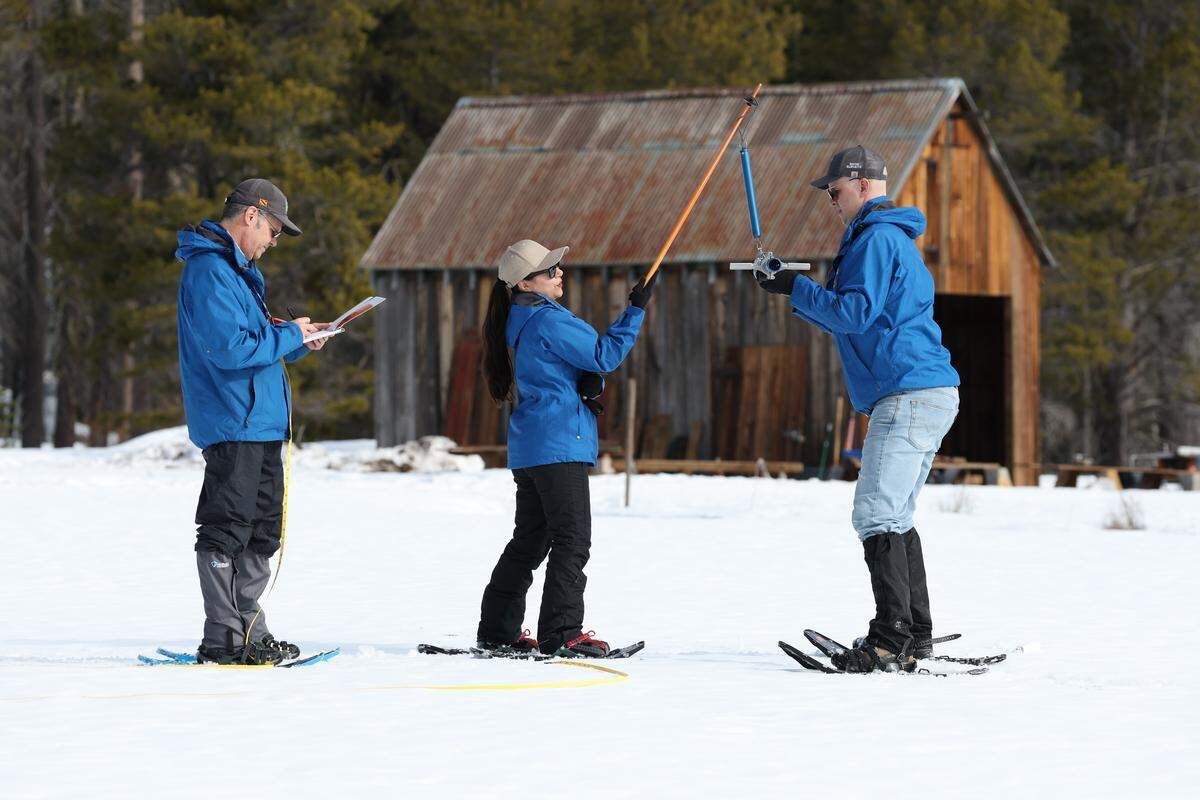
Andy Reising, manager of the snow survey and water supply forecasting, commented on the trend in a news release Friday.
“We are now two-thirds through what should be the best snow-producing months of the year,” he said. “While there is still time for February and March to deliver additional snow, the farther into the season we get with below-average conditions, the harder it will be to catch up.”
Water suppliers will wait several weeks before deciding how much to allot for irrigation in spring and summer.
The National Weather Service had said that no storms were expected until mid-February. That forecast has been updated to show a likelihood of mountain snow and valley rain on Monday, Feb. 9.
DWR has hundreds of automated snow sensors in the Sierra and other mountain ranges. It also does a monthly media event near Lake Tahoe using manual devices, including one Friday that included Reising.
The snowpack accounts for only about 30% of California’s total water, but it is vital in Stanislaus and other counties with long, hot summers.
Details on each watershed from DWR as of Jan. 30:
Tuolumne River: Its main storage site, Don Pedro Reservoir, was at 117% of its historical level for this time of year. It is shared by the Modesto and Turlock irrigation districts, which serve about 207,000 farmland acres. They also provide treated river water to ease pressure on wells in the cities of Modesto, Ceres and Turlock. TID’s farm service area extends into northern Merced County. The Tuolumne also provides part of the Bay Area’s supply via the Hetch Hetchy system.
Stanislaus River: The largest reservoir, New Melones, was at 128% of the historical average for Jan. 30. It supplies a total of about 115,000 farmland acres in the Oakdale and South San Joaquin irrigation districts. The latter provides domestic water to Manteca, Lathrop and Tracy. The Stanislaus also feeds the federal Central Valley Project, which pumps water south from the Sacramento-San Joaquin Delta.
Merced River: Storage was at 142% of the historical average in McClure Reservoir. The largest user is the Merced Irrigation District, with about 100,000 acres just south of TID’s territory.
The region also gets water from the CVP, a federal agency, and the State Water Project. Both pump massive amounts from the Delta but sometimes curtail the flows to protect fish. The systems share San Luis Reservoir, which was at 105% of its historical average Friday.
The CVP serves farms as far south as Kern County. It gives priority to irrigation districts with older water rights. These include four agencies with about a quarter-million acres stretching from Crows Landing to Mendota. Other recipients can have zero water in dry times to protect fish.
The CVP has not yet projected its 2026 deliveries. The State Water Project made an initial estimate of 30% of the contracted amount, after weighing fish needs. This agency serves city users in Southern California, along with Valley farmers.
This story was originally published February 1, 2026 at 6:15 AM with the headline "Snowpack lags in watersheds for Stanislaus, nearby counties. Is it time to worry?."