Stanislaus bus drivers say staff shortage a safety issue: long hours, little rest
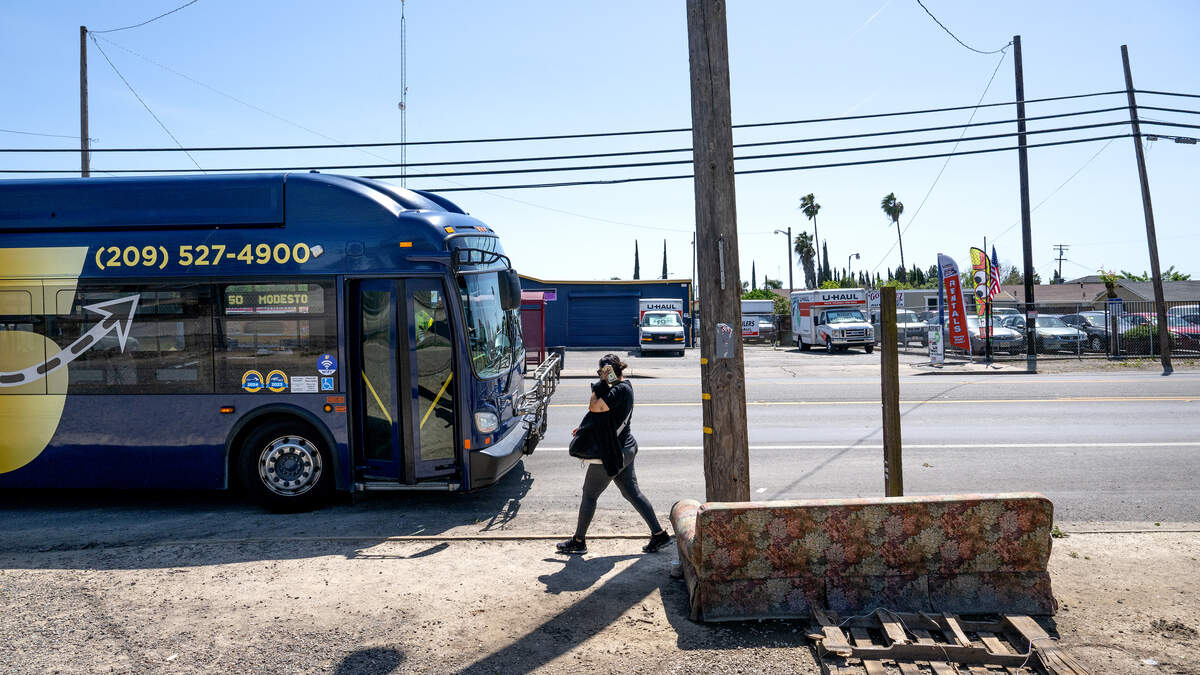
On April 30, the Stanislaus Regional Transit Authority, which runs the public bus system in the county, posted on Facebook that it was recruiting for new drivers.
A bus driver with StanRTA contracted with Transdev, Audra Robinson, commented: “You will never sleep. They will need you for every single route in the city and the surrounding cities as well, they will work you to death,” she wrote. “They don’t care about your mental health whether you have a family or not as long as you’re on the clock, they’re happy. Their turnaround rate is astronomical because of lack of sleep from the bus drivers.”
The comment was liked or loved by many of her colleagues.
Transdev is Stan RTA’s service provider. On May 5, 2026, its management sent out a memo to staff reminding them to “take a second to consider how your words reflect on you, your coworkers and the organization as a whole.”
The memo concluded with, “Moving forward, employees are expected to exercise sound judgment when engaging on public platforms, especially when referring to the company.”
Rob Stephens, interim general manager at Transdev for StanRTA, said the memo respected employees’ right to free speech but reminded them of the company’s social media policy.
‘We were told this would be a temporary thing’
Beginning around February, said drivers who spoke with The Bee on the condition their names not be used, Transdev told them they would increase working hours due to staff shortages. Then the managers began to “mandate” additional hours of work.
On July 1, Transdev sent a memo to drivers that said if they refused mandated work without authorization or a “qualifying excuse,” they could receive an “attendance point.”
One fixed-route driver said he regularly works six days a week, and over 10-hour days, but was told he needed to use his sick time to get a day off.
“We were told this would be a temporary thing, but it’s not a temporary thing,” he said. “It’s going on six months or better now. How long is this going to go on?”
An employee is required to have the opportunity for one rest day a week and cannot be disciplined for taking it, according to California labor law. Employers can mandate overtime but cannot penalize an employee for refusing to work a seventh day.
The Federal Motor Carrier Safety Administration also limits the amount of hours drivers can work in a row. The “60/70 rule” says drivers may not work over 60 hours in seven days or 70 hours over eight days.
But timesheets obtained by The Bee showed one employee exceeded 70 hours of work in a seven-day period, racking up around 33 hours of overtime for that week alone. The driver had one day off but still averaged over 10 hours a day, according to documents obtained by The Bee.
Another employee had 66 hours within a week, averaging more than 12 hours a day over five days.
StanRTA Director Adam Barth said he was not aware that drivers were exceeding the 60-70 rule and referred questions to Transdev.
Stephens said he was not aware of any employee exceeding the 60-70 rule.
“But I am aware of operators complaining about working more than 40 hours,” he said.
What’s the union doing about this?
Multiple drivers said they have reached out to their union, but haven’t gotten the response they wanted. There was an emergency bid over the weekend, but it still left drivers working six days a week for the foreseeable future.
General Teamsters Local 386, the union that represents both dispatchers and drivers, did not respond to a request for comment.
One fixed route bus driver said she was originally scheduled for four days on, three days off, but has been working six days a week since April.
“I feel like it’s a safety thing, because when it first started affecting me, I had passengers telling me, ‘You look exhausted,’” she said. “I picked up a habit of chewing gum to keep me awake.”
Stephens said the average overtime for drivers per week is just over 1,000 hours, and when divided by active drivers equates to 7.2 hours of overtime a week.
“That’s that sixth day,” he said.
Barth said he was aware Transdev is short on drivers and asking drivers to work more than their scheduled shift.
“So, obviously, overtime would be involved,” he said. “But I was not aware of the amount of overtime – I just did not know that information.”
Transdev reported it is currently down 50 drivers but holding hiring “blitzes” to try to replenish staff.
When the mandates started, drivers said they were given the choice to volunteer for an additional six-hour shift, or employees would be required to work under the mandate in reverse seniority order.
But drivers said even those who had been at StanRTA for many years were still put on the mandate list.
“Evidently, we have no options,” said one fixed route driver who had worked for StanRTA for the last year and a half. “We can’t refuse work.”
Another fixed route driver said she doesn’t have as many mandated hours as others because she had been with StanRTA for eight years, but her requests for time off are never approved.
Another fixed route bus driver said for him, the working conditions border on forced labor. “They’ll say ‘Oh, oh, you can quit,’ but they know nobody’s going to do that,” he said. “Everybody’s trying to feed their family and take care of themselves.”
Drivers described a hostile work environment where they risked getting written up for insubordination for speaking up. One driver said she’s already had six write-ups for refusing mandated overtime or trying to use sick time when exhausted.
Stephens said he knows drivers are being written up for refusing mandated hours.
Multiple drivers said that when they brought up their exhaustion to dispatchers or to management, they were dismissed. “I’ll be like, ‘No, I’m tired, I don’t feel safe operating these routes,’” one driver said. “They’ll say it’s a ‘failure to complete,’ and ‘you’re going to get a point.’”
Two drivers said they were aware of colleagues who had fallen asleep at the wheel.
“I am not aware of bus drivers falling asleep at the wheel,” Stephens said.
Another issue is a memo sent to staff on June 26. It essentially recommended that unless they are idling their buses near flammable brush, drivers ignore a warning light that indicates high exhaust system temperature.
The memo instructed drivers to operate the bus as normal unless instructed by maintenance. “When the bus is idled too long, it will overheat,” Stephens said. He said he’s reminded drivers not to idle for more than 10 to 15 minutes at any given time.
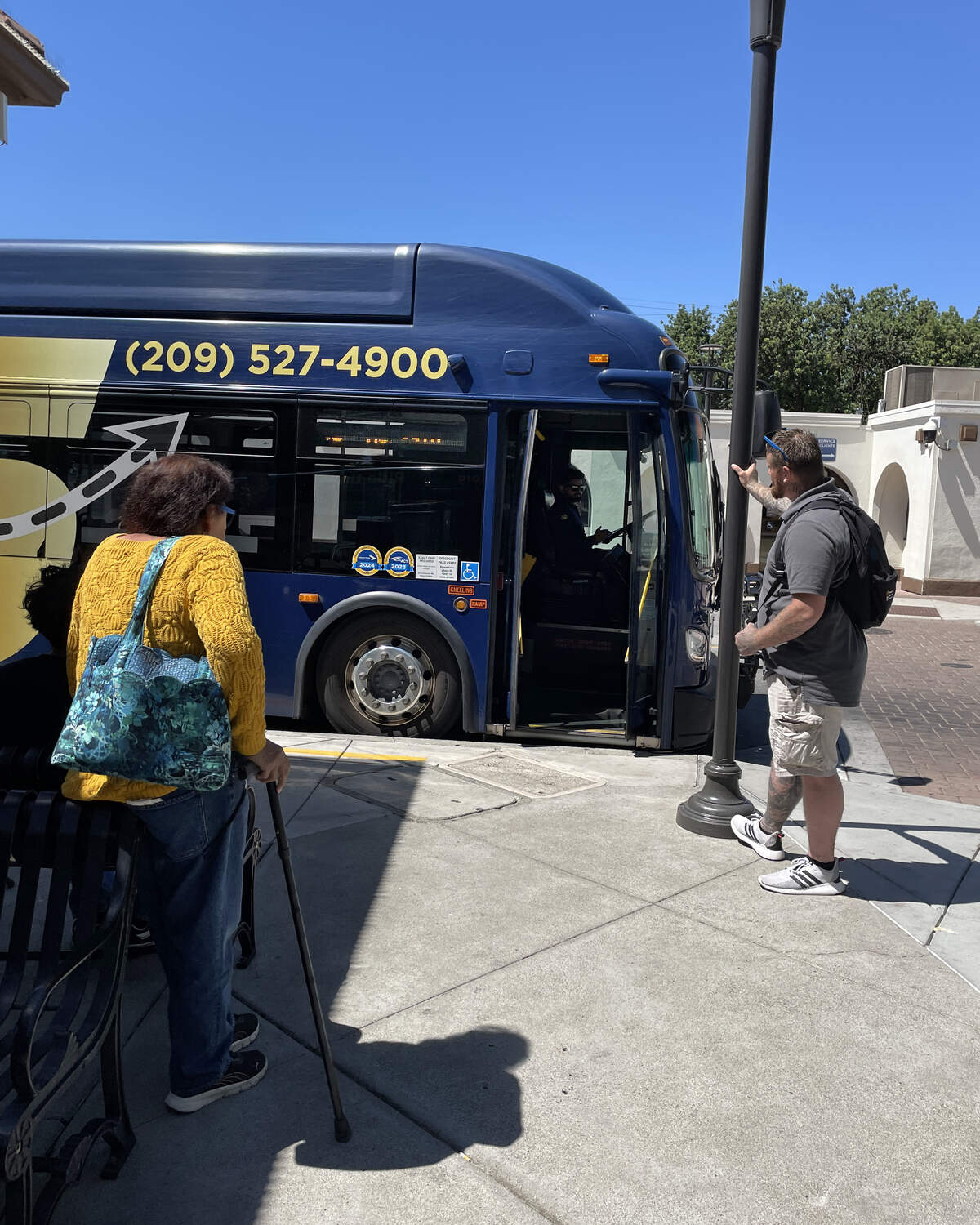
Multiple drivers expressed concerns around exhaust entering the cabin.
One driver reported having a few headaches due to the exhaust, another driver reported feeling lightheaded and having chest pain. Another went on workers compensation due to an incident that started with the Heat Exhaust System Temperature light coming on and not turning off. A half hour into the shift, the driver had to stop the bus, pull over and vomit.
Barth said there is a diesel particulate filter that will cycle occasionally, and sometimes exhaust will enter the bus. “But drivers should not be driving the bus when that happens,” Barth said. “They need to stop and put the bus out of service when that happens and the shop will take care of it.”
Barth said he hopes people are not driving the bus in that condition, since it’s not good condition at all.
Stephens said he was unaware of exhaust entering the buses.
Stephens said StanRTA was down about 50 drivers when the mandates started and they hope to finish onboarding 30 soon, which he said should alleviate some of the overtime.
Barth said he’s aware Transdev has had multiple job fairs to try to recruit new members and he hopes that will alleviate the overwork, but it will take time for bus drivers to get up to speed.
“Definitely where [Transdev is] at today and where they have been for the last few months has not been great,” Barth said.
Some drivers mentioned a high turnover rate, leading to delays in getting relief.
“I wouldn’t characterize it as a high rate,” Stephens said. He added that the process for onboarding employees takes four to six weeks, but due to hiring “blitzes” in May he expects to have 30 new drivers by the end of July.
The Bee spoke with seven local TransDev employees for this story.
This story was originally published July 16, 2026 at 10:21 AM.