Modesto approves contract to maintain rock wells, help prevent stormwater flooding
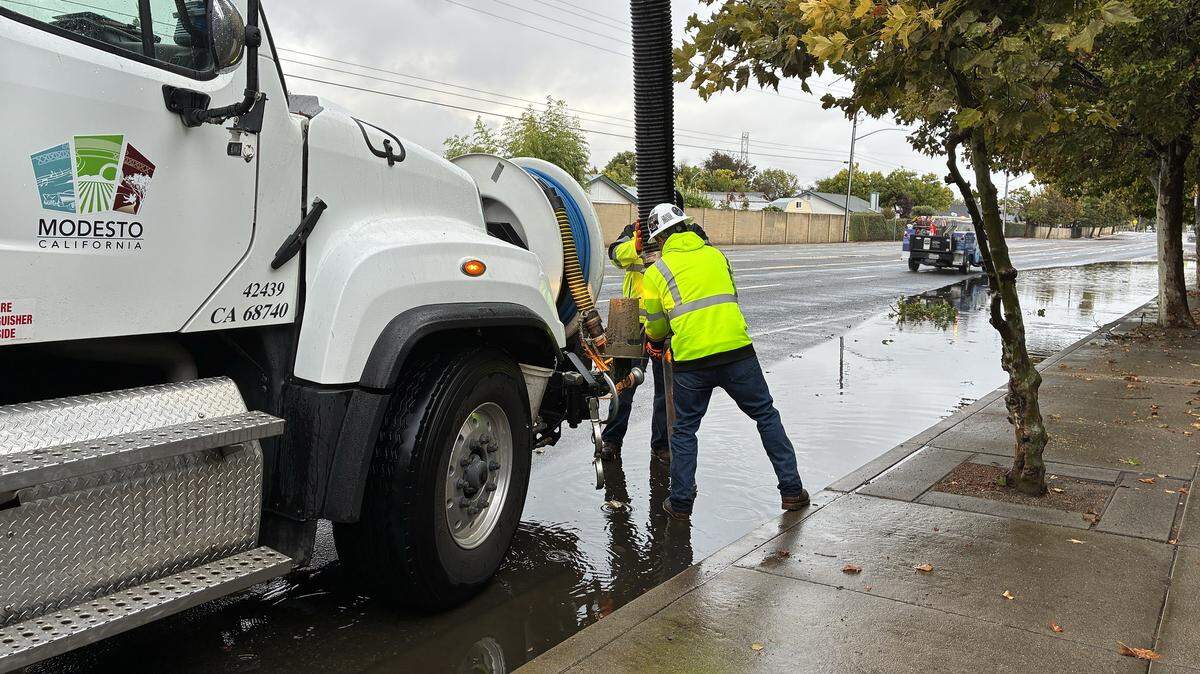
The city of Modesto approved a five-year contract for just under $3 million to rejuvenate or replace, as needed, its 9,000-plus rock wells. The gravel-filled holes drain untreated rainwater directly into the ground.
Rock wells are cheaper to install than traditional storm drainage systems, but the wells are easily clogged with leaves or trash. When they flood, emergency clearance is required.
Sam Fox, president of Fox Loomis Inc, won the contract over one other bidder to continue servicing the rock wells, which Fox Loomis has been doing for approximately the last 12 years.
Fox Loomis works for six cities, but Fox said Modesto is unique due to the sheer number of dry wells it has.
The contract is paid through the city’s storm drain fund, which is replenished by a fee of around $5 to $6 residents pay each month in their utility bill.
Robert Englent, the wastewater collection system superintendent, said the fund is in danger because rates haven’t been raised in around 20 years due to a state proposition passed in the 1990s that limited increases.
“The fund is quite challenged, to the point where we don’t have the resources to improve or do anything new with the storm system,” Englent said.
The approved contract is to help maintain the system by unclogging the wells to prevent flooding and pumping out excess water when floods occur as yearly rains often push leaves and debris into the wells.
“I think they should do more,” Fox said. “Because in the winter, when it does flood, there’s always an emergency phone call going, ‘Hey, come down here, because we don’t want the streets flooding.’”
The storm drain fund is already stretched thin, and the city has struggled to meet increasing requirements from the state.
Englent said the city does everything it can to keep streets from flooding.
“The current storm system with the rock wells is very labor intensive to keep going and to keep it working,” he said.
When rock wells no longer can drain water effectively and are irreparable, the city has replaced them with dry wells – a similar system that has a more effective catch basin to limit clogging by debris. Those replacements are done by city workers.
The state water resources control board implemented what Englent refers to as a “trash rule.” That’s a trash implementation program that requires cities to have full capture systems that prevent debris from entering surface water.
“That was an unfunded mandate by the state and we’ve been working on complying with that regulation,” Englent said. “There are still a lot of places in the city that drain into the Tuolumne River and Dry Creek that are not screened and filtered the way the state would like them to be.”
As it stands, Englent hopes the continued contract service mitigates flooding as much as possible with the funds it has.
“We’re hoping to keep the storm drain fund for a few more years,” Englent said.
This story was originally published May 15, 2026 at 6:00 AM.