How will Trump bill affect Stanislaus County? 100k residents may be impacted
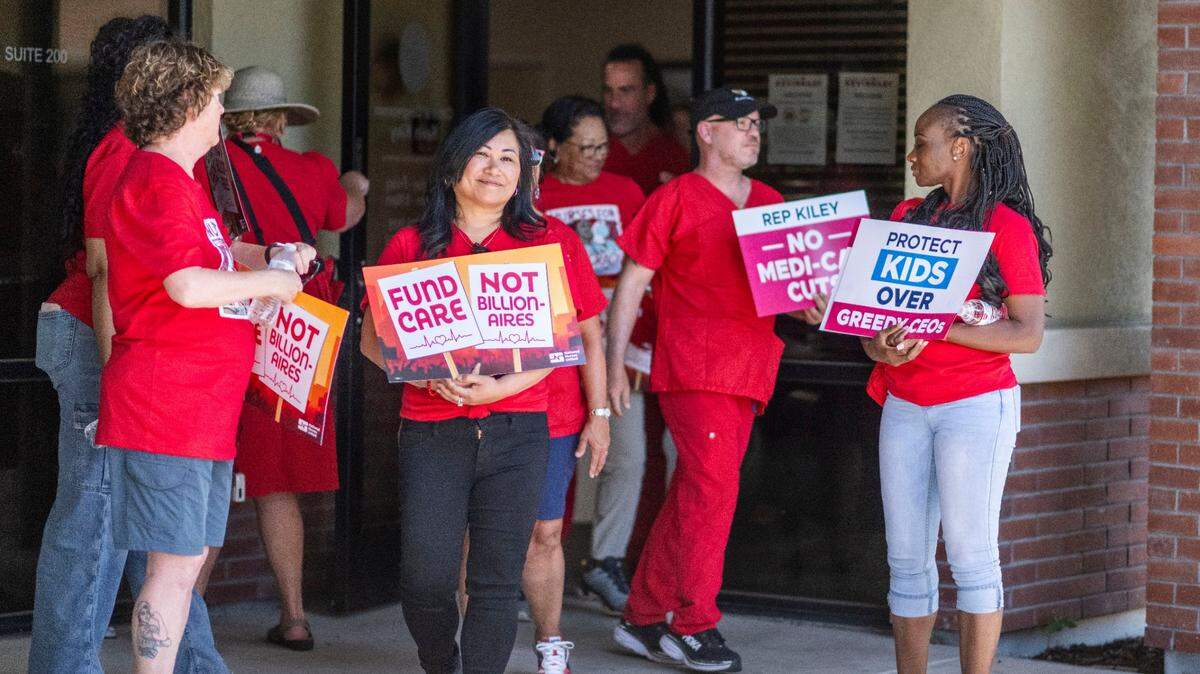
The federal “Big Beautiful Bill” will bring changes to the CalFresh and Medi-Cal programs, affecting more than 100,000 Stanislaus County residents, and also will result in millions of dollars of county costs, according to a report to county supervisors Tuesday.
Three county department directors said “H.R. 1” will impact significant portions of county safety-net programs and, among other things, require the county to re-establish an indigent health program at a cost of $8 million to $12 million next fiscal year.
According to the report, affected residents could suffer from loss of food assistance, loss of health coverage and delays in getting care, and will have to complete more paperwork to maintain services.
The county officials assessed the impacts on CalFresh, the Medi-Cal program, county health services and county Behavioral Health and Recovery Services.
CalFresh impacts
The federal policy will deny Supplemental Nutrition Assistance Program benefits to noncitizens including refugees, asylees, certain immigrants and trafficking victims. The food assistance will be limited to U.S. citizens, lawful permanent residents, Cubans and Haitians who entered the country, and other individuals.
The CalFresh restrictions began April 1 for new applicants. People who regularly receive the assistance will be assessed for immigration status at their next renewal date. The first households may be discontinued this month.
The county estimates that more than 5,000 of the nearly 90,000 residents getting food through CalFresh will be affected.
In addition, H.R. 1 work requirements will begin June 1 for able-bodied adults between the ages of 18 and 54 who are not raising children. They must work, participate in an employment or training program or perform community service 80 hours per month to keep getting food assistance.
Christine Huber, director of the county’s Community Services Agency, said the department is focused on ensuring eligible people continue with CalFresh assistance and will hold outreach events to communicate the changes. The changes are expected to create more reliance on food banks and charitable organizations.
Impact on Medi-Cal recipients
More than 25,000 residents in Stanislaus County will be affected as H.R. 1 eliminates Medi-Cal eligibility for refugees, asylees, other immigrants and trafficking victims. The Medi-Cal health program is California’s version of Medicaid.
California plans to move many of these people into a state-funded version of Medi-Cal with restricted services.
Adults who gained access to Medi-Cal through the Affordable Care Act expansion will have work requirements, effective Jan. 1, 2027, that are similar to the CalFresh rules. But that doesn’t apply to pregnant women; foster youth; foster care graduates younger than 26; the elderly, blind or disabled; children younger than 19; and Native Americans.
People can lose Medi-Cal coverage for not complying with the work requirements. About 2 million adults in California may be affected, including more than 70,000 of the 217,000 on the Medi-Cal rolls in this county.
These adults also are facing more frequent renewal requirements, starting next year, from every 12 months to six months. That’s expected to double the administrative workload for the county.
The federal bill also will initiate cost sharing and monthly premiums for certain groups of Medi-Cal recipients. Those with “unsatisfactory immigration status” will be expected to pay $30 monthly, starting Jan. 1, 2027. Cost-sharing, with copays up to $35 per visit, will begin in 2028 for single adults with income above 100% of the federal poverty line.
The changes in the Cal-Fresh and Medi-cal programs will create more administrative duties for county staff to assist people with meeting eligibility and renewal paperwork. The report estimated four additional hours of work for every affected CalFresh recipient and 3.5 hours for each Medi-Cal client.
Without a concerted effort to keep people eligible, “H.R. 1 will result in widespread loss of medical coverage and access to food and cause significant fiscal and operational strain on counties and the broader health care system,” a staff report said. As some residents lose benefits, it’s expected to exert pressure on community health centers, hospital emergency departments, food resources and nonprofit organizations.
The officials said they’re coordinating with other county departments and community organizations and will conduct public outreach. Community groups scrambled to assist low-income households when SNAP benefits were interrupted in November during a federal government shutdown.
“Please think carefully about what we can do and try our best to mitigate the impact for everyone involved,” said Steve Morrow, a county resident who attended Tuesday’s meeting.
The county can expect revenue losses for county Behavioral Health and Recovery Services, which estimates a $2.3 million Medi-Cal revenue loss in the budget year starting July 1. The reduction in Medi-Cal revenue could range between $4.8 million and $6 million the following year as people lose coverage.
Rebuilding indigent health program
The county is mandated to provide health services for uninsured indigent adults but shifted thousands of those patients to Medi-Cal after the eligibility expansion of the Affordable Care Act in 2014. Because of H.R. 1, the county now is looking at resurrecting indigent health services.
The former program served 7,800 adults with a 55-member staff and $14 million annual budget.
The county Health Services Agency will need to rebuild the program infrastructure and staff and develop hospital and patient care networks. It needs to have the state redirect 1991 Health Realignment funding, which once accounted for $10.4 million in annual support for indigent health services.
Costs of restoring the program for 20,000 newly uninsured are estimated at $8 million to $12 million in 2026-27, $11 million to $20 million in 2027-28, and $18 million to $34 million in 2028-29, depending on the level of services.
The California State Association of Counties is lobbying the state to direct the realignment funding back to counties for indigent health programs. Gov. Gavin Newsom’s revision to the proposed state budget this month may clarify state funding levels, responsibilities for counties and details of implementing programs.
This story was originally published May 6, 2026 at 7:28 AM.