Environmental justice group hosts meeting for drinking water safety in Patterson
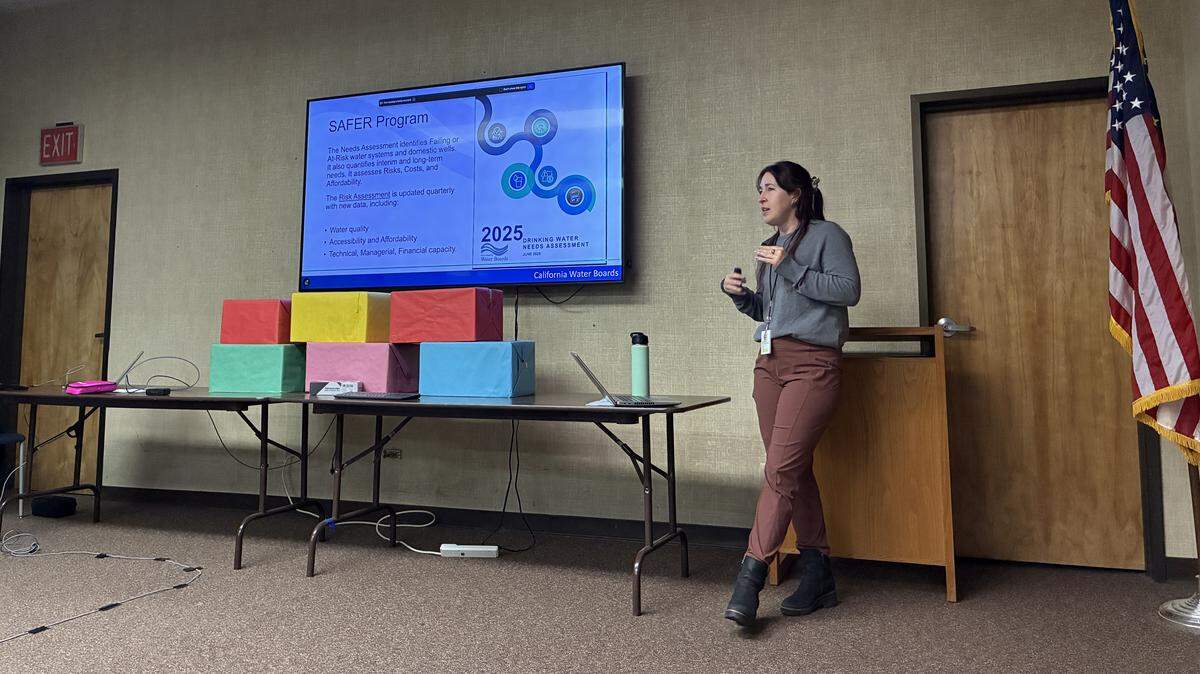
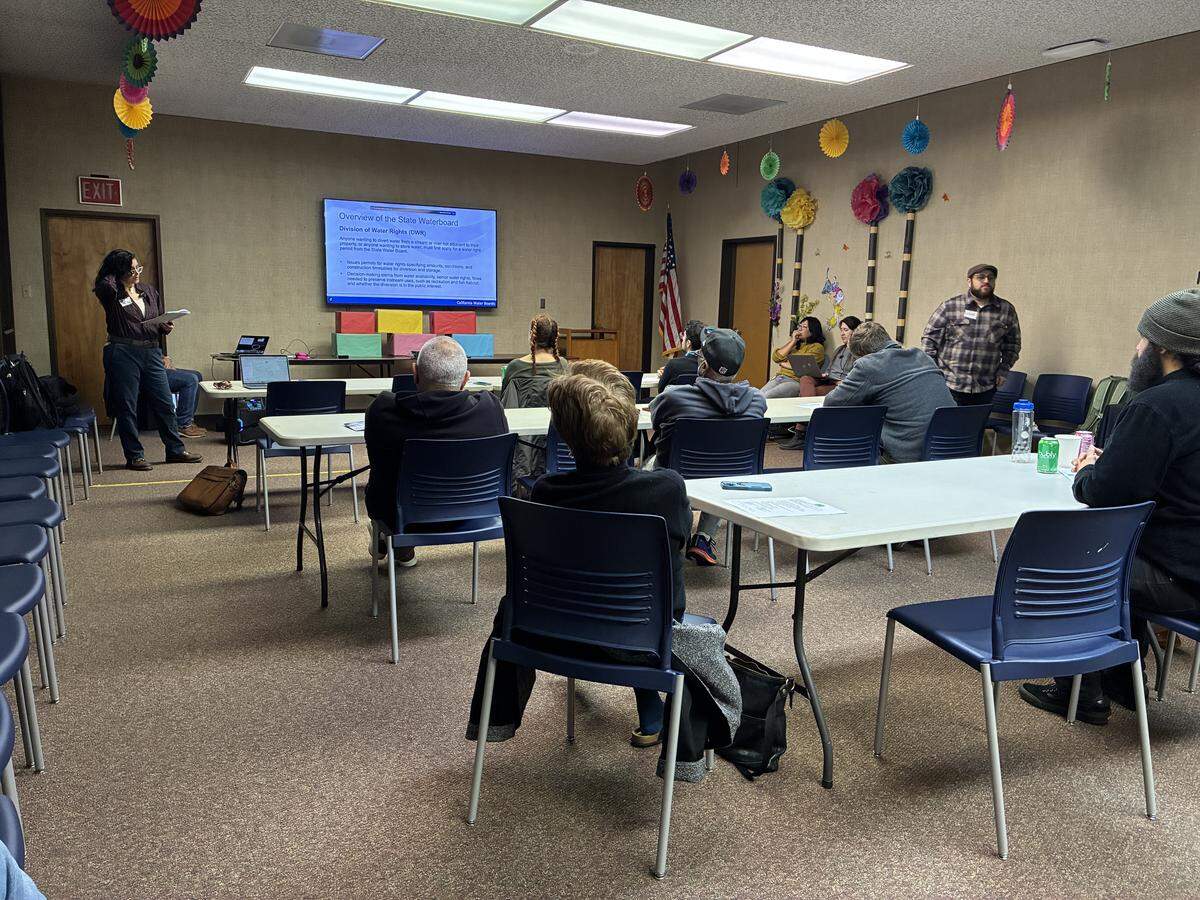
Environmental justice nonprofit Valley Improvement Projects hosted a community meeting on drinking water Wednesday evening in Patterson. It included representatives from the State Water Control Board, the Regional Water Control Board and the Department of Public Health.
The meeting focused on public water systems in Stanislaus County that had issues with safe drinking water and what resources residents have to address them.
Outside the Patterson Library, where the event was held, a public notice was posted informing residents about chromium hexavalent, or “CR6,” levels in the city’s water that is over safe drinking water limits.
“The city’s planning to meet those standards,” said Edgar Garibay of Valley Improvement Projects.
The city of Patterson is in the process of identifying a long-term solution to the ongoing issue of CR6, a naturally occurring contaminant that over time can increase consumers’ risk of getting cancer.
No representatives from the city of Patterson, which issued the notice, were present due to a scheduling conflict.
Garibay said the current timeline gives the city until 2030 to address the contamination by upgrading its water filtration systems. The city plans to hold a community meeting in late February or early March to go over its options.
Residents had questions about whether it was safe to drink their tap water and were referred to the state-required notice posted outside that stated they did not need an alternate water source, but that purchasing bottled water is always an option.
The way the new regulations are set up, Patterson’s exceedance does not rise to the level of an official violation until it has passed the compliance deadline set for October 2027.
The presentation from Valley Improvement Projects went over other communities within the county that are also facing issues such as the Riverdale Park Tract, Monterey Park Tract and Grayson.
“Longer-term solutions are needed in all of these communities,” Garibay said.
The county has 16 failing water systems and 19 at-risk water systems, which collectively serve a population of around 75,000 residents.
Rachel Wittenberg, from State Water Board and in the Office of Public Engagement, Equity and Tribal Affairs, explained how the state prioritizes its funding for small water systems through a yearly needs assessment.
“The overall focus of SAFER (Safe and Affordable Funding for Equity and Resilience), as I mentioned, but I’m just going to keep foot stomping, is safe, affordable, equitable,” Wittenberg said. “Those are the keystones here that we’re going with this program.”
John X Mataka, a representative of the Grayson Neighborhood Council, said an example of where this falls short is the Monterey Park Tract. The historically black community, now largely Latino, was hooked up to the city of Ceres as a way to address contamination in its small water system. But the price was so high, residents couldn’t pay it.
“So whenever you talk about consolidating these poor communities of color into a bigger system, there needs to be something in place that addresses the economic part,” Mataka said. “Or else it’s like peeing in the wind, for lack of a better way to say it – it doesn’t work.
Gavin Bruce, a program manager with Valley Improvement Projects, expressed concerns about how dischargers such as agriculture and dairies aggregate their data and report it to the regional boards.
“From an enforcement standpoint, how can you pinpoint who the bad actor is when these districts have this anonymity?”
Selina Delores Cole, a senior environmental scientist and specialist for the office of enforcement at the regional water control board, said there is very rarely one source that causes an issue in an area. The irrigated lands regulatory program he referred to requires dischargers to report nitrate levels to the regional control board, and very rarely is there just one source that causes an issue in an area.
“If there is a problem or an issue where we say, ‘Hey, we’re noticing you’re having issues with nitrates,’ they are required to do follow-up management plans and increased monitoring and increased reporting, and they have to develop plans to address that issue.”
Cole illustrated steps the board is taking to address salinity and nitrates in the Central Valley.
“Over 900 notices were sent to dischargers in these areas,” she said. “That group includes agricultural growers, dairies, industrial facilities and wastewater plants, and it required them to begin well testing and to provide free replacement water where nitrate contamination exceeds health standards.”
Stanislaus County has thousands of domestic wells that are not regulated by the state and can be contaminated due to environmental factors like agriculture, factories or septic tanks.
Sara Bernal, outreach coordinator for the Central Valley Water Collaborative, said if you are outside of a public water system and using a domestic well, her program offers free water testing and alternative drinking water sources if water tests over safe drinking levels.
Cole offered a link to the CalEPA complaint system, which will route complaints to those responsible for following up. If complaints routed to local enforcement authorities, like Stanislaus County’s Environmental Resources, generate no response, follow up.
Cole added that the regional board cannot tell them what they have to do, but they are required to tell them what they plan to do and can increase enforcement if those plans are unsuccessful.
Wittenberg addressed concerns raised by a resident that minorities and undocumented people may be unlikely to complain about issues even though they may be the most affected by their outcomes.
“We can help connect to resources without compromising somebody’s confidentiality,” Wittenberg said.
Spanish translation was provided and the meeting was held in a hybrid format for those who could not attend in person.
Mataka said that regardless of the level the state sets, residents are aware that contaminants are dangerous and can cause cancer or other health issues.
“So even though it might meet the level that the state says is acceptable, it doesn’t mean that you want to drink it,” Mataka said.