‘Hands off the U.S. mail’: In Ceres, Postal Service workers rally against privatization
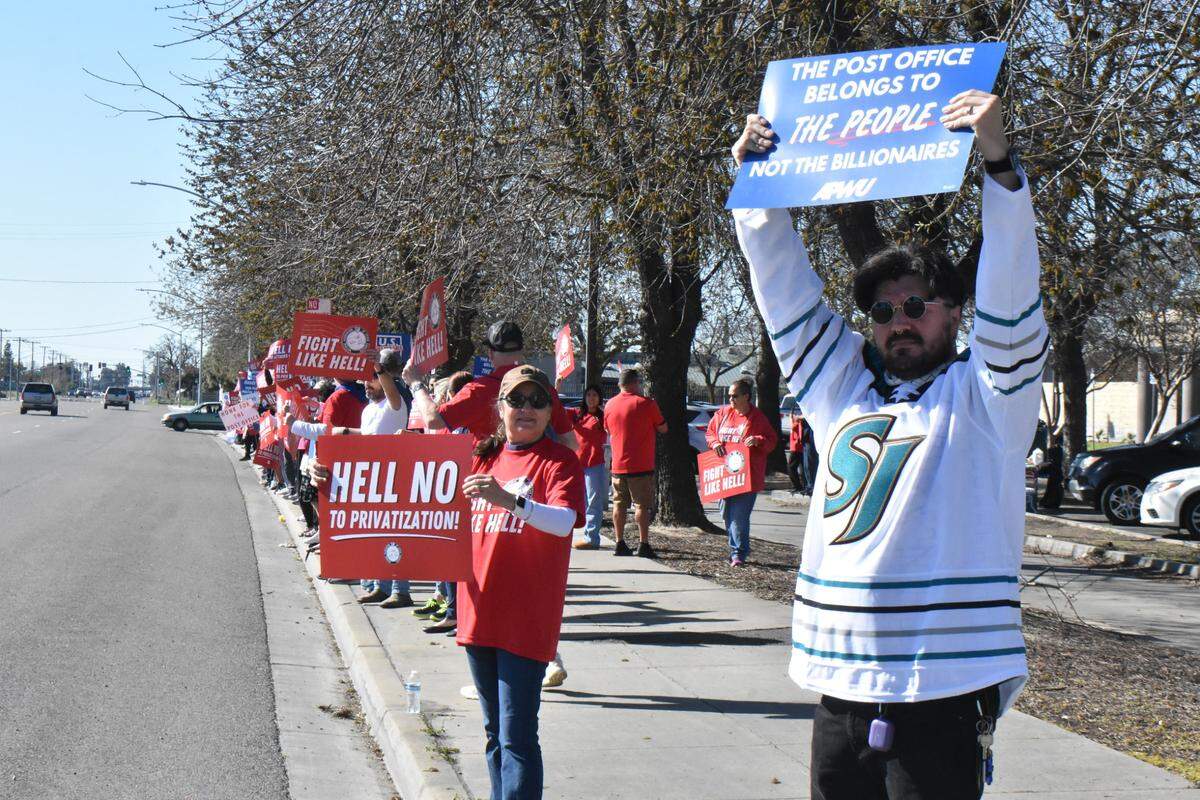
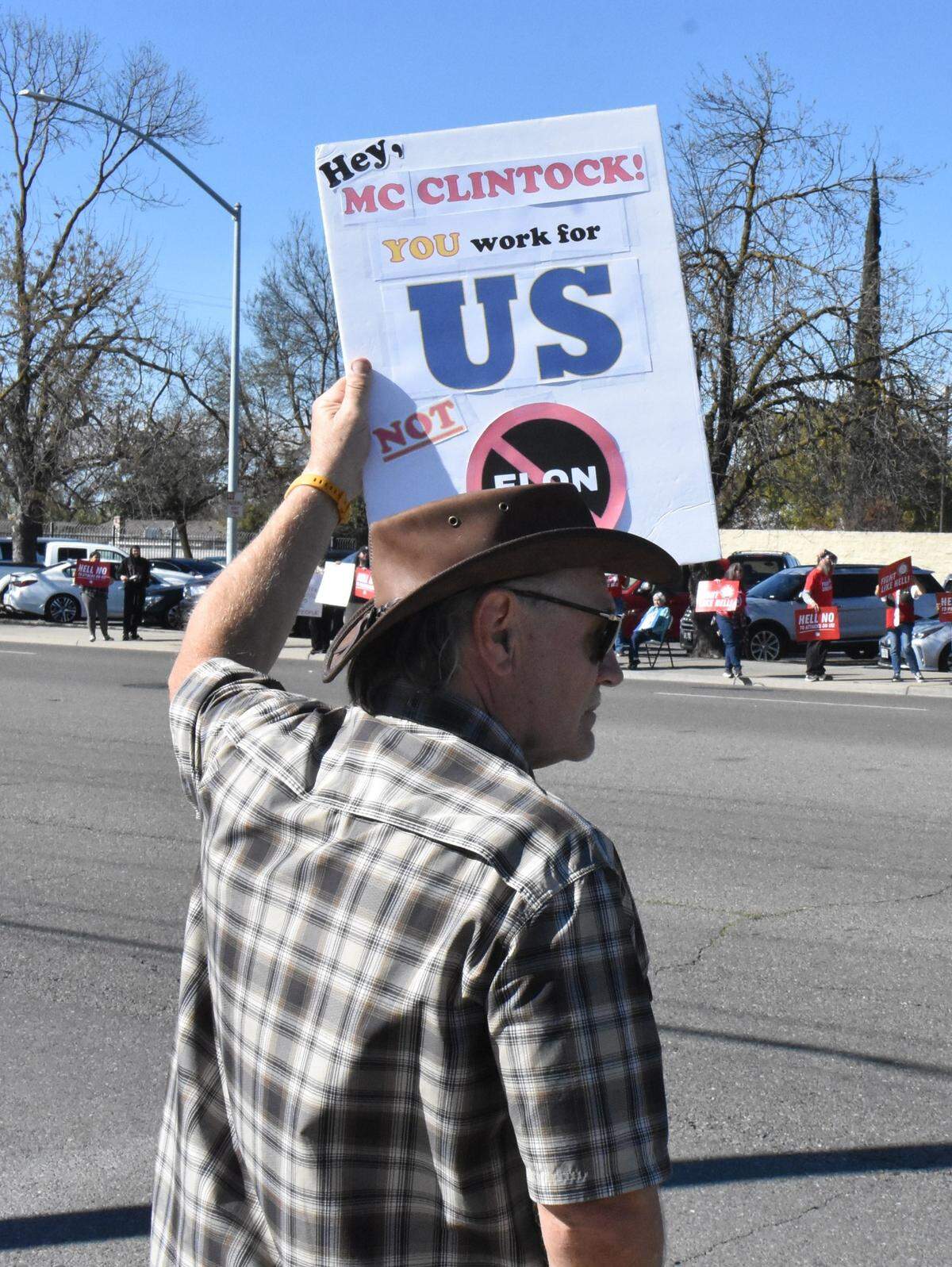
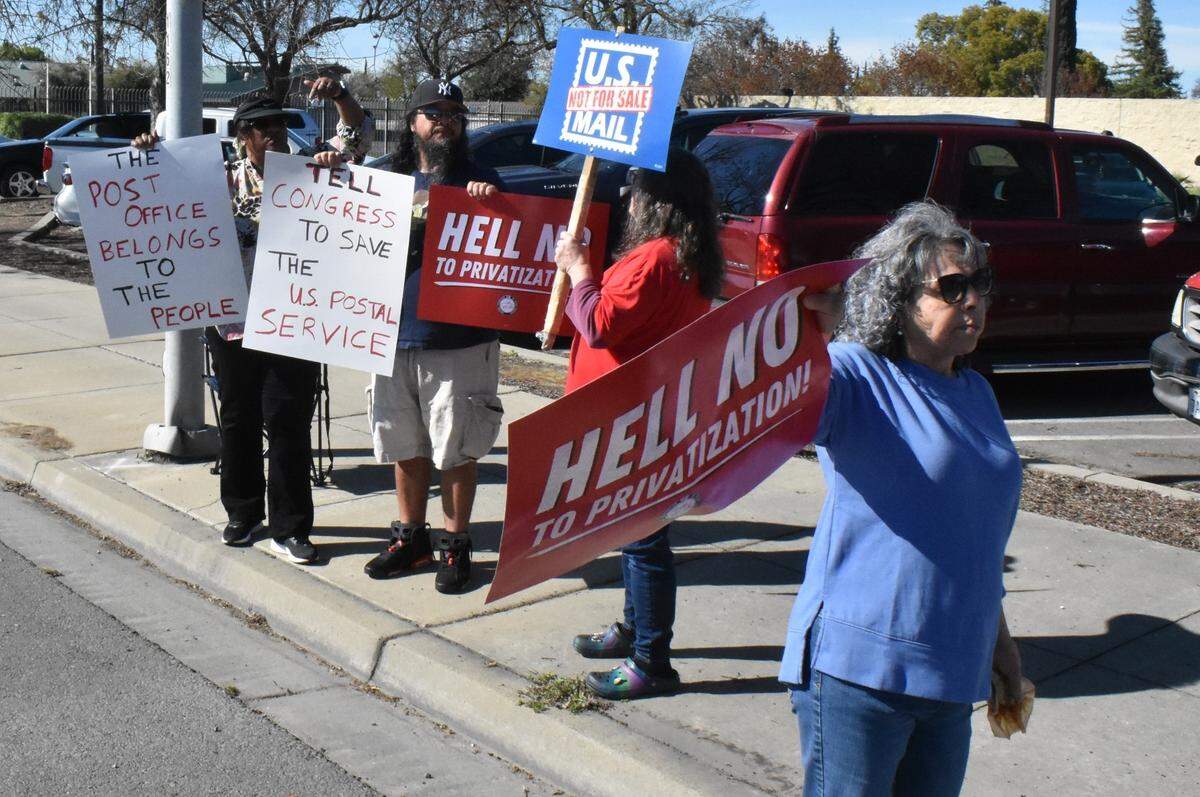
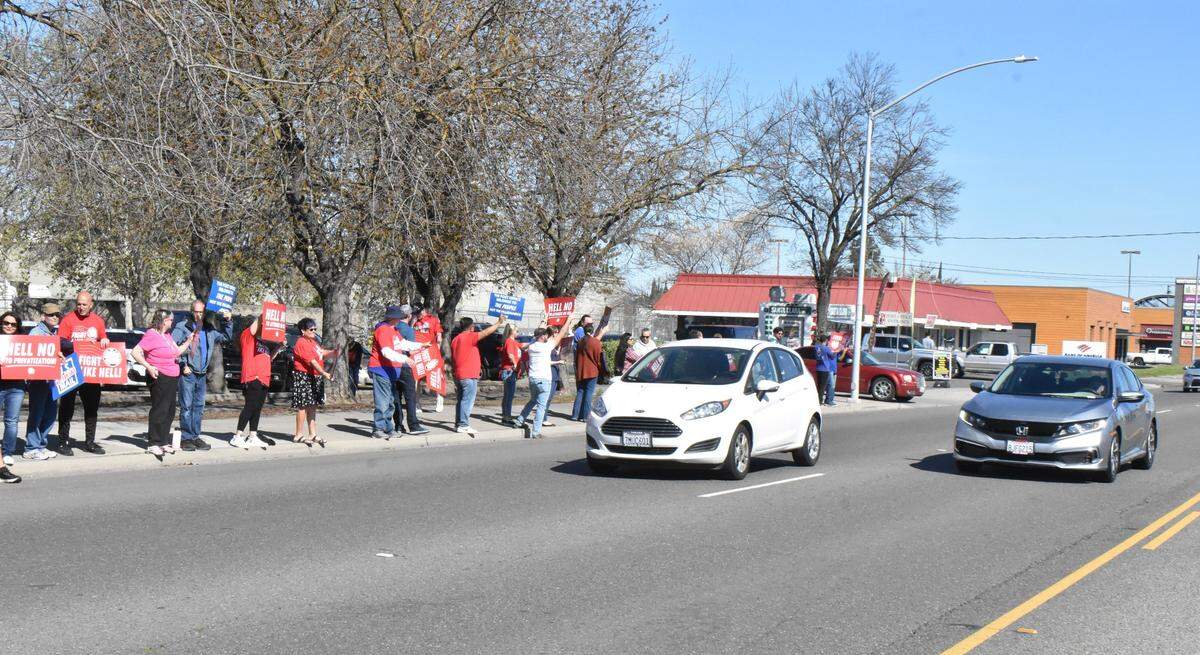
Mail carriers, their colleagues and supporters packed the Mitchell Road sidewalk in front of the Ceres Post Office on Sunday to rally against the Trump administration’s renewed interest in privatizing the U.S. Postal Service.
Brian Voigt, a retired letter carrier, organizer of the event and congressional liaison to the National Association of Letter Carriers, said they chose the area due to its high volume of vehicle traffic. Over a couple of hours, the group got countless horn honks of support, including at least a few blasts from big-rig drivers.
Voigt said recent moves in D.C. to restructure and privatize the USPS would have terrible consequences. “It would have a domino effect for the whole country, reducing services to 51.5 million households and businesses in rural areas where private carriers don’t deliver, raising shipping costs and deliberate inflation costs for businesses and consumers.”
“You know, there is talk of the U.S. Postal Service being taken private, you do know that,” then-President-elect Donald Trump said at a press conference in December. “Not the worst idea I’ve ever heard, you know, it really isn’t.”
The Postal Service employs between 250 and 500 workers in Stanislaus County, making it a major employer, according to California’s Employment Development Department.
Liset Hernandez, a member of the American Postal Workers Union representing clerks, maintenance, motor vehicle and support services staff at USPS, said she was encouraged to see people from different unions at the rally.
“Just because they’re mail carriers and I’m a clerk, doesn’t mean that their fight isn’t my fight,” she said.
The rally was also attended by members of National Rural Letter Carriers’ Association.
The history and role of the U.S. Postal Service
The U.S. Postal Service is one of the rare examples of a federal agency mentioned in the Constitution under congressional authority, giving it the ability “to establish post offices and post roads.”
The first postmaster general was Benjamin Franklin in 1775, a year before the Declaration of Independence was signed. The formal office was created by then-president George Washington and Congress in 1792.
“There’s a lot of history with the post office, we’re not just brand new,” Hernandez said. “We’re here for the people.”
Unlike a private company expected to turn a profit, the USPS is required by its Universal Service Obligation to deliver the mail to everyone regardless of how difficult it is to reach them. This means the Postal Service provides mail to places including Antarctica, American Samoa, Guam, Puerto Rico and reservations with nontraditional addresses throughout the United States.
People without housing who do not have an address can get their mail through “General Delivery,” a free service that sets up a temporary address that can be used to receive important documents.
Private companies like UPS and FedEx do not offer these services.
“If it’s not cost-effective to them, they’re not going to go out there,” Voigt said. “If they do choose to give mail service to rural America, I can only imagine what the cost would be.”
In 1970, Congress removed many federal subsidies from the Postal Service and made it an independent agency within the executive branch, tasked with self-sufficiency. For the past 15 years, the agency has lost money, in part due to declining use of first-class mail, according to the Government Accountability Office.
A shift in funding requirements in 2022, which removed the agency’s requirement to pre-fund retirement benefits, helped, but the Postal Service continues to have financial concerns.
“The powers that be would like to have us running like a smooth business and profit, profit, profit. That’s not what we’re here for,” Voigt said. “We’re here to provide a service to the public every day, six days a week, sometimes seven days a week. That’s what we’re entrusted to do by Congress.”
This is not the first time the USPS has encountered calls for privatization.
Postmaster Louis DeJoy, appointed during Trump’s first administration in 2018, created a 10-year financial solvency plan that included making service more cost-efficient by cutting or curtailing unprofitable wings of the agency. The Postal Commission reported that DeJoy’s plan would result in rural communities getting a lower standard of service.
What’s happening now
Recently, Voigt said there has been talk of the elimination or firing of the Board of Governors, the entity responsible for hiring and firing the postmaster general. The nine-member body consists of presidential appointees confirmed by Congress.
Hernandez said she’s already seen reductions in service availability with the consolidation of sorting and delivery service in Stockton. Mail carriers from Manteca and Escalon now travel 10-20 miles to start their jobs at that site.
“When you have a downtown office, you can be like, ‘Hey, my wedding dress, I need it,’ and somebody will go above and beyond to get it for you,” she said. “Now your mail is in Stockton and I can’t do anything about it.”
DeJoy reached out to the newly coined Department of Government Efficiency earlier this month to review and ask for assistance regarding USPS’s 31,000 retail offices, according to Reuters. Dejoy said in a letter to Congress on March 17, “Future lease renewals will be even more difficult to support financially.”
In Stanislaus County, there are 11 retail offices; if closed, workers would have to relocate to other areas Hernandez said could be prohibitively far. “There’s people that are in the offices that are older, they can’t just relocate,” she said.
Hernandez also said she’s seen more senior employees receive voluntary early retirement requests. “We know they’re serious because they’re offering all the old-timers, ‘Hey, we’ll give you X amount of money to leave the post office now,’ versus staying and trying to work more years,” she said.
DeJoy said in a statement in February that he planned to resign. He cited pushback for his proposed changes, which he referred to as “illogical and irrational scrutiny,” asking the Board of Governors to look for a replacement.
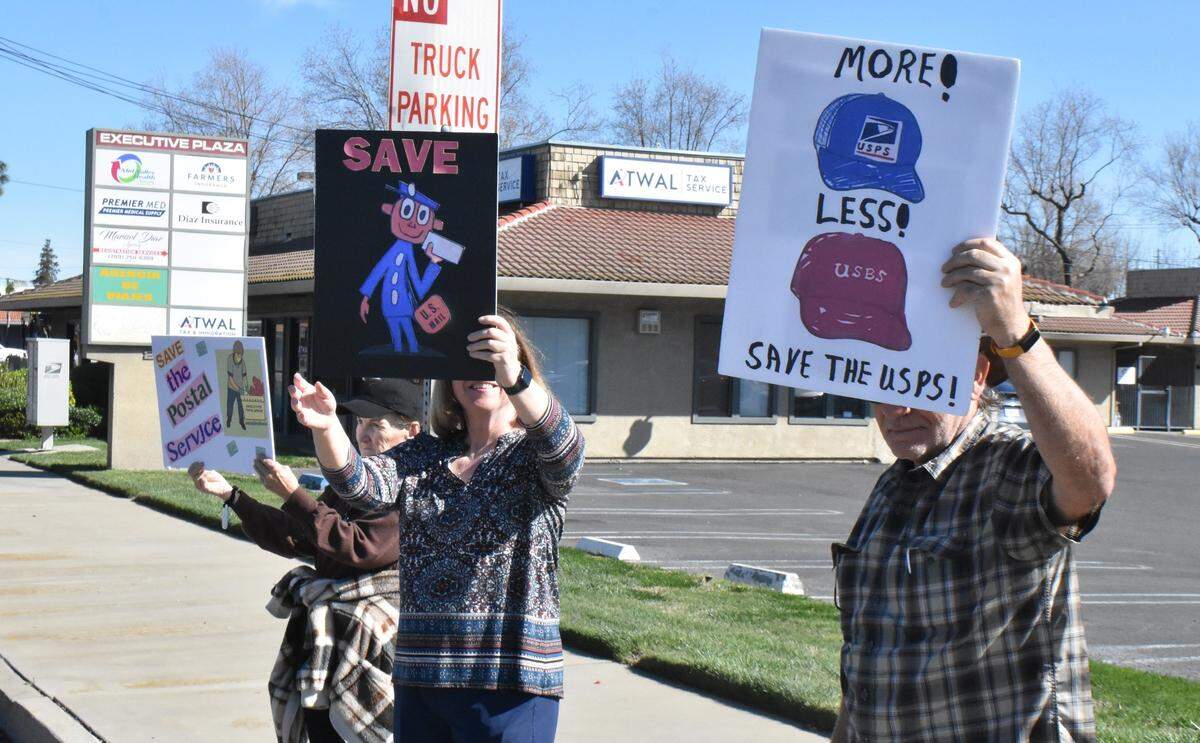
Voigt said the response to Sunday’s rally was largely positive. Postal workers and supporters held up signs that read “Fight Like Hell,” one of the chosen chants for the rally.
“It’s a brotherhood or a sisterhood, we have each other’s backs,” Voigt said.
According to the Pew Research Center, the USPS in 2024 was listed as the second most trusted federal agency, right behind the National Parks Service.
The current administration has argued that recent changes to the agency were made to increase efficiency and profitability, but Hernandez said they don’t show the ugly truth of that profit.
“Support us, help us in our endeavors,” she said. “It’s not a joke, it’s not a hoax or anything, this is real life. It’s an alarm we’re trying to sound to the public.”
Voigt said he wants to see the public get involved in reaching out to their congressional representatives since he said policy changes should be set by the will of the people.
“Call your representatives back in D.C. and tell them, ‘Keep your hands off the Postal Service,’” he said.
This story was originally published March 24, 2025 at 5:13 PM.