Modesto City Council rejects ‘free money’ for cannabis program. Some call it racism
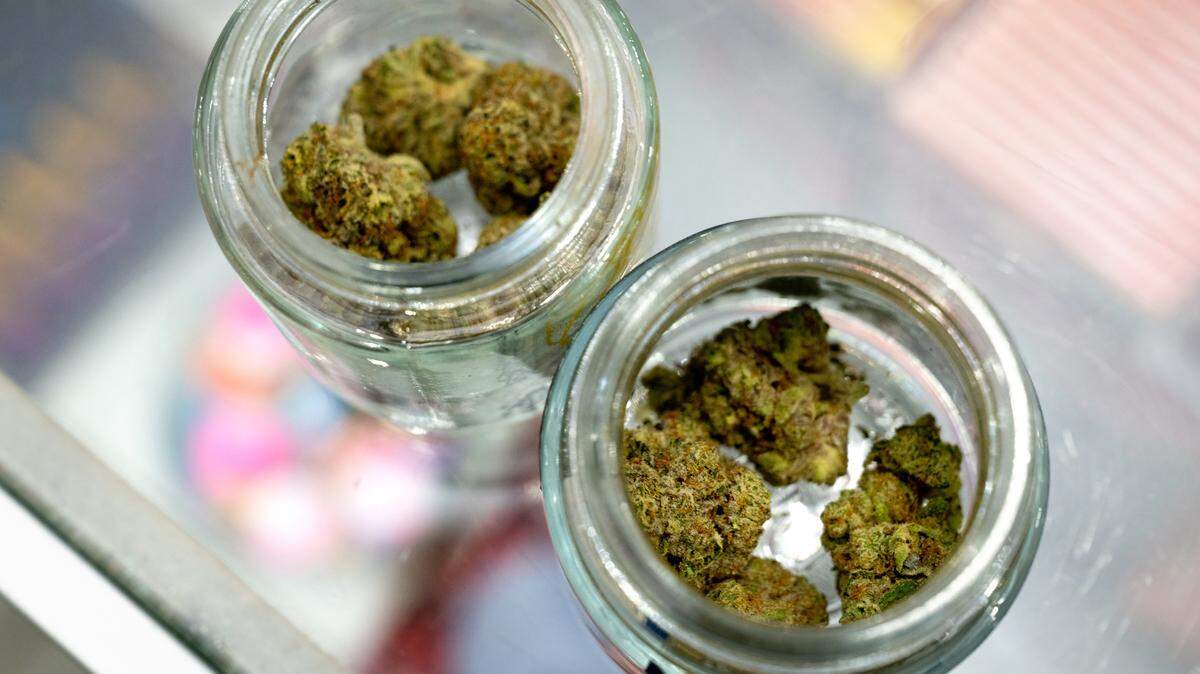
In a tie vote last week, the Modesto City Council decided against securing additional funding for its Cannabis Equity Program, which was designed to help those formerly incarcerated for marijuana-related crimes get into the legal weed business.
The decision to turn away from “free money” from the state was framed as racist by two recipients. The program is a branch of a statewide program aimed to help Black and Hispanic communities, which were disproportionately jailed when marijuana was illegal.
Five people were selected to receive $75,000 to help start four local cannabis businesses (one is run by two owners). The city voted Dec. 3 on whether to apply for another grant, which would further finance the five applicants’ budding businesses.
The item failed. The vote was split 3-3, with Councilmembers Nick Bavaro, Rosa Escutia-Braaton and David Wright in opposition. Councilmembers Jeramiah Williams and Chris Ricci and Mayor Sue Zwahlen voted to continue funding.
Bavaro said he believed the money given to the four businesses in the program was intended to be used only as “startup money” that would enable recipients to find other funding.
Vice Mayor Eric Alvarez abstained from voting because of a conflict of interest. Before the vote, he said a family member had an interest in applying for the program.
“I come from the entrepreneur side where you know you need to … get funding from the private sector. And if you have something that works well, you’re going to attract stakeholders,” Bavaro said at the council meeting. “So this is why I will be voting (no) on this item tonight.”
Recipient LaPrice Reynolds and other supporters of the program said Bavaro’s explanation and the City Council’s decision didn’t make any sense.
“I was baffled by that,” Reynolds said. “Because it’s free money that the government is giving us to start up, because it takes a lot of money to run a business in this cannabis industry, and we don’t have the same investors Bavaro would have. We’ve been incarcerated before for this.”
Reynolds co-owns one of the four businesses that qualified to receive funds from the Cannabis Equity Program. He said he became involved in the cannabis business because of his paralyzed son, who used CBD products to help mitigate seizures.
Reynolds said he was confused why any council member would oppose applying for more funding. None of the money comes from the city, but rather from the Governor’s Office of Business and Economic Development (Go-Biz). In fact, Modesto pockets some of the grant money.
The city applied for a grant from Go-Biz and was awarded $350,000 in January 2023. These funds were distributed to five people from Modesto in April of this year. Those who applied needed to have proof of:
- Cannabis-related arrest or conviction of themselves or a family member
- Residency in designated ZIP codes (95355, 95354, 95350, 95351) prior to Nov. 8, 2016
- An income level below 80% of the area median income.
Though recipients technically received $75,000, a little over $10,000 of that went toward the city’s commercial cannabis permit application fee and its annual permit fee for nonoperational businesses.
An additional $35,000 from the $350,000 grant total was taken by the city to recover “costs related to program administration.”
The approximately $64,000 that recipients receive from the grant isn’t enough to get a business started, Reynolds said. His business has two parts: He would grow and cultivate the product while his co-owner, Eric Washington, would open a dispensary.
But Reynolds estimated the cost of just renting a space and paying utilities would be $10,000 a month. This doesn’t include the potentially tens of thousands of dollars needed for state permits, furnishings and equipment, he said.
The only way for a small, independently owned cannabis business operated by those formerly incarcerated for doing what is now legal to just get started in Modesto would be additional grant funding, Reynolds said.
‘No logical reason’ not to apply, NAACP says
“From the onset, working with the city on this project has been a struggle,” wrote Wendy Byrd, president of the Modesto-Stanislaus NAACP, in a statement to The Bee. “It’s not just one thing. It’s an accumulation of mishaps on their part that gives the impression that the program is not important and is being sabotaged and set up for failure. There is no logical reason good enough not to apply.”
The idea of a Modesto version of the statewide program came from the NAACP three years ago, Byrd said.
The state program was designed to “advance economic justice for individuals most harmed by cannabis criminalization and poverty,” among which, according to California Department of Justice data, were Black Californians. Black residents were two times more likely to be arrested for cannabis misdemeanors and five times more likely to be arrested for cannabis felonies than white Californians.
Reynolds wondered why, if there was no cost to the city for this program, it would not vote to continue funding it. He believes, at least for him and Washington, it was the city’s “bias against African Americans, period, cut and dry.”
“They don’t want us to have anything here in this community,” said Reynolds.
Reynolds said the purpose of the program is that the state invests in the businesses because of the opportunities denied to people like him during marijuana’s prohibition. “This is why this program was set up, to help us get into the industry like everybody else is,” he said.
Issues with how money was spent
Asked why she voted against applying for more funding, Escutia-Braaton cited how the funds were spent and pointed toward the chance for the city to apply again next year.
“Equity programs play a vital role, and I fully support their importance,” she wrote in a statement to The Bee. “However, before pursuing additional funding, it is essential to confirm that the initial grant investments have been effectively utilized, and the project goals have been achieved.”
Data on how the program’s funds were used will be presented to the City Council in April, according to Bavaro’s statements during the Dec. 3 meeting.
Byrd and Reynolds acknowledged there were issues in how the funds were used, but not at the fault of its recipients. Byrd cited a lack of experience from city staff on a new program as one of these issues.
“There has been a tremendous amount of staff turnover,” Byrd wrote. “This program has been tossed around like a hot potato.”
She also noted complaints from recipients regarding the program’s six-week direct technical assistance workshop, which was supposed to provide general business and cannabis industry-specific skills.
The city outsourced the workshop to Tulip & Oak Consulting for $35,000 — paid for by a portion of the state’s $350,000 grant.
“They were more focused on money rather than quality of work and, according to some attendee feedback, hired trainers did not adequately prepare the students for everything they needed to know,” Byrd wrote.
The next time the city can vote again to apply for state Cannabis Equity Program funding is in October 2025. Byrd said she planned to ask the city council to hold a special meeting to meet this year’s grant application deadline.
This story was originally published December 10, 2024 at 4:14 PM.