
Scientist studying shark fossils instead discovers previously unknown winged reptile
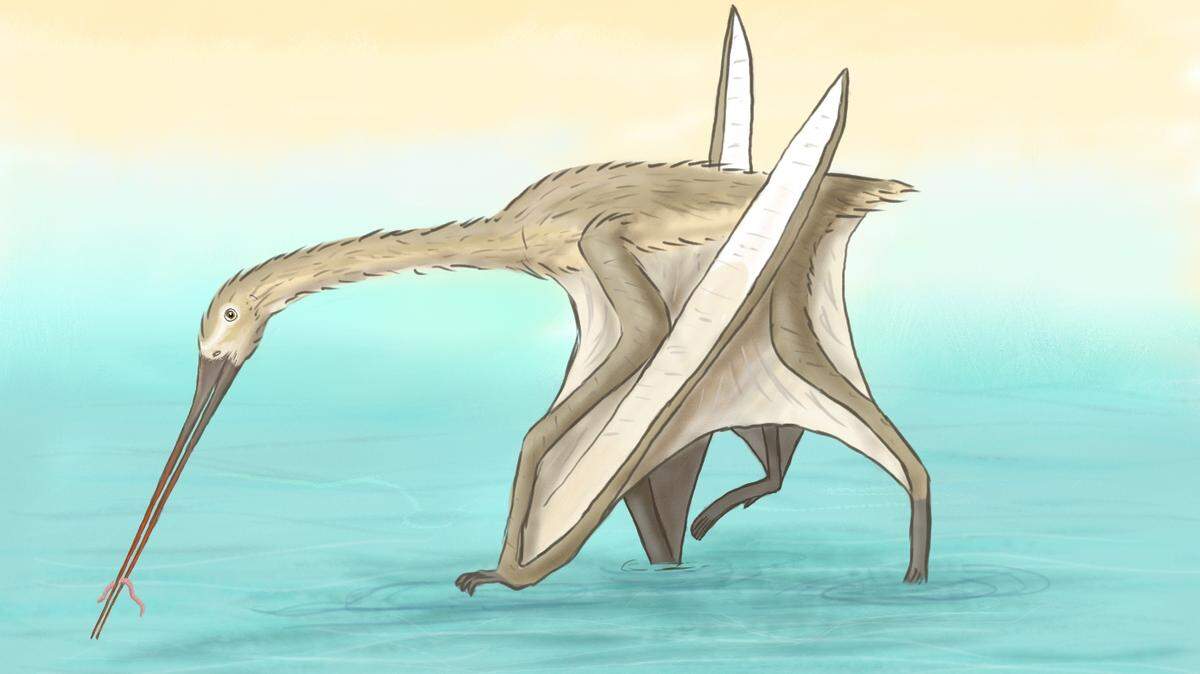
Prehistoric beasts came in all sizes, and paleontologists say they just found one of the runts in the form of a flying reptile about the size of a turkey.
The new species of pterosaur — “the less well-known cousins of dinosaurs” — was discovered by accident when a scientist realized what was thought to be a fish fossil from North Africa was actually a “long slender toothless beak,” according to the University of Portsmouth in the United Kingdom.
Doctoral student Roy Smith is credited with making the find while “examining the fossils of shark spines” stored at two British museums, according to EurekaAlert!, a nonprofit that distributes information for the American Association for the Advancement of Science.
A more thorough search of fossil collections (dated between 145.5 and 65.5 million years ago) turned up even more evidence, the university said.
“It is a palaeontological mystery,” Smith said, according to the news service. “I’m hopeful that other museum collections may contain more examples, and as soon as the COVID restrictions are lifted I will continue my search.”
Winged pterosaurs lived at the time of Cretaceous-era dinosaurs but are categorized as flying reptiles (different from dinosaurs), according to Live Science.
The newly discovered fossil evidence came decades ago from an area that is now Morocco, according to University of Portsmouth Professor David Martill, who co-authored the fossil report.
“We’ve never seen anything like this little pterosaur before. The bizarre shape of the beak was so unique, at first the fossils weren’t recognized,” Martill said, according to the university.
More than “100 species of these winged-reptiles” have been discovered, including some the size of “a fighter jet,” the university said in its news release.
“Some species hunted food on the wing, others stalked their prey on the ground. Now, the fragments of this remarkable little pterosaur show a lifestyle previously unknown for pterosaurs,” Martill said.
That lifestyle likely involved the creature using “its beak to probe dirt and mud for hidden prey, hunting like present-day sandpipers or kiwis,” experts believe.
Nick Longrich of the University of Bath’s Milner Centre for Evolution suspects “people have probably been finding bits of this beast for years, but we didn’t know what they were until now,” the University of Portsmouth reported.
This story was originally published November 11, 2020 at 8:33 AM with the headline "Scientist studying shark fossils instead discovers previously unknown winged reptile."