
What do Americans think of DEI programs? What a poll found as Trump calls them ‘illegal’
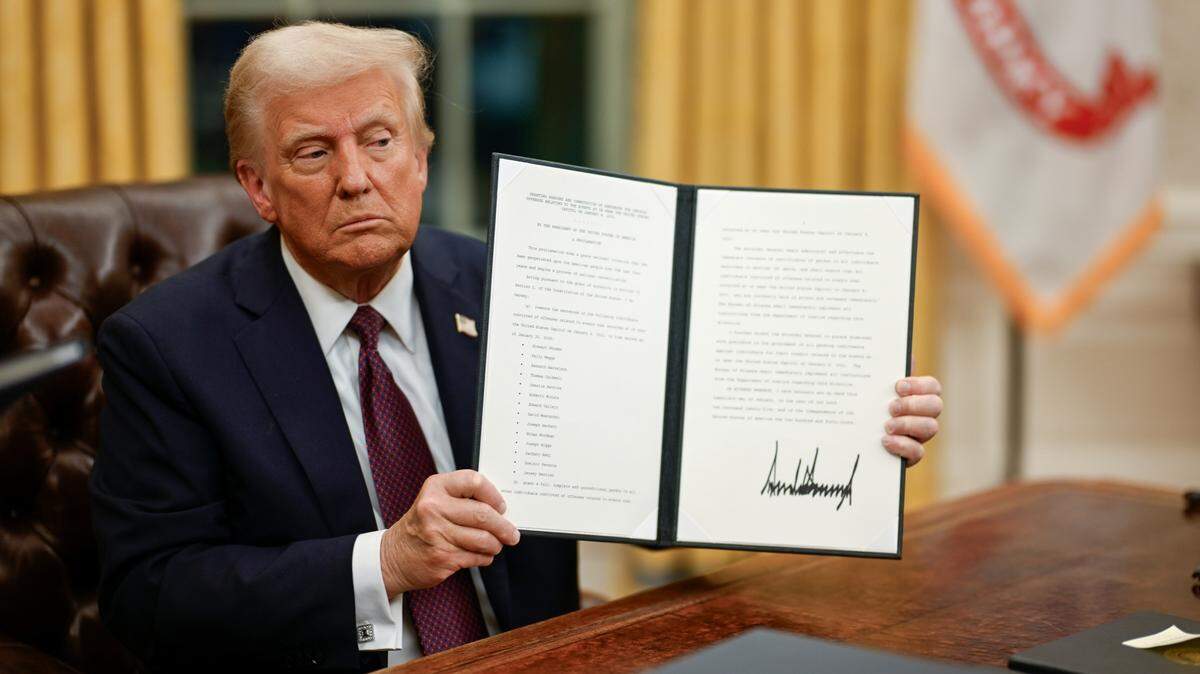
Among the dozens of executive orders issued by President Donald Trump on Inauguration Day was one that targets diversity, equity and inclusion (DEI) programs.
The order — which characterized DEI programs as “illegal and immoral” forms of discrimination — called for them to be removed from all levels of the federal government.
“Federal employment practices, including Federal employee performance reviews, shall reward individual initiative, skills, performance, and hard work and shall not under any circumstances consider DEI or DEIA factors, goals, policies, mandates, or requirements,” the order said.
But what do Americans think of DEI programs?
DEI poll
New polling indicates Americans are divided in their views on DEI, which — while subject to competing definitions — is often understood to be a framework for promoting fairness in institutions, particularly for marginalized groups.
In the latest YouGov poll, nearly half of respondents, 48%, said they have a somewhat or very favorable view of DEI programs. Meanwhile, a smaller share, 29%, said they have an unfavorable view, and 22% said they didn’t know.
Unsurprisingly, opinions were heavily skewed by partisanship, with more than twice as many Democrats (73%) as Republicans (30%) expressing favorable views. Independents were somewhere in the middle, with 43% saying they have a positive view of DEI programs and 30% saying they have a negative view.
There were also sizable differences based on the age and race of respondents, with younger and Black respondents being more likely to have favorable opinions than their older and white counterparts.
The poll — conducted with 6,419 U.S. adults on Jan. 23 — also asked respondents what effect DEI programs have had on them personally.
A plurality, 41%, said they have had no impact. Meanwhile, 20% said they’ve had a positive effect; 16% said they’ve had a negative effect and 23% said they weren’t sure.
Pluralities of Democrats (43%) and Republicans (40%) said they’ve had no effect, though 26% of Republicans said they’ve had a negative impact, compared to 6% of Democrats.
Meanwhile, a plurality of Black respondents, 34%, said the programs have had a positive effect on them personally, while less than half of white respondents, 16%, said the same.
Lastly, the poll asked respondents: “Do you think that businesses generally do too much, too little, or about the right amount to promote diversity, equity and inclusion within their workplaces?”
The responses were close to evenly divided, but a plurality, 29%, said they do the right amount. An additional 25% said they do too little; 22% said they do too much and 24% weren’t sure.
Here, again, there were strikingly different responses based on partisan affiliation. A plurality of Democrats, 40%, said businesses generally do too little, while a plurality of Republicans, 37%, said businesses tend to do too much.
Meanwhile, a plurality of Black, Hispanic and white respondents — 35%, 33%, and 27%, respectively — said businesses do about the right amount.
This story was originally published January 23, 2025 at 2:45 PM with the headline "What do Americans think of DEI programs? What a poll found as Trump calls them ‘illegal’."