
It’s becoming more common for Cabinet nominees to withdraw. Why? Historians weigh in
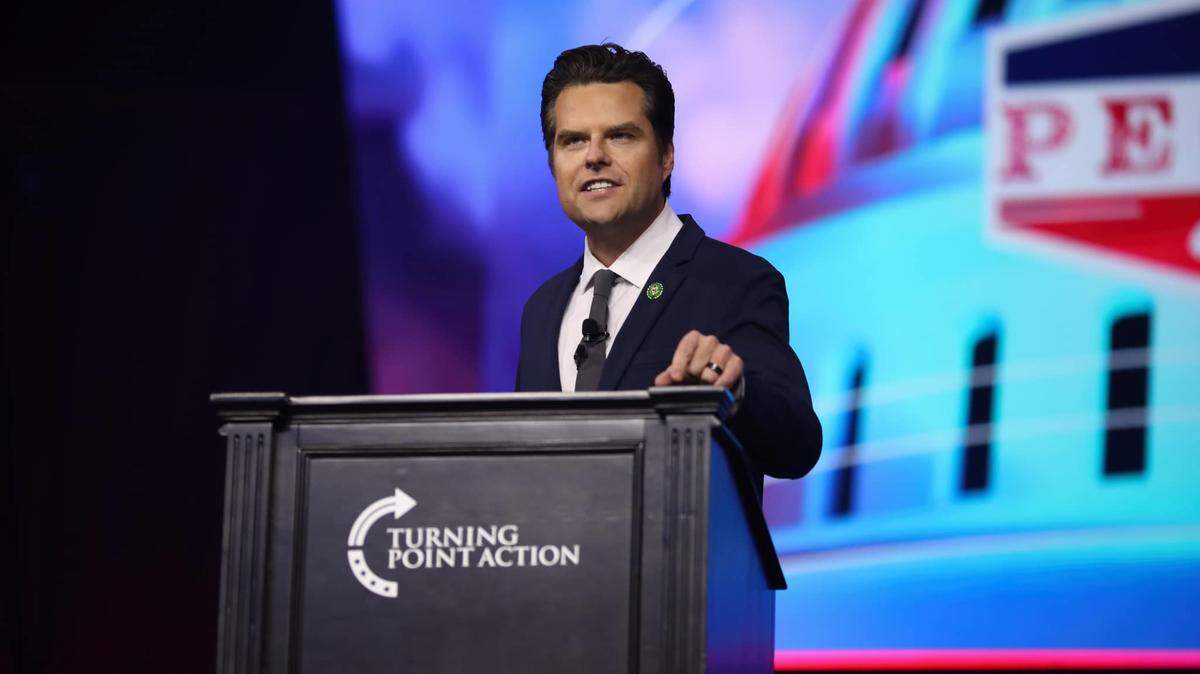
In late November, President-elect Donald Trump’s nominee for attorney general, Florida Rep. Matt Gaetz, withdrew his name from consideration, following allegations of sexual misconduct.
Now, Trump’s nominee for secretary of defense, Pete Hegseth, could be next to go. There’s speculation on Capitol Hill that he’ll be forced to withdraw due to a sexual assault allegation and concerns about his alcohol consumption, according to Politico.
These events, though, are not without precedent.
In fact, numerous presidents have put forward Cabinet nominees that eventually bowed out of the confirmation process or were rejected.
However, unsuccessful nominations are becoming more and more common — likely for a variety of reasons, according to historians and political experts.
History of unsuccessful nominations
“While each Cabinet nominee is unique as are the reasons why some withdraw or get rejected, I see patterns and factors emerge in American history,” Louis Picone, an adjunct professor of history at William Paterson University in New Jersey, told McClatchy News.
A few of the country’s earliest presidents — including John Adams and James Madison — failed to have one of their Cabinet nominees confirmed.
But, John Tyler, America’s 10th president, was the first to have several of his Cabinet nominees — four to be precise — fail to be confirmed, Picone said.
Tyler, who ascended to the presidency after William Henry Harrison’s death, switched from the Democratic to the Whig party, which ostracized both factions in Congress.
“Tyler’s situation is worth noting because most of his rejections (including one recess appointment) stemmed from his feud with the Senate, which used the nominations to take swings at him personally,” Taylor Stoermer, a historian at Johns Hopkins University in Maryland, told McClatchy News. “It wasn’t so much about the nominees—it was about Tyler.”
Andrew Johnson, the country’s 17th president, also put forward two Cabinet nominees who never made it through the confirmation process.
“His racist views and appeasement towards former confederates put him increasingly out of touch with the radical Republican Congress and (the) American public in the North,” Picone said.
He was eventually impeached in 1868 — the same year he made both of his unsuccessful nominations.
In the modern era, it’s become far more common for presidents to put forward Cabinet nominees that fail.
President Bill Clinton, for example, had five nominees that were never confirmed, Stoermer said.
One of them, Zoe Baird — his nominee for attorney general — withdrew after it was revealed she had hired illegal immigrants to assist in caring for her child, according to the Los Angeles Times.
“Trump,” though, “holds the record with six Cabinet nominees withdrawing, including Gaetz,” Stoermer said.
The other five nominees withdrew during Trump’s first term. They include Patrick Shanahan, a nominee for secretary of defense, who bowed out after a previous domestic incident was reported in the media, according to CNN. Additionally, Andrew Puzder, a secretary of labor nominee, withdrew after it was revealed that he failed to pay certain taxes and did not have enough votes in the Senate, according to Politico.
One of the five, John Ratcliffe, was later confirmed as director of national intelligence after withdrawing.
Why are unsuccessful nominations becoming more common?
There are a handful of factors that could be playing into the rise in unsuccessful Cabinet nominations, experts said.
“The main factor is probably party polarization, which has increased,” John Mark Hansen, a professor of political science at the University of Chicago, told McClatchy News. “Supreme Court confirmations have become more contested as well.”
“The other thing I’d point to is a rising concern with personal conduct,” Hansen said. “Womanizing, being behind on your taxes, and not paying FICA for your nanny are things nobody would have even asked about – sadly – back in the old days, when the press didn’t mention ‘personal matters’ like JFK’s philandering.”
Nowadays, there is “relentless coverage” of the Cabinet nominees and their backgrounds, Stoermer said.
“Some of these nominees have full-on haunted houses in their closets,” he said, “and they’re getting dragged out and dissected on social media and in every podcast feed.”
Other historians offered up different possible explanations.
Alex Keyssar, a professor of history at the Harvard Kennedy School in Massachusetts, told McClatchy News that it “seems possible that the procedures were different” in earlier times and “that nominees were pre-cleared with key figures in the Senate before being officially nominated.”
Meanwhile, another factor is “simple mathematics,” Picone said.
“With the growth of America came the growth of the presidential Cabinet,” he said. “George Washington had 4 cabinet members while Joe Biden has 24,” meaning the pool of nominees that must pass muster in the Senate has grown exponentially.
“And then there’s the most clear thing: Trump’s nominees are just nuts,” Stoermer said.
This story was originally published December 5, 2024 at 6:23 AM with the headline "It’s becoming more common for Cabinet nominees to withdraw. Why? Historians weigh in."