
Why were dog paw prints added to 220-year-old brick? Delaware historians offer theory
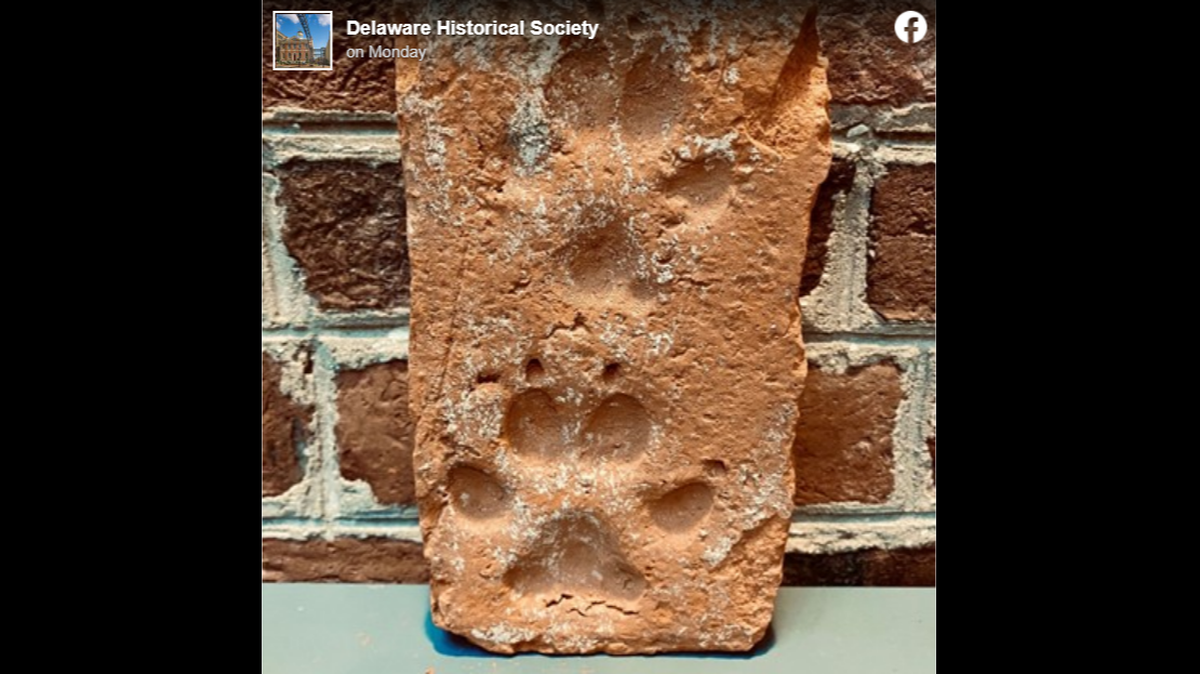
The nation has more than its share of artifacts that defy easy explanation, and one of the oddest is a 220-year-old brick that includes paw prints from one or more large dogs.
It was discovered as part of a building that dates to 1801, and currently serves as the Delaware Center for Jewish History in Wilmington.
The mysterious brick includes two impressions, and they appear to have been included intentionally, experts say.
“If this brick could bark, it would have a story to tell,” the society wrote Dec. 6 on Facebook.
“The mason working in what is now the Delaware Center for Jewish History had never seen anything like it — two paw prints in one of the old bricks in an unstable attic partition wall.”
The prints are so deep and well defined that even the toenail impressions were included.
Experts have traced the brick to a brickyard owner named Thomas Coxe, and they believe he made it as part of a project to build nearby homes for daughters Katherine and Margaret.
Those homes remained property of the Coxe family until 1957, the society says. Then, in 1976, “the building was picked up, loaded onto a flatbed truck, and moved to what is Willingtown Square.”
The square is made up of “four historic buildings dating from 1748 to 1801,” each moved from another location to save it from being torn down, the society says.
Historians theorize the special brick was created as a Coxe family memento.
“Here is the story as we imagine it,” society officials wrote.
“These two paw prints belong to the Coxe family’s favorite dogs. The Coxe brickyard was not far from the sister’s future home. They could have easily walked their dogs over to the yard and pushed their paws into the wet clay of an unfired brick.
“After the brick was fired they made sure it was placed where it would be safe.”
Their plan worked. The brick’s continued survival is now guaranteed as part of a museum collection.
“It will be cataloged and added to the Delaware Historical Society’s collections to be preserved forever,” officials said.
This story was originally published December 10, 2021 at 5:10 AM with the headline "Why were dog paw prints added to 220-year-old brick? Delaware historians offer theory."