
Endangered species get help from Stanislaus State program
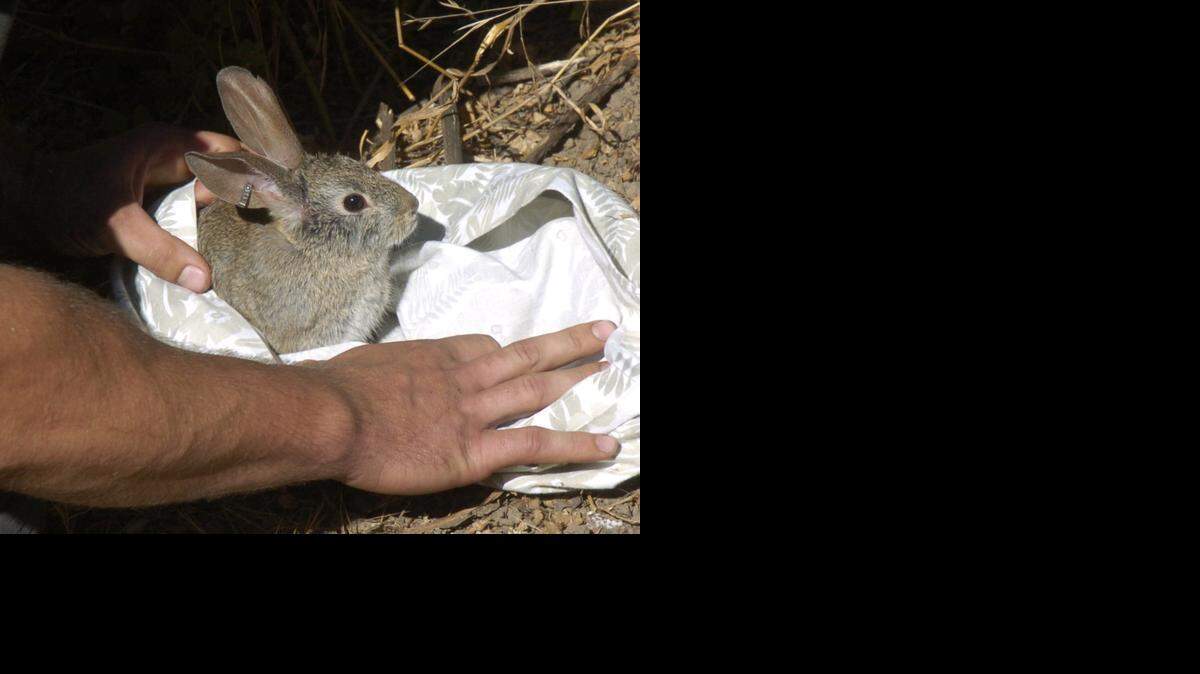
Zoology professor Patrick Kelly visited a favorite spot last week for observing riparian brush rabbits, a creature on the rebound.
He is coordinator of the Endangered Species Recovery Program at California State University, Stanislaus, in Turlock. The rabbits are among the success stories – even though they stayed mostly hidden during that visit to the San Joaquin River National Wildlife Refuge, west of Modesto.
Kelly reflected on the work in an email exchange with The Bee:
What types of wildlife and habitats does the program work with?
In vernal pool grasslands, we have conducted studies on plants, fairy shrimp and tiger salamanders. In the desert, we study desert tortoises and Mohave ground squirrels. On the Channel Islands, we have been involved in the recovery of island foxes. In the central and southern San Joaquin Valley, we study a whole range of endangered species, including but not limited to Kern mallow, Bakersfield cactus, blunt-nosed leopard lizards, Buena Vista Lake shrews, kangaroo rats and San Joaquin kit foxes. Here in the Modesto area, we study riparian brush rabbits and riparian woodrats along some of our major rivers.
What have been some notable successes?
Perhaps the biggest success story is the recovery of riparian brush rabbits. Since 2002, working with federal and state partners; the active involvement of private landowners such as the Dell’Osso, Lyons and Gallo families; and student researchers and interns, rabbits that were bred in captivity were successfully reintroduced on the San Joaquin River National Wildlife Refuge and some adjacent lands. Despite wildfire (2004) and two major floods (2006, 2011), riparian brush rabbits are now established and naturally breeding on the refuge. While no other endangered species in the Valley has so rapidly progressed on the road to recovery as the riparian brush rabbit, the knowledge base for many of our native species has been increased substantially, providing information that is critical to their conservation and recovery. For example, ESRP researchers have shown that San Joaquin kit foxes, although extirpated from much of their former range, are thriving in the city of Bakersfield. This is work led by Dr. Brian Cypher, one of the top canid ecologists in North America. Of course, there are natural areas for the kit fox and other species too, most notably the Carrizo Plain National Monument.
How did Stanislaus State come to be home to the program?
The program was established in 1992 with support from the U.S. Fish and Wildlife Service and the U.S. Bureau of Reclamation and under the direction of Dr. Dan Williams, professor of zoology at California State University, Stanislaus (Williams retired in 2002). Over time, ESRP has grown into a cooperative research program working with a variety of local, state and federal agencies, as well as nongovernmental organizations, corporations and private landowners. We have offices on the Stanislaus campus in Turlock and in Clovis and Bakersfield.
What is the annual budget, and what are the funding sources?
Our budget varies from year to year, depending on the volume of work we are doing, and this support can be in the form of contracts or grants, some of which involve support for student interns (e.g., a grant from Sacramento Zoo to support students working at Caswell Memorial State Park). Currently, our annual budget ranges from $600,000 to $700,000. Funding comes mainly from federal and state agencies, but we also receive some funding from local agencies (e.g., Kern Co. Waste Management District), private landowners (e.g., Tejon Ranch) and environmental consulting firms.
Do you have partners among private landowners, government agencies and academia?
We have worked with many private landowners over the years, and we are proud of the good relations we have fostered with private landowners. In the northern San Joaquin Valley, the late Helen Buffington along with the Dell’Osso, Lyons and Gallo families have been important partners in the recovery of riparian brush rabbits. We work with many government agencies at all levels. We have a long history of collaboration with other academic institutions in the United States – including but not limited to UC Davis; UC Berkeley; CSU, Fresno; CSU, Bakersfield; University of Nevada, Reno; the Smithsonian Institution; and overseas.
Are there examples of where agriculture and urban development can coexist with wildlife?
Some species of wildlife can adapt better to humans, agriculture and the built environment than others. Irrigated ag fields generally do not meet the basic needs (food and shelter) of most wildlife species. That said, stubble fields of corn and winter wheat are important for migratory geese and cranes. Also, raptors and coyotes forage in crop fields, often hunting for crop pests (such as voles, gophers). Rice fields can provide important wetlands for water birds and the endangered giant garter snake. The USDA Natural Resources Conservation Service has numerous practices that growers can adopt to benefit wildlife on the periphery of ag fields. NRCS and the Xerces Society are promoting hedgerows and cover crops for native pollinators, with an emphasis on bumblebees and monarch butterflies. Rangeland is very important for many sensitive plant and animal species, but controlled grazing programs are needed to maintain habitat suitability. Cities in the Northern San Joaquin Valley have gray foxes, whose natural habitat is oak woodland and forest, but our cities in some respects resemble woodland, albeit with lots of houses. Gray foxes can be confused with kit foxes, but the gray fox is larger and stockier than the kit fox, and gray foxes are excellent climbers.
What challenges lie ahead for our wildlife?
The biggest ongoing challenge for endangered plants and animals of the San Joaquin Valley is the continuing loss of habitat. Habitat is lost through direct conversion of natural land to other uses (farming, urban, industrial, transportation). Even when natural land is not fully converted to other uses, it is often divided and fragmented, which can introduce other problems (e.g., invasive species, disturbance, trash dumping). Despite our intimate knowledge of these problems, Valley floor habitats continue to be converted, fragmented and degraded. This is a very serious problem for plants and animals that depend on Valley floor ecosystems, and some of those species are found nowhere else in the world. Species that are endemic to the San Joaquin Valley include the Fresno kangaroo rat, which is very rare if not extinct, and the magnificent blunt-nosed leopard lizard, a large and very colorful lizard that preys on insects and other smaller reptiles.
Another major challenge for our native plants and animals is climate change. We are already familiar with the threat that climate change poses through sea level rise and extreme weather, but it is also expected to affect upland plant and animal communities. Consequently, it will likely exacerbate the situation for sensitive plants and animals that are confined to fragmented habitat remnants on the Valley floor. Isolated preserves that are home to sensitive species today may no longer provide suitable habitat, and populations will wink out.
Where can residents go to see wildlife in and near Stanislaus County?
The San Luis National Wildlife Refuge Complex offers year-round elk viewing (San Luis NWR), snow geese and sandhill cranes in the winter months (Merced NWR), bird watching and the possibility of seeing endangered riparian brush rabbits (San Joaquin River NWR), all at no charge. Caswell Memorial State Park is another great destination for those who want to experience nature as it once was on the Valley floor.
Why is it important to protect these creatures?
There are many good reasons to protect biological diversity, and not just charismatic animals or showy plants. One often-used reason is the potential to discover new medicinal compounds or properties in plants. Unfortunately, species are going extinct worldwide before they have even been discovered and described by science, and this could be happening here in the San Joaquin Valley. Aldo Leopold (1887-1948), the famous U.S. Forest Service ecologist and author, wrote: “To keep every cog and wheel is the first precaution of intelligent tinkering” (“A Sand County Almanac”). Ecosystems are like machines; their parts (species) are interrelated. The loss of even one key species can have a domino effect on other species and thereby change the character and functioning of the ecosystem. Therefore, we need to try to preserve intact ecosystems and not pick and choose which species we like and which we do not. Ecosystems and natural communities (habitats) in the San Joaquin Valley, including grasslands, vernal pools and other wetlands, alkali scrub, oak and riparian forests, are part of our rich natural heritage. Conserving this heritage for future generations enhances our overall quality of life and theirs.
This story was originally published August 17, 2014 at 9:20 PM with the headline "Endangered species get help from Stanislaus State program."