Mayor in Stanislaus County votes for contract with big campaign donor promoting brain therapy
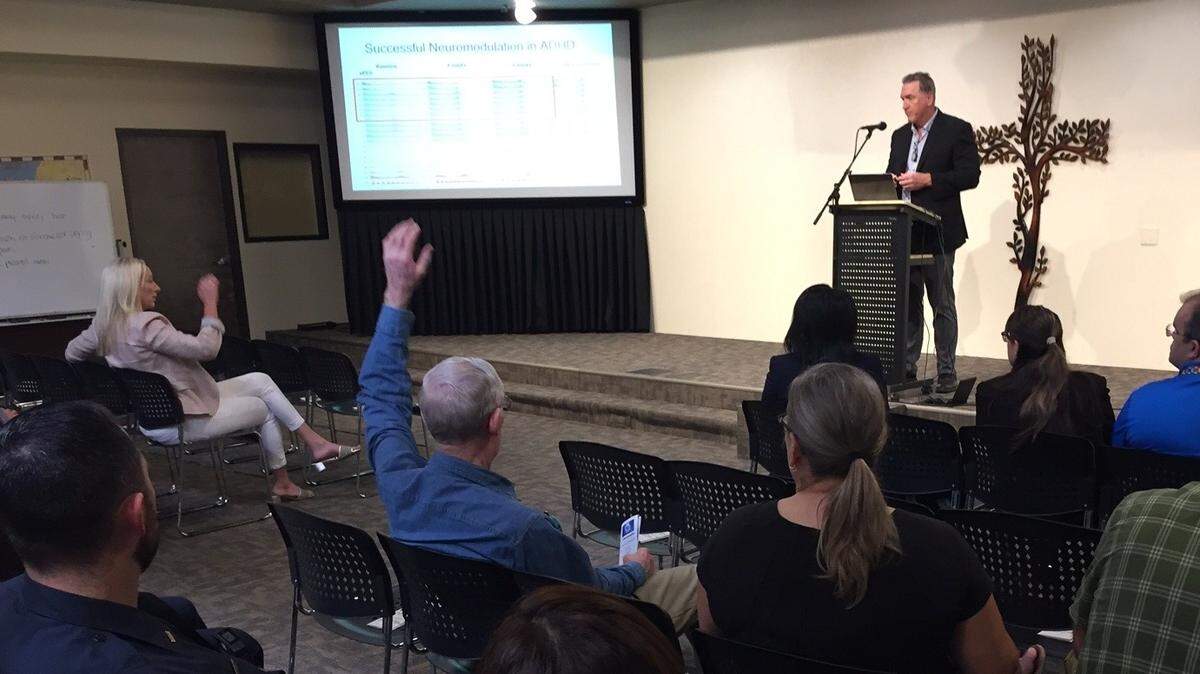
Turlock Mayor Amy Bublak sparked a political flap last month when she voted for a $642,500, noncompetitive contract between the city and Genesis Behavior Center, which will offer an unorthodox therapy to first responders.
The 3-2 vote by the City Council has prompted questions about Bublak’s relationship with the growth-minded company and its influence on the city’s top elected official.
Romena Kiryakous, who operates the Genesis center on Colorado Avenue, has donated $12,000 to the mayor’s election campaigns going back to 2016. In addition, campaign finance disclosures show $1,000 donations to Bublak from two of Kiryakous’ family members.
Bublak’s participation in the Oct. 22 council decision, instead of recusing herself for the sake of appearances, does not appear to violate California’s political reform laws that discourage campaign donors from expecting favors from elected officials. But it came pretty close for an elected official who’s been a spokesperson for the brain scan therapy provided by Genesis.
Lawrence Giventer, a retired public administration professor for Stanislaus State University, said it’s not a good idea for a prospective contractor to contribute to a political campaign. “It’s a bad practice for the contractor and the politician. It creates the appearance, at the very least, of conflict of interest,” he said.
A 2022 state bill prohibits local elected officials from taking part in a government decision if they received a campaign contribution of more than $250 from the applicant. But the law refers to campaign contributions in the past 12 months.
Records show the last donation from Kiryakous to Bublak was $4,000 in December 2021. Bublak, a former councilwoman, was elected mayor in 2018 and re-elected in 2022. Kiryakous did not respond to messages from The Modesto Bee.
To avoid the appearance of influence by campaign donors, the city of Modesto has a “tin cup” ordinance requiring that council members and the mayor not vote on matters involving donors of $3,000 or more.
Giventer and others also questioned why the Genesis center therapy, called PrTMS, for personalized repetitive transcranial magnetic stimulation, was the only proposal considered at the Oct. 22 council meeting. If the city wants to help police, fire and dispatch personnel who have issues with depression, anxiety or loss of sleep, why not seek proposals from a number of professional services?
The PrTMS “may or may not be beneficial,” said Councilman Kevin Bixel, who voted against the contract with Genesis. “There could have been other modalities to consider, also.”
Councilwoman Cassandra Abram said at the meeting that the American Rescue Plan Act money spent on the contract could instead go to sidewalks in disadvantaged areas or to assistance for seniors. She questioned how the federal government will view the contract when ARPA spending is reported. With the decision, Turlock will have $1 million in ARPA funds remaining.
Turlock officials justified using ARPA funds to pay for the contract, noting that the COVID-19 pandemic was stressful for police and fire personnel.
Councilwoman Rebecka Monez, who favored the contract, said TMS therapy worked well for a young person she knew.
Bublak stressed that she benefited from the treatment and wanted to offer more than counseling to Turlock’s public safety staff.
In a phone interview Wednesday, the mayor was passionate about her support for the nondrug therapy. A former Bay Area police officer, she said the treatment alleviated her anxiety, migraine headaches and loss of sleep, most of which resulted from the early prison release of a man who had tried to kill her while she was on duty.
Bublak said she paid for the treatment she received at the Turlock Genesis center. And referring to taking part in the council decision last month, she said, “I did not do anything illegal or unethical. The story is about something that can help our public safety employees.”
Bublak said she does not have a financial stake in the Genesis center or the PrTMS therapy. A financial interest would have disqualified the mayor from participation in the decision under California’s Political Reform Act.
Transcranial magnetic stimulation, or TMS, is an FDA-approved therapy that has proved effective for clients with depression and other disorders that didn’t respond to drug therapy. The Genesis treatment called PrTMS was developed by Dr. Kevin Murphy and goes further by targeting the stimulation to specific areas of the brain and customizing it for the individual.
Murphy’s personalized version of TMS has not been subjected to clinical trials and is administered as an “off-label” treatment. But Murphy, who attended the council meeting remotely, stressed that clinical trials are being scheduled at Walter Reed National Military Medical Center in Bethesda, Maryland.
Mayor touts therapy at national conference
The Bee learned that Bublak and Kiryakous presented the brain scan technology at the annual Conference of Mayors in Kansas City in June. According to the conference agenda, the panel discussion explored strategies for cities to “maximize the use of opioid settlement funds and examine the latest brain technologies available for treating addiction and behavioral health conditions.”
Lining up lucrative government contracts is a stated ambition of Genesis, and opioid settlement funds may be another funding source.
Court cases seeking compensation from pharmaceutical companies for the nation’s opioid addiction crisis have awarded hundreds of thousands of dollars to cities and millions of dollars to counties in the United States.
On its website, Genesis PrTMS, with locations from Los Banos to Sacramento, promotes its PeakLogic software and an aggressive growth plan including licensing partnerships and franchise agreements.
“As more government contracts are secured, all treatment and related business will be handled by local franchises and licensed partners,” the Genesis website says. “This allows owners to tap into a steady high-volume revenue stream, serving municipal employees and citizens in need of mental health support.”
Bublak said she spoke at the national mayors conference to tell how the therapy worked for her. She said she believes it can be effective for young people with attention-deficit hyperactivity disorder and older adults with dementia. She said she didn’t know if more proposals will surface offering PrTMS to people in Turlock.
“It can help so many different people, but my testimonial is about public safety and specifically about my scenario,” Bublak said. “I don’t get anything out of this.”
More about the treatment
The therapy uses electromagnetic waves to stimulate nerve cells in the brain. By targeting specific areas of the brain, the treatment can be customized to improve cognitive function, regulation of emotion and motor skills, Genesis says.
At the center, a coil is placed against the client’s head to deliver magnetic pulses. Possible side effects are headache, a lightheaded sensation and twitching of facial muscles.
Clients receive the therapy five days a week, though four is OK, with each session lasting 20 to 45 minutes. The cost structure for the Turlock contract is $200 per session, $350 for an assessment by Murphy and $250 each for six to 12 EEGs to track the individual’s progress.
Police Chief Jason Hedden said a few employees approached him and expressed interest in the therapy, but the process through human resources is confidential and he won’t be notified how many officers are seeking treatment.
Jessie Dhami, Turlock’s human resources director, said an anonymous survey following a presentation by Murphy in March found that 27 employees signaled an interest in the therapy. She said the program is rolling out soon.
Murphy’s group said 22,000 people have received the treatment since 2016.
This story was originally published November 21, 2024 at 5:19 PM.